| | THIS WEEK'S KEYS:Pulse: The Rising Cost of Deferred Maintenance Playbook: What Makes a Home Services Business Scalable Spotlight: Sunbelt Pools: Building the Backbone of Commercial Aquatics Roundup: This Week’s M&A Highlights
Have a great weekend! | | |
| | | PULSE The Rising Cost of Deferred Maintenance |  | Photo by Emma Pearson and Franchising.com |
| Across home services, a clear shift in customer behavior is taking shape. In HVAC, plumbing, electrical and pest control, emergency and reactive service calls are accounting for a growing share of near-term revenue while recurring maintenance programs face mounting pressure. Maintenance plans have long served as the foundation for predictable cash flow, customer retention and labor planning. Today, industry data and consumer surveys suggest that many households are deprioritizing preventative services in favor of urgent repairs that cannot be postponed.
Macroeconomic pressure is the primary driver behind this shift. Angi’s 2025 State of Home Spending Pulse Report shows that homeowners are becoming more selective about discretionary spending as inflation, insurance costs and higher interest rates strain household budgets. Preventative maintenance plans and subscription programs are easier to delay or cancel when cash flow tightens, while emergency repairs remain unavoidable when core systems fail. In practice, this has pushed a greater share of spending toward reactive work even as total home services budgets come under pressure.
Structural housing dynamics reinforce the trend. According to the U.S. Census Bureau, more than half of owner-occupied homes in the United States were built before 1980. Aging HVAC systems, plumbing infrastructure and electrical panels increase the likelihood of unexpected failures. Years of deferred maintenance, particularly during periods of elevated inflation and higher borrowing costs, have allowed minor issues to compound into critical breakdowns. As a result, demand is increasingly driven by system failures rather than scheduled upkeep.
Platform data mirrors this reality. ServiceTitan reports that emergency service calls typically generate higher average ticket sizes due to after-hours pricing, expedited labor and bundled repair work. These calls can deliver meaningful short-term revenue and provide temporary margin lift during peak demand periods. However, ServiceTitan also emphasizes that emergency-driven revenue lacks the stability and predictability of recurring maintenance programs which underpin customer lifetime value and smoother revenue profiles. Angi’s reporting similarly highlights that homeowners are prioritizing essential repairs over optional services or upgrades, reinforcing the near-term tilt toward reactive demand.
This shift introduces real operational tradeoffs for operators. Emergency-driven revenue is inherently more volatile and labor intensive. Dispatch becomes less predictable, technician utilization fluctuates and response time expectations increase. Customer acquisition costs also rise when growth depends on one-time breakdowns rather than long-term service relationships. Maintenance plans, while currently under pressure, continue to play a critical role in stabilizing cash flow, improving labor planning and reducing dependence on unpredictable demand spikes.
Consumer credit conditions may further amplify this behavior. The Federal Reserve’s Consumer Credit G.19 release shows that higher borrowing costs are influencing how households allocate spending. As revolving credit becomes more expensive, homeowners are increasingly reserving available liquidity for repairs that are immediately necessary rather than preventative services with longer-term payback. Coverage of Angi’s findings in Kitchen & Bath Design News reinforces this pattern, noting that repair needs are crowding out optional improvements across multiple home services categories.
For investors and acquirers in the lower middle market, these dynamics are material. Businesses with a heavy concentration of emergency work may report strong near-term EBITDA that does not fully reflect normalized earnings power. Underwriting increasingly requires a closer look at service mix, customer retention and maintenance penetration to distinguish sustainable performance from demand driven by deferred upkeep. At the same time, continued fragmentation across home services means many smaller operators lack the systems, pricing discipline and marketing infrastructure required to convert emergency customers into recurring ones.
From a consolidation perspective, emergency-heavy operators can still represent attractive entry points when paired with proven operating playbooks focused on maintenance re-enrollment, membership pricing redesign and cross-selling across service lines. The moment of urgency created by a system failure remains one of the most powerful opportunities to establish trust and reposition the relationship. Ultimately, durable value creation depends less on riding reactive demand and more on converting breakdown-driven interactions into long-term customer relationships supported by recurring revenue. |
|
|
|
|---|
PLAYBOOK What Makes a Home Services Business Scalable |  | | | Home services are often described as local, fragmented and difficult to scale. That perception persists not because growth is unattainable, but because many operators attempt to scale volume before building the structural foundation required to support it. Growth pursued without discipline often increases complexity faster than capability, leaving businesses exposed to operational risk, margin erosion and owner burnout.
True scalability in home services is not defined by fleet size, technician count or topline growth. It is defined by whether a business can grow without a proportional increase in owner involvement, execution risk or earnings volatility. Scalable operators convert variable, project based demand into predictable, system driven revenue streams that support repeatable expansion. As institutional capital continues to flow into HVAC, plumbing, electrical, landscaping and adjacent service categories, this distinction has become increasingly important. Industry research from KPMG highlights that platform durability and operating discipline are now core underwriting priorities as investors differentiate between growth and scalability.
Recurring revenue sits at the center of that structure. One time or emergency driven models produce uneven utilization and force constant reinvestment in customer acquisition. Maintenance agreements, route based services and subscription style plans stabilize cash flow and improve customer lifetime value. Research from CMM shows that recurring client relationships materially improve retention and smooth revenue volatility in service based businesses, reinforcing why investors increasingly favor predictable revenue models across home services. Predictability allows operators to plan staffing proactively, smooth seasonal swings and reinvest in systems rather than relying on overtime, price discounting or last minute hiring during peak periods. Over time, recurring revenue shifts the business from reactive to deliberate.
Geographic density compounds these benefits. Scalable platforms expand depth before breadth, prioritizing tight service territories over rapid multi market expansion. Dense routing reduces windshield time, increases jobs completed per technician per day and improves same day response rates. It also lowers fuel costs and scheduling friction while improving customer satisfaction. From an investor perspective, density enhances margins and creates local defensibility that competitors struggle to replicate without comparable scale, data and infrastructure. Market analyses from Mordor Intelligence reinforce that regional density and route efficiency are key drivers of profitability in the United States HVAC and broader home services markets.
Process standardization is what allows growth to occur without degradation. Many subscale operators rely on informal pricing, manual scheduling and owner judgment to resolve daily operational issues. These approaches may function at a small scale but break down as complexity increases. High performing platforms institutionalize decision making through standardized pricing frameworks, defined service protocols, consistent call handling and real time performance tracking. According to insights from the Forbes Business Council, the integration of field service software, CRM platforms and AI enabled tools is accelerating this shift by reducing operational variance and improving management visibility across crews, branches and markets.
Labor strategy is equally critical. While skilled labor shortages are real, they are rarely the true constraint on scale. The binding constraint is retention, productivity and consistency. Scalable operators invest in structured onboarding, continuous technical training and clear advancement pathways that reduce turnover and improve service quality. Standardized systems ensure that performance does not depend on a single technician, dispatcher or manager. The objective is not to eliminate judgment, but to make outcomes repeatable regardless of who executes the work.
Customer experience also benefits directly from professionalization. Consistent pricing, predictable service windows and standardized scopes build trust and reduce friction. When customers know what to expect, retention improves and referrals increase. Over time, this lowers customer acquisition costs and reduces dependence on paid marketing, reinforcing the economics of scale. Research from DataHorizzon Research underscores that franchise and platform models with strong customer experience infrastructure consistently outperform fragmented peers in long term growth and valuation.
Ultimately, scalability in home services comes from professionalization rather than leverage. In a highly fragmented industry dominated by owner operated businesses, the platforms that win are those that systematize pricing, routing, labor and customer relationships. Growth is earned through execution, not just expansion. When these systems are replicated across markets, incremental efficiency gains compound into durable growth, stronger cash flow and outsized enterprise value. |
|
|
|
|---|
|
SPOTLIGHT Sunbelt Pools: Building the Backbone of Commercial Aquatics | 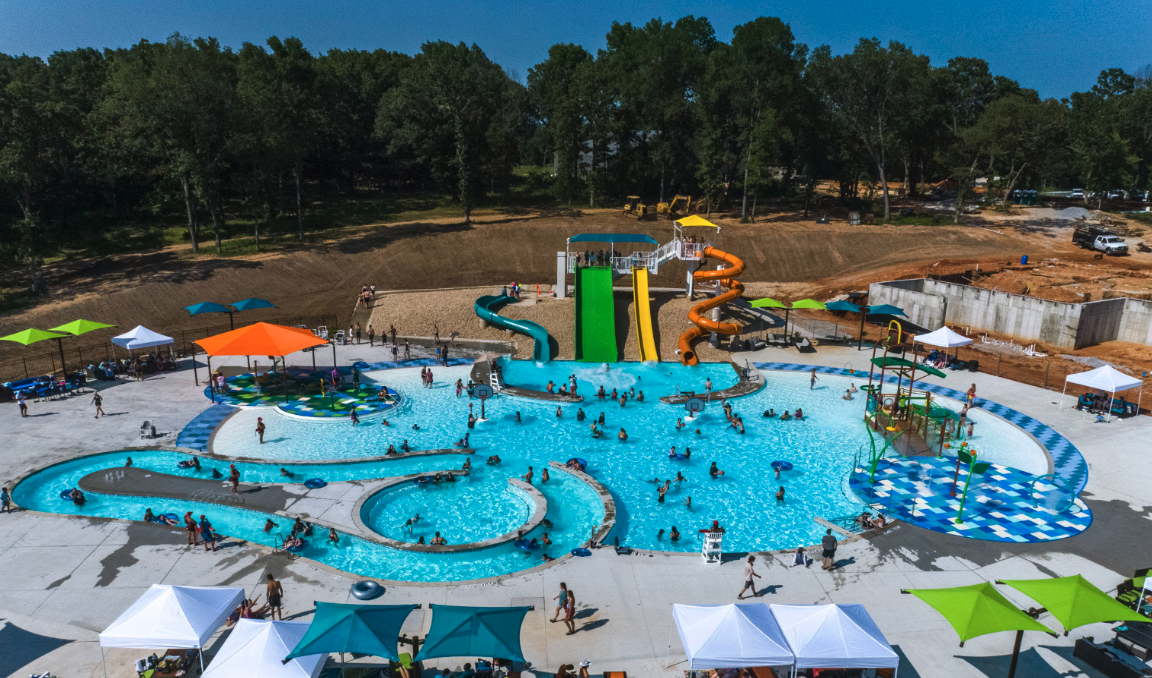 | | | What began as a modest regional venture in the mid-1980s has evolved into one of the most respected commercial aquatic construction platforms in the United States. Sunbelt Pools, headquartered in Dallas, Texas, operates across the southern United States and has built a reputation for delivering technically complex aquatic facilities for institutional, municipal and commercial clients.
Sunbelt Pools specializes in the design and construction of large-scale aquatic projects, including water parks, commercial swimming pools and private aquatic facilities. Its client base spans K–12 school districts, universities, athletic and recreation centers, municipalities and hospitality operators. Over the years, the firm has been entrusted with projects where safety, regulatory compliance and long-term performance are non-negotiable. Notable developments include a water park at Camp Barnabas, multiple pools at Jesuit College Preparatory School and Village Dallas and high-profile destination projects such as Epic Waters.
To date, the company has completed more than 100 major projects across water parks, secondary schools, higher education campuses, athletic facilities and private developments. These projects vary widely in scale and complexity, but they share a common theme: each requires deep technical expertise, coordination across multiple stakeholders and the ability to deliver systems that operate reliably for decades. Epic Waters, which features prominently in Sunbelt’s project portfolio, illustrates the firm’s capacity to execute at scale while meeting stringent safety and performance standards.
Industry recognition reflects this track record. Engineering News-Record has identified Sunbelt Pools as a leading specialty contractor within the commercial construction landscape, citing its consistent execution of large, technically demanding aquatic projects across the southern United States. In a niche where precision engineering, regulatory knowledge and disciplined project management are critical, Sunbelt’s reputation has been built over decades rather than through rapid expansion.
The business did not begin in its current form. Founded in 1986 as Texas Pool Supply, the company initially focused on supplying pool products to residential and commercial customers throughout Texas. In 1990, management made a pivotal strategic shift by expanding into commercial pool construction and rebranding as Sunbelt Pool Supply. That transition marked the company’s entry into a higher-barrier segment of the market, one defined by institutional clients, complex engineering requirements and longer project cycles. Over time, the firm further refined its focus, evolving into the specialized commercial aquatics platform it is today.
Sunbelt Pools now operates as an integrated provider rather than a single-service contractor. In addition to construction, the company supplies commercial pool products designed to support durability, safety and long-term performance. These offerings include interior systems such as filtration, circulation and disinfection equipment, as well as exterior components like diving boards, water slides and other aquatic attractions. Beyond initial build-out, Sunbelt provides ongoing services including maintenance, pool repair, equipment servicing and cleaning, allowing it to remain embedded in facilities long after construction is complete.
One of the company’s defining capabilities is its expertise in equipment room design and installation. Equipment rooms serve as the operational core of any aquatic facility, governing water quality, energy efficiency and user safety. Poorly designed systems can lead to higher operating costs, regulatory issues and premature equipment failure. Sunbelt Pools offers consultation, custom equipment room design, system specification and tailored installation to ensure that facilities operate efficiently and reliably over the long term. This behind-the-scenes focus is a critical differentiator in an industry where surface-level aesthetics often receive more attention than infrastructure.
As highlighted by Aquatics International, Sunbelt Pools’ integrated approach to construction, systems engineering and lifecycle performance sets it apart within the commercial aquatics industry. Rather than competing solely on design flair or upfront cost, the company emphasizes operational integrity and longevity. That orientation has helped build long-standing relationships with institutional clients who value predictable performance and minimal downtime.
For operators, this model translates into reliability, regulatory confidence and lower total cost of ownership over the life of a facility. For investors, it reflects a specialized platform anchored by technical expertise, repeatable execution and deep customer relationships in a niche with meaningful barriers to entry. Sunbelt Pools’ evolution demonstrates how disciplined focus, operational depth and long-term thinking can create a durable market position in a complex segment of commercial construction. |
|
|
|
|---|
|
| | This Week’s M&A Highlights |  |
|
|
|---|
|
●Centre Partners and LP First Capital-backed United Land Services acquired Wrightsville Beach Landscaping, a North Carolina-based commercial landscaping services provider
●Centre Partners and LP First Capital-backed United Land Services acquired H&O Grounds, a Southeast-based landscape maintenance company
●Centre Partners and LP First Capital-backed United Land Services acquired Custom Tree Surgeons, a regional provider of tree care and vegetation management services
●Pacific Plumbing Supply Co. acquired M&L Supply, a Washington-based family owned plumbing distributor
●Shoreline Equity Partners-backed Pool Troopers acquired Prime Pool Service, a Texas-based residential and commercial pool maintenance company
●Champions Group Holdings acquired Lex Cooling, Heating, Plumbing & Electrical, a Texas-based residential service provider
●TruArc Partners acquired Schill, a commercial landscaping provider, from Argonne
●Brentwood Associates completed its recapitalization of Perennial Services Group, a lawncare, pest control, landscaping and arbor services provider |
|
|
|---|
|
ABOUT US WestGate Partners | | | WestGate Partners (WGP) is an independent sponsor focused on acquiring and growing lower middle market businesses in essential residential and commercial services. We bring institutional experience, tailored capital with hands-on partnership to help owners transition, grow and preserve their legacy. By partnering with strong operators, we build enduring businesses in economically-insulated industries. |
|
|
|
|---|
|
For more information, please visit: |
|
|
| | |
|---|
|
|