| | THIS WEEK'S KEYS:Pulse: The Hidden Cost of Permitting Delays Playbook: Building Evergreen Businesses Spotlight: Preparing a Service Business for Exit Roundup: This Week’s M&A Highlights
Have a great weekend! | | |
| | | PULSE The Hidden Cost of Permitting Delays | 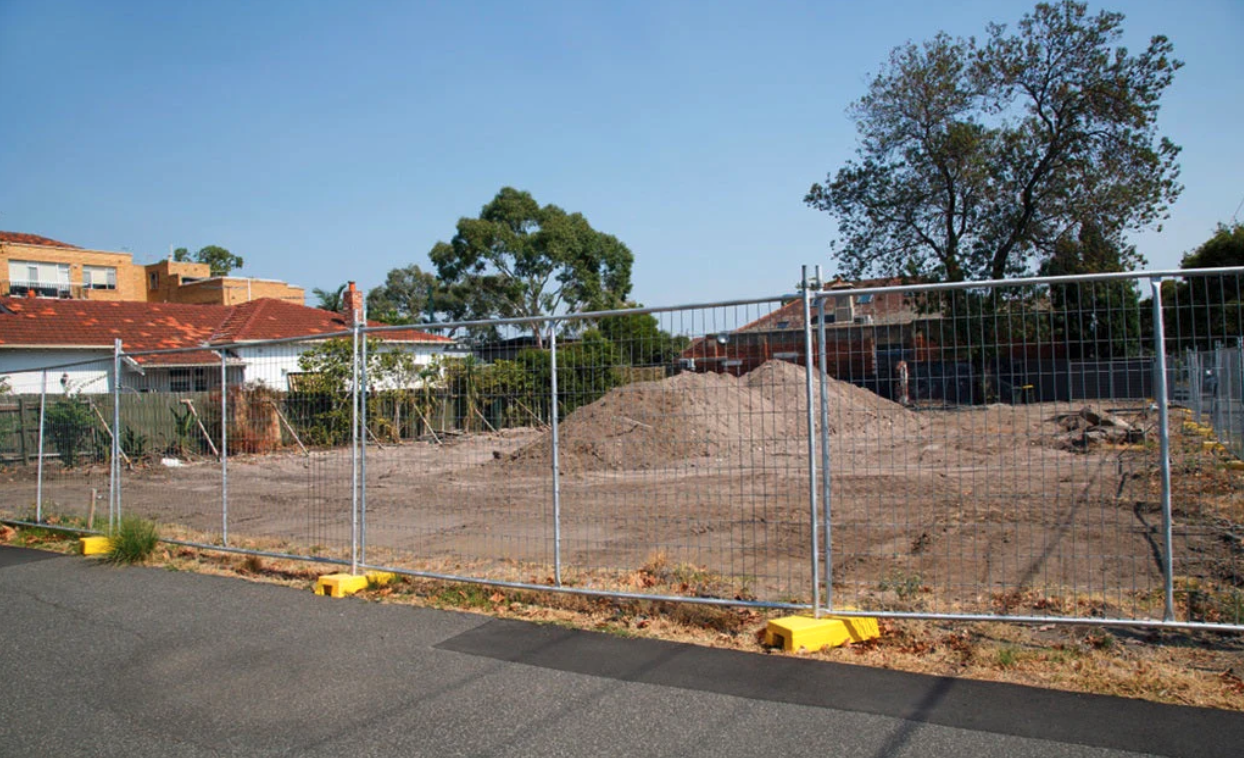 | | | The permitting process in the United States has become a material bottleneck for economic activity, contributing to a growing backlog of delayed projects across infrastructure, energy, housing and the broader built environment. Permitting plays a critical role in safeguarding public health, ensuring building safety and protecting environmental and land-use standards. But the scale and persistence of current delays increasingly outweigh those benefits, especially as the country attempts to modernize aging infrastructure, expand electrification and address housing shortages.
Recent legislative efforts to streamline the process have delivered limited relief. In June 2023, Congress passed the Fiscal Responsibility Act (FRA), which imposed a mandatory two-year deadline on federal permitting reviews under the National Environmental Policy Act. Before the FRA, ~71% of federal infrastructure projects took longer than two years to receive approval. After enactment, that figure declined only modestly to 61%, according to analysis from the Bipartisan Policy Center. The marginal improvement highlights how deeply entrenched permitting delays have become, even when statutory timelines are introduced.
This lack of predictability now ripples through the entire construction ecosystem. Developers struggle to time capital commitments, contractors face volatile scheduling and investors must underwrite longer, more uncertain timelines. In practice, permitting risk has become a core financing variable. Projects are delayed not because demand is lacking or funding is unavailable, but because approvals cannot be secured with any degree of certainty. That uncertainty raises carrying costs, compresses returns and deters investment in otherwise viable projects.
The challenge is magnified by the unprecedented scale of capital flowing into infrastructure, energy and resilience initiatives. McKinsey estimates that between $240 billion and $280 billion in infrastructure projects enter the permitting pipeline each year. Many of these projects take four to five years to move from submission to approval, and some extend even longer. As a result, McKinsey estimates that between $1.1 trillion and $1.5 trillion in infrastructure investment is currently stalled at various stages of review. This backlog represents not only delayed construction, but also postponed productivity gains, deferred emissions reductions and higher long-term costs as inflation compounds over extended timelines.
For electrical and HVAC contractors, the downstream impact is particularly acute. Projects that require federal approvals or complex local permitting are often deprioritized behind large, nationally significant developments such as utility-scale energy projects or major transportation corridors. That dynamic slows approvals for commercial retrofits, residential upgrades, grid interconnections and electrification initiatives that are otherwise shovel-ready. These are precisely the types of projects policymakers aim to accelerate, yet they remain constrained by the same administrative bottlenecks.
Even after permits are granted, delays often cascade into secondary disruptions. Contractors must reshuffle crews, extend temporary staffing, renegotiate material deliveries and absorb idle time that cannot easily be recovered. In labor-intensive trades, where margins depend on utilization and routing discipline, these disruptions quickly erode profitability. Industry analyses consistently show that permitting delays are rarely isolated events; they trigger compounding effects that extend well beyond the original approval window, increasing costs for contractors and end customers alike.
There is also a labor dimension to the problem. Uncertain project start dates make it harder for contractors to plan hiring, retain skilled workers and invest in training. Crews cannot be deployed efficiently when timelines slip unpredictably and workers are more likely to seek opportunities with steadier demand. Over time, permitting delays exacerbate labor shortages by undermining workforce stability in trades already facing demographic and recruiting pressures.
Solutions exist, but they require coordinated adoption rather than isolated pilots. One of the most immediate opportunities is the expansion of virtual and remote inspections. Digital inspection programs, which gained traction during the pandemic, have demonstrated the ability to shorten inspection timelines, improve scheduling flexibility and reduce rework, particularly for standardized electrical and HVAC installations. Municipalities that have adopted virtual inspections consistently report faster project closeouts and higher inspector capacity without compromising safety or code compliance.
Improving permit application quality and process transparency is equally important. Incomplete or inconsistent submissions remain a leading cause of review delays. Clearer requirements, standardized documentation and early technical reviews can significantly reduce back-and-forth between applicants and agencies. At the federal level, McKinsey emphasizes the need for parallel reviews rather than sequential approvals, expanded agency staffing and performance-based accountability metrics to prevent projects from stalling indefinitely in review cycles.
Without these reforms, permitting delays will continue to constrain contractors, slow electrification and energy-efficiency efforts and inflate costs for consumers. Streamlining approvals is not about weakening safeguards or bypassing environmental review. It is about modernizing systems so essential building and infrastructure projects can move forward with greater speed, predictability and accountability. As demand for upgrades to housing, power systems and commercial buildings continues to rise, the ability to permit efficiently is becoming just as important as the ability to build. |
|
|
|
|---|
| |  | Photo by ServiceMaster Clean
|
| Profitable companies are rarely defined by having the smartest people in the room or the boldest ideas on paper. More often, they succeed because they build structures that continue to function when circumstances change. Markets shift, leadership turns over strategies evolve. The businesses that endure are the ones designed to absorb that change without losing momentum.
That idea sits at the core of what investors increasingly describe as “evergreen.” On the capital side, evergreen vehicles have gained traction as private markets expand beyond traditional institutional LPs and push deeper into the wealth channel. According to Hamilton Lane, evergreen funds now represent ~5% of private market assets, or close to $700 billion, and continue to grow. Their appeal is structural. They are designed to hold assets longer, smooth fundraising cycles and reduce pressure to force exits based on fund timelines rather than business fundamentals.
But evergreen is not just a capital structure. It is also an operating concept. On the company side, evergreen businesses are those that continue to run consistently even as leadership changes. That distinction matters because leadership turnover is not the exception in sponsor-backed environments, it is the norm. Heidrick & Struggles reports that more than 70% of CEOs at private equity-backed companies are replaced during an average holding period of roughly five and a half to six years. In that context, relying on individual leaders rather than systems introduces real execution risk.
Evergreen operating structures reduce that risk by making execution repeatable. Decisions are not dependent on who happens to be in charge at a given moment. The framework for how work gets done is already in place. Roles are clearly defined, responsibilities are documented and accountability does not shift with personalities. Leadership can change, but the business continues to execute in the same way every day.
Well-designed standard operating procedures sit at the center of this model. While SOPs are often viewed as rigid or bureaucratic, research suggests the opposite. AIMA has noted that clear operating standards can actually increase organizational flexibility by removing ambiguity. When teams do not need to reinvent basic processes, they can focus their attention on judgment, problem-solving and improvement. Standards clarify who owns which decisions, how information flows and how performance is measured, which reduces friction when conditions change.
The impact shows up in day-to-day operations. Meetings, performance reviews and planning cycles occur on a predictable cadence, keeping teams aligned without constant disruption. Hiring and onboarding become easier because each role is defined by responsibilities rather than by the traits of the previous occupant. When someone leaves, the objective is to replace a role, not to replicate a personality. Information transfers more cleanly, expectations remain consistent and new leaders can step in without resetting the organization.
Evergreen structures also create learning organizations. Processes are documented, decisions are summarized, and outcomes are reviewed, which allows teams to solve similar problems faster over time instead of repeating mistakes. McKinsey highlights that strong SOP frameworks support operational excellence while still allowing leaders to adapt tactics as conditions evolve. The system provides continuity while leaving room for improvement.
Over time, these elements compound. Each additional process that is clarified, documented and reinforced reduces dependency on any single individual. Each leadership transition becomes less disruptive. The organization becomes faster, more resilient and easier to scale. From an investor perspective, that durability translates into lower execution risk and greater confidence that value creation will persist beyond the current management team.
In that sense, evergreen is less about permanence and more about durability. If a system continues to function after the person who built it steps away, it is evergreen. Companies do not achieve that overnight. They start by strengthening one structure at a time, clarifying one process, defining one role, standardizing one decision path. Over years, those foundations accumulate into organizations that can withstand change without losing direction. |
|
|
|
|---|
|
SPOTLIGHT Preparing a Service Business for Exit |  | | | Across service industries, more owners are coming to the same realization: getting a company ready to sell is not about finding the right buyer, it is about building a business that can operate smoothly without the owner at the center of every decision. Buyers consistently pay more for companies that already look organized, transparent and scalable rather than those that feel like a one-person operation. The difference shows up directly in valuation, deal certainty and post-close outcomes.
The process starts with financial clarity. Buyers typically expect at least three years of clean, consistent financial statements, and they want confidence that reported earnings reflect the true economics of the business. The U.S. Chamber of Commerce emphasizes the importance of separating personal expenses from business operations so that cash flow is clearly defensible. In practice, this means cleaning up add-backs, standardizing expense categories and making sure revenue and margins can be explained without heavy interpretation. In a market where buyers have more options and are underwriting conservatively, clean books reduce friction and shorten diligence timelines.
Timing also matters more than many owners expect. BizBuySell’s Insight Report shows that pricing and multiples can shift meaningfully across industries and even across quarters, especially as financing conditions and buyer sentiment change. Businesses with credible financials and well-documented add-backs are better positioned to withstand those shifts. When markets tighten, buyers gravitate toward clarity and consistency, not stories that rely on adjustments or assumptions that are hard to verify.
Landscaping provides a useful illustration of how operational readiness translates into value. Valuation guides consistently show that landscaping companies with documented maintenance contracts, organized route data and branch-level profit reporting are far easier for buyers to underwrite than firms that rely on handshake agreements and basic spreadsheets. Route density, contract visibility and service mix can be quantified, which allows buyers to assess durability rather than just headline revenue. The same dynamic applies across other route-based services like pool, pest, HVAC and commercial cleaning.
Systems and people are just as important as numbers. Advisors frequently describe sale-ready companies as “management-run,” meaning daily operations are handled through defined roles, written processes and repeatable systems rather than constant owner intervention. HCVT’s transaction readiness roadmap highlights that businesses built this way are easier to diligence and easier to transition because performance does not depend on the founder’s memory, relationships or personal oversight. Buyers gain confidence that results can hold up after the handoff, which directly supports valuation and reduces the perceived risk of transition.
Operational maturity also creates accountability. When dispatching, pricing, invoicing and customer communication are standardized, gaps surface earlier and can be addressed proactively. This not only improves current performance but also demonstrates to buyers that the business can scale. A company that already tracks KPIs, enforces service standards and develops frontline leadership looks less like a lifestyle business and more like a platform.
Finally, buyers want a believable growth story. That does not mean aggressive projections or dramatic expansion plans. BNY advises sellers to present a clear, realistic path for growth that builds on existing strengths rather than reinventing the business. Scaleco echoes this view, emphasizing that clean financials, professionalized operations and a coherent strategy together signal that a company can grow under new ownership. In services, that growth story is often rooted in route density, recurring contracts, pricing discipline and incremental service expansion rather than geographic sprawl.
When these elements come together, a local service business moves from simply being available for sale to being genuinely prepared for it. Financial clarity, operational independence and a credible growth narrative transform a founder-led operation into an asset that buyers can underwrite with confidence. In today’s market, that preparation is often the difference between a difficult process and a premium outcome. |
|
|
|
|---|
|
| | This Week’s M&A Highlights |  |
|
|
|---|
|
●King Pest Solutions acquired Maverick Pest Management, Advanced Pest Solutions and T&J Pest Control, all Colorado based pest control companies
●Exscape Group acquired WinnScapes, Pony Lawncare and Landscaping, and Shearer Patio & Landscape Services/Polaris Pools, all Columbus, OH-based landscaping services providers
●Thompson Street Capital-backed PestCo Holdings acquired Bio-Tech Pest Control, a Texas-based pest control company ●Blackstone acquired Madison Dearborn’s remaining stake in Air Control Concepts
●Emerald Lawns and The Senske Family of Companies acquired Greenup Lawn and Shrub Care, a Houston, TX-based lawn care provider
●Easton Select Group acquired Connecticut-based Blue Wave Pool Service and Supplies
●A&M Capital-backed East Coast Power acquired United Powerline Solutions, an Indiana-based electric utilities services provider |
|
|
|---|
|
ABOUT US WestGate Partners | | | WestGate Partners (WGP) is an independent sponsor focused on acquiring and growing lower middle market businesses in essential residential and commercial services. We bring institutional experience, tailored capital with hands-on partnership to help owners transition, grow and preserve their legacy. By partnering with strong operators, we build enduring businesses in economically-insulated industries. |
|
|
|
|---|
|
For more information, please visit: |
|
|
| | |
|---|
|
|