| | THIS WEEK'S KEYS:Pulse: The Post-Pandemic Reset in Pool Services Playbook: United Site Services: A Case Study in Leverage, Labor and Lost Discipline Spotlight: Earnouts and the New HVAC Playbook Roundup: This Week’s M&A Highlights
Have a great weekend! | | |
| | | PULSE The Post-Pandemic Reset in Pool Services |  | | | Pool services remains a fundamentally local, route-based business, but the operator playbook is clearly changing. The post-pandemic period pulled forward demand, raised customer expectations and exposed operational inefficiencies across the industry. In 2025, the data points to a market that is stabilizing rather than retreating. Demand has not collapsed, but the era of easy growth is fading. The strongest operators are responding by tightening pricing discipline, improving technician productivity and leaning into higher-value services such as repairs and renovations, while investors continue to focus on the sector’s fragmentation and recurring revenue profile.
Industry sentiment remains broadly constructive despite mounting cost pressure. Skimmer surveyed more than 2,000 pool professionals and paired those responses with platform data from over 30,000 users servicing more than 700,000 pools each month. In that survey, 81% of respondents expect revenue growth in 2025, with only a small minority anticipating declines. This optimism reflects confidence in the durability of service demand, even as operators acknowledge that execution matters more than it did during the demand surge of recent years.
The broader industry backdrop reinforces this view. A Q3 2025 Pool & Hot Tub Alliance pulse survey reported that the typical pool business saw total revenue increase between 1-5%, with 55% of companies experiencing higher service call volume. Notably, the service, maintenance and repair segment was the only portion of the industry reporting growth in bottom-line profitability. New pool construction told a more mixed story, with 37% of respondents reporting declining revenue from new builds. This divergence is consistent with a market normalizing after a post-pandemic construction boom and shifting back toward a service-led growth model.
Margin pressure sits at the center of the current operating environment. The same PHTA survey identified inflation, interest rates and the challenge of recruiting and retaining skilled labor as the industry’s top concerns. On the ground, operators are contending with sustained increases in wages, chemicals, fuel, parts and insurance, while customers remain anchored to legacy monthly pricing expectations. In response, pricing discipline is becoming more systematic. Skimmer reports that 83% of respondents planned to raise prices at some point in 2025, with most increases expected to be modest rather than aggressive. The more meaningful change is not simply that prices are rising, but that operators are working to build repeatable frameworks that keep pricing aligned with costs without eroding trust or retention.
Billing and chemical strategy is another place where operators are being forced to choose between simplicity and protection. Skimmer reports that 55% of respondents bill monthly including chemicals, while 20% use a monthly plus chemicals model. All-inclusive pricing is easy for customers to understand, but it exposes the operator when chemical usage and costs swing. The report is direct that staying ahead of volatility may require more flexible pricing strategies, especially as chemical costs remain elevated compared to pre-pandemic levels.
Pool cleaning technology is also becoming an important catalyst for market competition. Pool Magazine recently covered Aiper unveiling an AI-powered robotic pool cleaner, underscoring the continued push toward smarter, more automated cleaning hardware. It is notable that robotic cleaners are a double-edged sword for pool professionals, helping with efficiency on one hand while pushing some homeowners toward DIY maintenance on the other. This raises the importance of selling expertise in water chemistry, long-term pool health, and superior service into 2026.
Consolidation continues to sit in the background as both a competitive force and an exit pathway. Skimmer notes increased sponsor investment and roll-up activity across pool and spa services, driven by fragmentation and predictable recurring revenue. Operator sentiment remains mixed, however, with only 17% of respondents viewing private equity involvement positively. This tension reflects the gap between financial interest in the category and the day-to-day realities of operating a labor-intensive, route-based business.
Looking forward, the market outlook is constructive but not exuberant. The Business Research Company estimates the global pool cleaning and maintenance services market will reach $35.8 billion by 2029, growing at a 7.5% CAGR, driven in part by smart home technology adoption and a broader emphasis on health and wellness. The more immediate takeaway for U.S. operators is simpler. The winners into 2026 are likely to be the companies that tighten execution. Better pricing processes, denser routes, disciplined scopes and more repair and renovation attachment are becoming the true growth engine. |
|
|
|
|---|
PLAYBOOK United Site Services: A Case Study in Leverage, Labor and Lost Discipline | 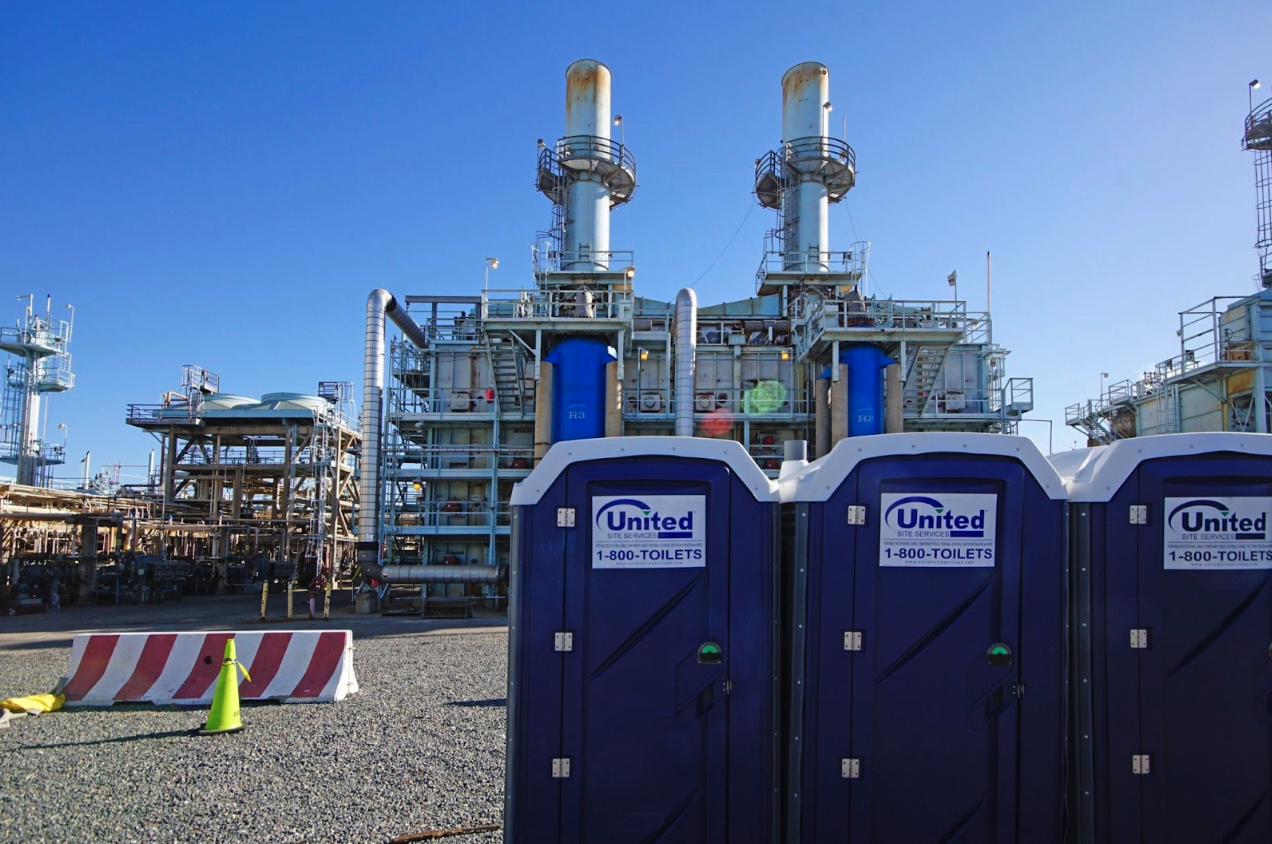 | | | United Site Services (USS) is one of the largest providers of temporary site services in the United States, supplying portable restrooms, sanitation stations and related on-site infrastructure to construction projects, large-scale events, emergency response efforts and government operations. Over more than two decades, the company built a reputation around reliability, safety and nationwide scale. On the surface, USS appeared well positioned in an essential services niche. Beneath that surface, however, operational strain and an overleveraged balance sheet gradually exposed deeper structural weaknesses that now threaten the company’s durability.
Operational stress has been building since Platinum Equity acquired USS in 2017. Employee reviews on sites like Glassdoor have criticized USS for “unrealistic expectations,” “poor management” and “constant billing errors,” problems that show up directly in frontline customer interactions. These unresolved problems have pushed frontline teams into extended overtime, forcing them to juggle customer complaints while still being tasked with driving new sales. As management focus remained anchored to targets rather than root causes, morale declined, turnover increased and service quality deteriorated. In a labor-intensive, route-based business, erosion at the frontline quickly translates into operational underperformance.
Those operational shortcomings have increasingly collided with financial stress. In recent months, USS entered into a forbearance agreement with its lenders after experiencing acute liquidity pressure. The company reportedly missed multiple coupon payments on its debt, prompting negotiations to temporarily suspend enforcement actions. Despite having taken on additional borrowing in prior years, USS has struggled to generate sufficient free cash flow to meet its debt obligations. Debt service has absorbed operating cash, leaving limited flexibility to reinvest in the business or stabilize execution.
At the core of the problem is an unsustainable capital structure. USS is estimated to be operating with leverage approaching 18x on a last-twelve-month basis. That level of leverage leaves virtually no margin for execution risk, labor disruption or demand volatility. In a business that depends on consistent utilization and disciplined operations, high leverage amplifies every misstep and compresses the runway for corrective action.
These challenges were not resolved when USS transitioned into a continuation vehicle in 2021. Platinum Equity moved the company from an older fund into a new vehicle, allowing legacy investors to achieve liquidity without an outright sale. While continuation vehicles have become more common in private equity, their success depends on the underlying health of the asset. In USS’s case, the transaction shifted ownership without addressing operational weaknesses or balance-sheet risk. New investors inherited a business already under strain, while reported losses tied to the investment have exceeded $1.4 billion. The decision now facing stakeholders is not one of growth, but of control and recovery.
The broader lesson from United Site Services extends beyond temporary site services. Post-COVID demand should have provided a tailwind for a business tied to construction, infrastructure and emergency response. Instead, weak management systems, declining employee engagement and inconsistent service execution eroded what should have been a defensible market position. Rather than prioritizing operational reinforcement, the company relied heavily on financial solutions to bridge performance gaps.
USS’s liquidity crisis underscores the risks of overleveraging and relying on short-term capital fixes in place of structural improvement. Debt can magnify returns when operations are strong, but it accelerates deterioration when execution falters. The use of a continuation vehicle without a parallel operational reset illustrates how financial engineering can delay outcomes without changing them.
United Site Services ultimately serves as a cautionary case study. Sustainable value creation requires more than scale and capital access. It depends on strong governance, realistic management expectations, disciplined leverage and an operating foundation that supports frontline execution. When financing is used simply to keep a struggling business afloat, without reinvesting in people and processes, it does not preserve value. It postpones the reckoning. |
|
|
|
|---|
|
| |  | Photo by K&C Cooling & Heating |
| For years, growth in the HVAC industry followed a straightforward playbook. When demand increased, owners added technicians, bought more trucks and expanded service territories. Control remained centralized with the founder and success was measured by how full the schedule stayed during peak seasons. In a stable labor market with predictable demand, that approach worked. As labor tightened and volatility increased, however, the model left many businesses stretched thin and increasingly inefficient.
That dynamic is now changing. As HVAC platforms have scaled and private capital has moved deeper into the sector, operators are being asked to grow differently. The emphasis has shifted away from simply adding capacity toward improving how existing capacity is deployed. Earn-outs have emerged as one of the primary tools enabling that transition, not as a financial engineering tactic, but as an operating mechanism.
Consider Coolray, a large Southeast residential services company with more than 500 employees and estimated annual revenue between $50 million and $100 million. Prior to adopting more structured, performance-linked incentives, growth was driven largely by handling more calls, widening coverage areas and leaning heavily on overtime during peak periods. Technicians spent meaningful portions of the workday driving between jobs, while maintenance agreements remained underpenetrated relative to the size of the installed customer base.
That dynamic is now changing. As HVAC platforms have scaled and private capital has moved deeper into the sector, operators are being asked to grow differently. The emphasis has shifted away from simply adding capacity toward improving how existing capacity is deployed. Earn-outs have emerged as one of the primary tools enabling that transition, not as a financial engineering tactic, but as an operating mechanism. In 2024, earn-out structures represented ~31% of total deal consideration, with 86% of transactions using performance periods between one and three years timeframes designed to reward incremental operational gains rather than aggressive expansion.
As Coolray evolved within a broader platform environment, so did its incentive structure. Earn-outs tied a portion of post-transaction upside to outcomes local leadership could directly influence: branch-level revenue growth, customer retention, technician utilization and the expansion of recurring service programs. The logic was straightforward: improving technician utilization by even a few percentage points created incremental capacity equivalent to multiple new hires without adding trucks or payroll. For Coolray's branch managers, this meant earn-out payments rewarded disciplined execution over raw volume, aligning their interests with sustainable operational improvements rather than short-term growth at any cost. A recent Harvard Law study shows that well-structured earn-outs "align the interests and expectations of sellers and buyers and incentivize sellers to remain involved and committed to the target's post-closing operations" a principle that translated directly into how Coolray's local teams approached service delivery, staffing decisions, and customer relationships post-acquisition.
Earn-outs have gained traction because they reinforce that reality. They keep operators engaged after a transaction closes and align incentives around how value is actually created at the branch and technician level. Rather than rewarding expansion alone, they reward better routing, higher utilization, stronger customer retention, and deeper penetration of recurring revenue programs.
Growth in HVAC is still available, but it is no longer unlocked by expansion alone. Increasingly, it is earned by platforms that align incentives with execution and reward operators for building disciplined, repeatable operating systems rather than simply pushing more volume through a stretched organization. |
|
|
|
|---|
|
| | This Week’s M&A Highlights |  |
|
|
|---|
|
● BHMS Investments-backed Exscape Group acquired Columbus, OH-based landscaping and snow management companies WinnScapes, Pony Lawncare and Landscaping and Shearer Patio & Landscape Services / Polaris Pools
● O2 Investment Partners-backed Azureon acquired Precision Pool & Spa, a Fairport, NY-based provider of residential pool construction, renovation and maintenance services
● Searchlight-backed Integrated Power Services acquired TechPro Power Group, a Crofton, MD-based provider of power management, for $350M
● Mariani Premier Group acquired Roots Landscape, a Wayne, Pennsylvania-based landscape firm
● New State Capital Partners acquired Harrell-Fish, a Bloomington, IN-based provider of mechanical installation and maintenance services |
|
|
|---|
|
ABOUT US WestGate Partners | | | WestGate Partners (WGP) is an independent sponsor focused on acquiring and growing lower middle market businesses in essential residential and commercial services. We bring institutional experience, tailored capital with hands-on partnership to help owners transition, grow and preserve their legacy. By partnering with strong operators, we build enduring businesses in economically-insulated industries. |
|
|
|
|---|
|
For more information, please visit: |
|
|
| | |
|---|
|
|
|