| | THIS WEEK'S KEYS:Pulse: SBA Loans: A Double-Edged Sword Playbook: The Rise of Zombie Funds Spotlight: Jack of All Trades, Master of All Roundup: This Week’s M&A Highlights
Have a great weekend! | | |
| | | PULSE SBA Loans: A Double-Edged Sword |  | Photo by Pedretti's Bakery |
| Small businesses are the backbone of the U.S. economy, but the operating environment has become materially less forgiving. But behind the optimism of entrepreneurship, a growing number of firms are facing financial strain that forces difficult decisions about survival. Rising interest rates, uneven consumer demand and persistent cost pressures are pushing more operators toward a crossroads: pursue court-supervised restructuring through bankruptcy, or rely on Small Business Administration (SBA) financing as a last line of defense to stabilize liquidity and buy time.
Bankruptcy filings are climbing again. According to the Administrative Office of the U.S. Courts, total bankruptcy filings rose 10.6% over the most recent 12-month reporting period. Small businesses have been particularly exposed to this shift. Higher borrowing costs have tightened refinancing options, while labor, rent, insurance and inventory expenses remain elevated relative to pre-pandemic levels. For many owners, margins that once absorbed volatility no longer exist. The margin for error in the lower middle market is thin. Unlike large corporations, most small businesses operate with limited cash buffers and minimal access to capital markets. They lack pricing power, depend heavily on local demand and often rely on a single lender relationship. A few weak months, a seasonal downturn or a delayed refinancing can quickly transform a manageable squeeze into a liquidity crisis. In this environment, access to capital becomes less about growth and more about survival.
SBA-backed lending has stepped into that gap. Loan volume through the SBA’s 7(a) and 504 programs has remained elevated as borrowers seek longer maturities and lower effective borrowing costs, enabled by federal guarantees that reduce lender risk. SBA data shows a growing share of approvals tied not to expansion, but to working capital support, debt refinancing and balance-sheet repair. For stressed operators, SBA financing often represents the most accessible form of non-dilutive capital available.
But increased reliance on SBA lending is also creating strain within the system. In early 2025, Barrons reported a sharp rise in delinquencies and defaults within the SBA’s 7(a) portfolio, including higher early-stage defaults and the program’s first period of negative cash flow in more than a decade. The SBA later confirmed that the 7(a) program saw ~$397 million in negative cash flow during fiscal year 2024. These developments have intensified scrutiny around underwriting discipline, lender oversight and the long-term sustainability of using federally guaranteed loans as a widespread stabilization tool.
For business owners, the decision between SBA financing and bankruptcy is rarely straightforward. SBA loans often require personal guarantees and, in some cases, collateral tied to personal assets. If a turnaround fails, owners may remain personally liable even after the business ceases operations. Bankruptcy, while disruptive and often stigmatized, can offer legal protections, structured renegotiation with creditors and a defined path to reorganization or orderly wind-down. Many advisors emphasize that SBA loans are most effective as a preventative measure, not as a last-minute bridge when the underlying business model is already impaired.
Policymakers and regulators are navigating a delicate balance. Expanding access to affordable capital can preserve jobs, sustain local economies and prevent unnecessary liquidations. At the same time, looser credit standards increase the risk that guarantee programs evolve into open-ended backstops, transferring losses to taxpayers and distorting lending behavior. The challenge is designing a system that supports viable businesses through temporary stress without subsidizing structurally uncompetitive ones.
Access to capital has become a decisive variable in small business survival. The simultaneous rise in bankruptcies and SBA lending reflects a central reality of today’s operating environment: financing decisions often determine whether financial stress remains a temporary setback or becomes a terminal event. SBA loans are not a universal solution, and they carry real risks for owners. But when deployed early, underwritten responsibly, and paired with operational discipline, they remain one of the most powerful tools available to help small businesses endure periods of economic uncertainty. |
|
|
|
|---|
| |  | | | In today’s private equity market, characterized by slower distributions, muted exit activity and extended holding periods, the phenomenon of “zombie companies” has become increasingly common. These businesses are not failing outright, but they are no longer healthy. They struggle to generate meaningful growth, produce limited free cash flow and face increasing difficulty servicing the debt used to acquire them. As a result, they are unattractive to new investors and often impossible to refinance on acceptable terms. Rather than exiting, they remain effectively trapped on sponsors’ balance sheets well beyond their originally underwritten holding periods. According to Reuters, private equity now has ~$3 trillion of unsold assets tied up because exits have slowed and 2024 sales trail the five-year average, creating conditions that allow marginal companies to persist far longer than intended.
The rise of zombie companies is closely tied to the rapid shift in interest rates beginning in 2022. During the low-rate era, private equity firms leaned heavily into leverage to amplify returns. When borrowing costs rose sharply, debt service burdens increased just as growth slowed across many sectors. For a subset of portfolio companies, this combination proved toxic. Access to incremental capital tightened, refinancing windows narrowed and operational underperformance became harder to mask. Sponsors were left with limited options: extend fund lives, renegotiate with lenders, inject rescue capital or simply wait for a more favorable exit environment. The result has been a growing population of assets that are neither growing nor collapsing, but still require time, attention and capital with limited upside.
This dynamic has spilled over from companies to funds themselves, giving rise to “zombie funds.” These legacy vehicles persist long after their expected lifecycles despite low probability of delivering meaningful distributions. Often, they hold a small number of aging assets that have already undergone multiple business plans, management changes or restructurings without achieving exit velocity. While general partners rarely intend to create zombie funds, incentive misalignment can slow resolution. Management fees frequently continue during extension periods, reducing urgency to liquidate, while limited partners see capital effectively frozen with declining return potential. MSCI research on aging private equity vehicles shows that more than half of buyout and venture funds operating beyond their typical life still carry NAV exceeding 20% of committed capital, and that the average buyout fund does not fully liquidate until roughly year 12, underscoring how long these vehicles now persist. Broader market conditions help explain why zombie funds have become more prevalent. Sponsor-to-sponsor exit activity has slowed, IPO markets remain largely closed for all but the highest-quality assets and acquisition financing is materially more expensive than in the prior cycle. The traditional three-to-five-year liquidity rhythm has broken. PitchBook estimates that ~40% percent of global buyout fund NAV, or ~$826 billion, is tied up in companies held seven years or longer, a bucket heavily skewed toward pre-2017 deals and the 2012–2016 vintage years. Funds raised between 2012 and 2016 increasingly contain companies that have survived through multiple market regimes but never reached a clean exit. Secondary markets, once the relief valve for stale assets, are also evolving. Buyers are more selective, favoring high-quality continuation vehicles over portfolios dominated by structurally challenged companies.
For limited partners, zombie funds introduce real portfolio friction. Capital tied up in older vintages depresses portfolio IRRs, reduces liquidity and limits the ability to reallocate toward newer strategies or managers better positioned for the current environment. For general partners, the incentives are more complex. While prolonged fund lives carry reputational risk, extensions can preserve fee streams and buy time for valuation recovery. This tension has accelerated the adoption of alternative liquidity tools, including NAV-based lending, continuation funds and structured secondary solutions. These mechanisms aim to address duration risk without forcing immediate realization at unfavorable prices.
The rise of zombie funds signals a broader shift in the private equity playbook. Duration risk has become one of the industry’s most critical performance variables. Investors are increasingly rewarding managers who underwrite longer holding periods realistically, plan for multiple exit pathways and engage actively in post-acquisition value creation. Proactive liquidity management is no longer optional; it is a core competency. According to the Financial Times, a senior industry executive has warned that up to 80% of private capital firms could become “zombie firms” within a decade if they cannot raise fresh capital and remain reliant on stretching existing holdings, a stark reminder that managers who confront duration risk early and transparently will be best positioned to return capital predictably and continue raising funds. |
|
|
|
|---|
|
| | 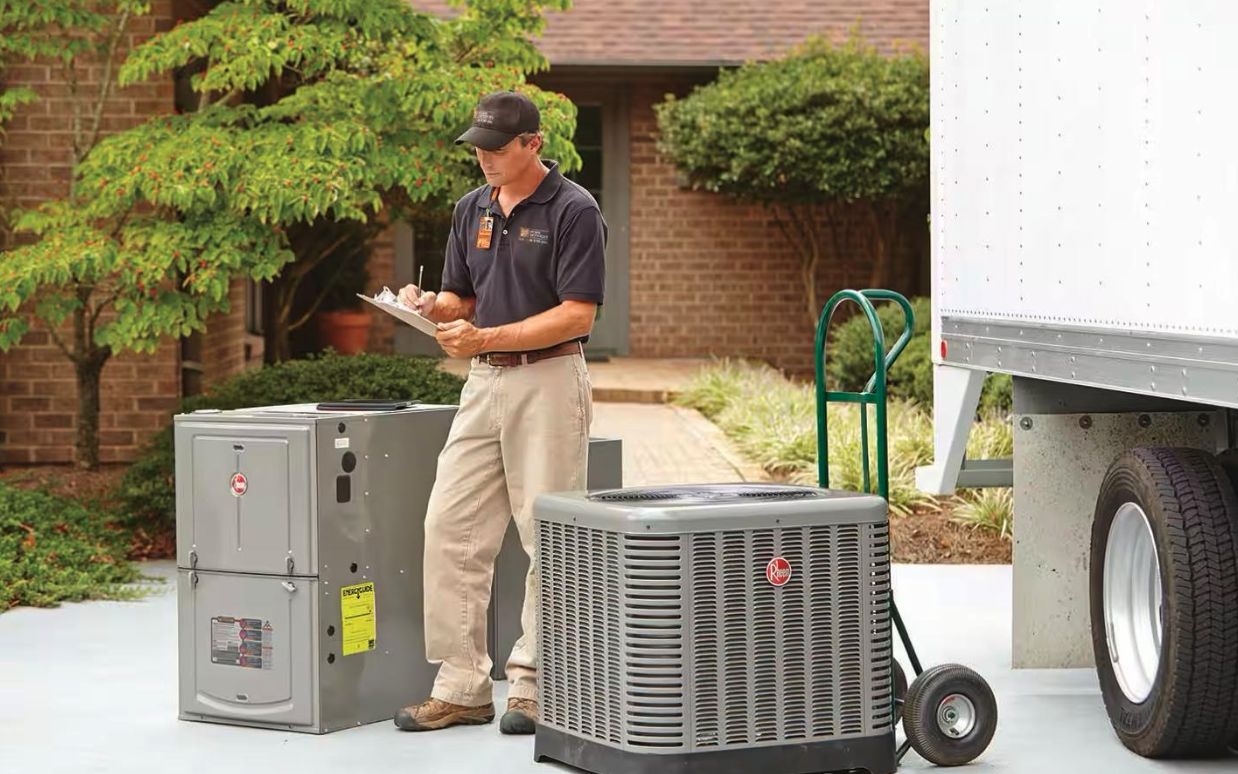 | | | Over the past several months, TruTemp has emerged as a clear case study in how private equity sponsors are manufacturing scale in residential and commercial field services. Backed by Centre Partners and Baldwin Creek, TruTemp was formed through the acquisition of Raleigh-based Maynor Service Company, with an explicit strategy to build a multi-trade HVAC, plumbing and electrical platform across the Southeast. From the outset, the sponsors positioned TruTemp not as a loose roll-up, but as a platform designed to compound through both organic initiatives and targeted acquisitions.
The strategy is supported by demand fundamentals that have proven resilient even as housing activity moderates. According to Harvard’s Joint Center for Housing Studies, homeowner remodeling spending is expected to reach $524 billion in early 2026, a new record high. Importantly, this spend is increasingly less discretionary than in prior cycles. On the consumer side, Lazard’s survey of 1,200 U.S. households found that 77% of respondents identify as “do it for me” when it comes to home maintenance and repair. Between 70% and 80% of consumers across categories such as home repair, structural work, appliance repair and major home projects now seek outside providers, and around 20% have shifted from DIY to professional services over the past three years. This shift reframes home services not as optional upgrades, but as unavoidable, repeatable needs driven by aging housing stock, time constraints and rising technical complexity.
The second tailwind is operational, and it is where integrated platforms like TruTemp can meaningfully differentiate. Residential and light commercial services are fundamentally labor-intensive, route-based businesses. The binding constraint is not leads, but technicians, dispatch capacity and utilization. Bureau of Labor Statistics data for NAICS 238220 shows more than 1.2 million workers employed across HVAC and plumbing-related occupations, highlighting both the scale of the labor pool and the intensity of competition for skilled technicians. At the same time, customer behavior is evolving in a way that favors multi-trade operators. Research cited by L.E.K., drawing on HIRI data, shows that 33% of millennial homeowners hire providers for six or more service categories, compared to just 18% for Generation X. As households increasingly bundle services, platforms that can reliably deliver across multiple trades gain structural advantages in retention, share of wallet and truck productivity.
Crucially, TruTemp’s foundation rests on an operator nucleus rather than financial engineering alone. Centre Partners has emphasized Maynor’s long operating history, its reputation for service quality and culture and the continuity of leadership as core elements of the platform thesis. Maynor President Brett Chappell, who brings more than four decades of industry experience, invested alongside the sponsors and will lead TruTemp’s growth. Loyal customers, deep vendor relationships and a strong local brand provide the raw material upon which a scalable platform can be built. In services, the value of a roll-up is rarely created by the first acquisition. It is created by the repeatable system that follows: standardized call handling, disciplined dispatch, consistent training, cross-trade selling and a centralized back office that converts each service interaction into margin and future demand.
Viewed in context, TruTemp illustrates a broader truth about consolidation in home services. Acquisitions may create headlines, but execution creates value. The real challenge is building an operating machine that can recruit and retain technicians faster than the market, keep utilization high across seasons and transform a single emergency call into a long-term customer relationship spanning HVAC, plumbing and electrical. TruTemp’s Southeast focus, multi-trade scope and sponsor-led buy-and-build strategy all point in the same direction. The next generation of scaled home services winners will not simply be great contractors at larger scale. They will be disciplined operating systems that systematically acquire great contractors and make them better. |
|
|
|
|---|
|
| | This Week’s M&A Highlights |  |
|
|
|---|
|
● Mubadala Investment Company and Bain Capital acquired Service Logic, a commercial HVAC and building automation services company
● Riverview Landscapes acquired the landscaping and snow management business of Irrigation and Landscape Management, a Parsippany, New Jersey–based landscaping services company
● Modigent acquired Southland Mechanical, a Houston, Texas-based industrial HVAC company
● Mariani Premier Group acquired Roots Landscape, a Wayne, Pennsylvania-based landscape firm
● Strata Landscape Services acquired Watersedge Landscape, a San Diego-based commercial landscape maintenance company |
|
|
|---|
|
ABOUT US WestGate Partners | | | WestGate Partners (WGP) is an independent sponsor focused on acquiring and growing lower middle market businesses in essential residential and commercial services. We bring institutional experience, tailored capital with hands-on partnership to help owners transition, grow and preserve their legacy. By partnering with strong operators, we build enduring businesses in economically-insulated industries. |
|
|
|
|---|
|
For more information, please visit: |
|
|
| | |
|---|
|
|
|