­


THIS WEEK'S KEYS:

Pulse: What Mortgage Rates are Doing to Home Services Demand

Playbook: 5 Capital Raise Fundamentals for Independent Sponsors

Spotlight: Interview with Niklas James

Roundup: This Week’s M&A Highlights


Have a great weekend!

­
­

PULSE

What Mortgage Rates are Doing to Home Services Demand 

Photo by Adobe Stock Photos

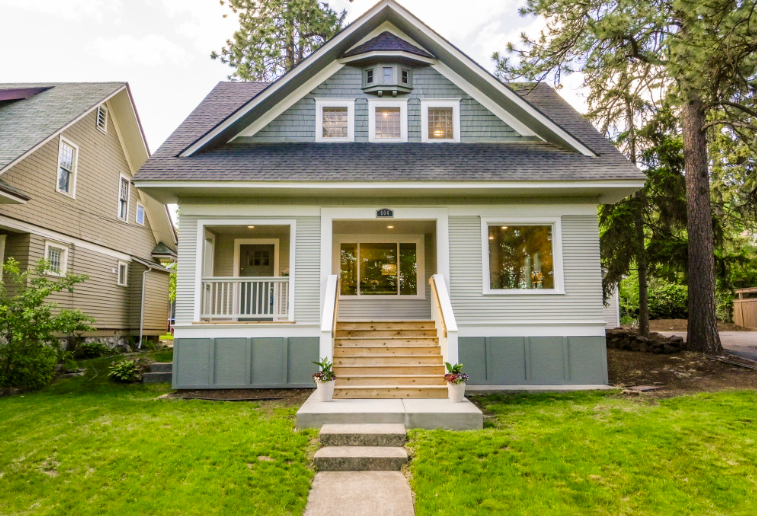
Mortgage rates may not be a line item on a home services P&L, but the 30-year fixed rate shapes homeowner behavior across nearly every major service category. It drives decisions to buy, sell, upgrade, finance or stay put, and each of those decisions changes who is calling a contractor and why.


For the week ending July 23, 2026, the average 30-year fixed mortgage rate was 6.58%, according to the Federal Reserve Bank of St. Louis. That is more than twice the sub-3% rates many homeowners locked in earlier in the decade. The gap creates a powerful lock-in effect: moving means swapping a cheap mortgage for an expensive one, so homeowners stay put even when the property no longer fits.


That creates both headwinds and tailwinds. Lower transaction volume reduces move-related spending, including inspection repairs, pre-sale upgrades, and the heavy renovation activity that typically follows a home purchase. Harvard's Joint Center for Housing Studies has noted that home sales are a major contributor to remodeling spending and projects a slower rise in improvement and repair spending through mid-2027.


The offset is maintenance and upgrade spending from owners who are not going anywhere. Instead of bearing the cost of moving, homeowners are remodeling kitchens, replacing HVAC systems, upgrading electrical panels and adapting homes to age in place. NAHB forecasts real remodeling growth of 3% in 2026 and 2% in 2027, driven largely by owners investing in properties they cannot afford to leave.


Financing conditions also shape project size. Federal Reserve research finds that a meaningful share of home equity borrowing goes toward home improvements, and higher rates are making customers more likely to postpone discretionary projects, reduce scope or seek contractor financing. Operators who offer financing options are structurally better positioned in a high-rate environment than those who do not.


Mortgage rates are a demand signal worth tracking. High rates compress turnover-driven work but support repair, replacement and aging-in-place projects while shifting demand toward financing-sensitive customers. The operators who adjust their service mix and marketing to fit the rate environment will outperform those waiting for conditions to normalize.

­

PLAYBOOK

5 Capital Raise Fundamentals for Independent Sponsors

Photo by Adobe Stock Photos


Independent sponsors win deals on relationships and lose them on financing. The business development side of the model gets most of the attention, but the gap between an LOI and a wire is where most first-time sponsors fail. Capital raising is not a step that begins after you find a deal. It is infrastructure that has to be built before one shows up. The five disciplines below separate sponsors who close from those who lose deals they should have won.


  1. Build the syndicate before you have a deal. Capital partners back people they already know. According to Capital Pad, the working rule is three relationships minimum, five is comfortable and ten is unnecessary. Deal lawyers stress the same point: engage partners before you have a live deal and keep them current on your pipeline. Dry powder is plentiful. Attention is the scarce resource.

  2. Lead with a thesis not a target. A market map, operator conversations and a specific value creation plan convert faster than an opportunistic one-off pitch. Naming the deal's risks yourself with mitigations attached builds more trust than a clean-looking model that ignores them.

  3. Solve structure before the LOI. Rollover, earnouts, holdbacks and the debt package should be sketched with a capital partner before you sign. The classic killer is the you-go-first standoff: lenders want committed equity and equity wants committed debt. A pre-LOI debt term sheet breaks the tie.

  4. Know your economics cold. Per the McGuireWoods Independent Sponsor Deal Survey, ~80% of closing fees land between 1% and 2.49% of enterprise value and 60% of deals use a 5% of TTM EBITDA management fee floored near $250,000 and capped under $1 million. Promote is typically tiered at 20% carry to a 2.0x multiple and 25% above it over an 8-10% preferred return, with a full catch-up in ~75% of deals. Expect to reinvest most of your closing fee.

  5. Run the raise on a clock. Exclusivity typically runs 60-120 days. Equity diligence runs three to four weeks per investor, debt five to seven and quality of earnings three to five. Anchor a lead investor first. The syndicate follows credibility. Document broken deal costs upfront: 32% of sponsors absorb them alone and a late break runs $300,000 to $700,000.


The sponsors who close consistently are not the ones with the best deal flow. They are the ones who treat capital raising as an ongoing discipline rather than a reactive sprint. Build the relationships early, know your structure before the LOI and run the process on a clock. The deal is the easy part. The financing is where preparation shows.

­

SPOTLIGHT

Interview with Niklas James

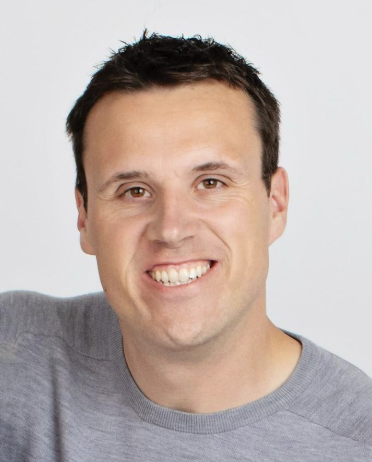
Photo by Niklas James

Niklas James is a founding partner of Minds Capital, an equity fund focused on independent sponsor-led acquisitions in the lower middle market. He is also a serial independent sponsor with multiple platforms and former Executive Chairman at Service Star Brands, a home services roll-up. Before becoming an independent sponsor, Niklas began as a self-funded searcher, giving him firsthand experience across both acquisition models. We sat down with Niklas to talk about what it takes to build proprietary deal flow, where independent sponsors can gain an edge in the lower middle market and what separates a good opportunity from a deal that actually gets done.


Westgate Partners: You've said that deal flow is the most important thing for a dealmaker. What separates sponsors who consistently generate quality proprietary opportunities from those who just see a lot of deals?

Niklas James: A high volume of deal flow drives learning, access to quality and selectiveness, but volume within a particular vertical or geography is even more powerful. Pick a lane, whether an industry, geography, seller profile or situation, and show up in it repeatedly until intermediaries think of you first when that deal walks in. Getting inbounds is the holy grail, and the sponsors who win make themselves the obvious call for a specific type of seller.


WGP: You've talked about the idea that "everyone wants a proprietary deal until they get one." What makes a truly proprietary deal harder to execute than a brokered deal?

NJ: A seller who has retained a banker is signaling they're motivated and ready, while a proprietary seller hasn't made that decision yet and you're the one who must walk them into it, alone, without a banker running stage-gates or absorbing the bad-cop role. You're the underwriter and the therapist. Sponsors who only value the price tag get blindsided by how much hand-holding the process takes.


WGP: When a strategic buyer shows up late with a higher bid, what can an independent sponsor realistically do to compete besides simply increasing the price?

NJ: Time kills all deals, exhibit H. You can't out-bid a strategic with synergy math, so you need to get to the closing table before they show up, with mad urgency from LOI onward. Beyond speed, be the buyer the seller wants to work with: clear on what happens to their team, straightforward about post-close and someone they can picture handing the business to.


WGP: You've discussed the importance of certainty to close. What creates credibility with a seller when an independent sponsor doesn't have a committed fund behind them?

NJ: If a first timer is in a brokered deal with multiple bidders and the seller starts asking about "certainty to close," they've already lost, because the banker's fastest, safest route to their commission will never be them. A track record of completed deals dramatically reduces this uncertainty. Showcasing relationships with capital providers, industry authority and process professionalism are other ways to build trust with the seller or the intermediary who will vouch for you.


WGP: What is one mistake you see first-time sponsors make when they transition from finding a deal to operating the business after closing?

NJ: The biggest misunderstanding is that they think they will reach homeostasis if they just solve the next operational headache. Dealmaking has a defined beginning and end, but that's M&A, not operations. The skillset you've honed as a searcher, whether sourcing, negotiating or underwriting, is almost entirely separate from the skills you need as an operator, whether management, back-office administration or sales and marketing.


WGP: You've talked about "zone-skipping" EBITDA. How should a sponsor think about creating enough EBITDA growth to move a company into a more attractive valuation range?

NJ: In the lower middle market, we distinguish between EBITDA zones like sub-$2M, $2-5M, $5-10M and above $10M, and each zone attracts a different cohort of buyers with different skills and risk tolerance. Since smaller companies are riskier, they command lower multiples, so moving a company across a zone boundary via organic growth or M&A creates real multiple arbitrages. That is the magic behind zone-skipping, and most independent sponsors have a keen eye for both value levers.


WGP: You've written that there are businesses you would like to own but wouldn't necessarily want to buy. What's the distinction, and how has that affected the way you underwrite acquisitions?

NJ: One of my portfolio companies is an HVAC installer for homebuilders, a business that wholly depends on macro trends in the local new construction market. Today we own it with a proven management team, no debt and dividends in strong years, so it's great to own. But it is highly cyclical with low volatile margins, valuation multiples of only 3-5x, and once you layer on transition risk plus debt, it isn't particularly compelling from an investment perspective.


WGP: You've interviewed dozens of independent sponsors on the Minds Capital Podcast, from long-term holders to serial platform builders. What is the one pattern you see in the top-decile IS that most people trying to break into space don't understand?

NJ: The best independent sponsors have a clearly identified identity, whether a niche, industry, geography or size, and can precisely describe what a perfect target company looks like for them. They also have repeatable strategies for creating value, whether being very good at hiring strong executives, having muscle for add-on M&A or building in-house EOS implementation.


WGP: After doing this for several years, what's one belief you had about buying lower middle market businesses that you've completely changed your mind about?

NJ: Price increases are almost always available and should be strongly considered. Most small business owners respect their customers so much they hesitate to risk the relationship over a small price increase, and it's unpopular with staff because their job gets harder with lower closing rates and more complaints. But small business owners underestimate their own value, and a few percentage points every year compound; these businesses deliver incredible value to customers but lack sophisticated pricing knowledge and systems.


WGP: If you had to start over today with no track record, no investor network and no proprietary deal flow, what would you do during your first 12 months to build an independent sponsor business?

NJ: Pick one narrow vertical and become the person who knows it better than anyone else trying to buy it. Spend the first few months almost entirely on relationships, whether trade shows, cold calls, coffee meetings with intermediaries and advisors or talking to as many specialized bankers as possible. Start writing and putting your thinking in public immediately, because the learning compounds faster than any other credibility-building move available to someone with nothing else to show. Then when a deal shows you talk the language, know the people and understand the value drivers, which lets you add real value to every stakeholder including the seller.


Niklas can be reached at Minds Capital, LinkedIn or NiklasJames.com.

­

ROUNDUP

This Week’s M&A Highlights

●Mosaic Capital acquired Southern Shade Tree, a Fort Mill, SC-based landscaping services company, and Atlantic Coast Landscaping Service, a New Bern, NC-based landscaping services company 


●Storr Group-backed SAS Service Partners acquired ProCure Heating & Air, a Buda, TX-based heating and HVAC services company


●Redwood Services-backed Hope Plumbing acquired Action Air, a Fishers, IN-based heating, air conditioning and plumbing services company


●Poolify acquired Redhawk Pools, a Yucaipa, CA-based pool services company


●Agellus-backed Bluejack Fire Life & Safety acquired Phillips Fire & Safety, a Houston, TX-based fire and life safety services company 


●Blackford Capital acquired Industrial Electronic Systems, a Rancho Cordova, CA-based fire alarm, security and life safety services company


●Gauge Capital-backed APHIX acquired Triangle Landscape Group, a Raleigh, NC-based landscaping services company


●Vesterra Capital Partners-backed Bland Landscaping acquired Charleston Grounds Management, a Charleston, SC-based landscaping services company, and Clear Lakes and Wetland Services, a Myrtle Beach, SC-based lake and pond management services company


●Massey Services acquired Bohannon Services, a Florence, AL-based pest control services company


●Caravel Capital-backed Arbor Alliance acquired Druid Tree Service, a Nashville, TN-based tree care services company


●AXN Growth Partners acquired Nature Guard Pest and Lawn, a Tulsa, OK-based pest control and lawn care services company


●United MEP Partners acquired Alamo Welding & Boiler Works, a San Antonio, TX-based mechanical contractor services company


●Carlyle Group-backed Sciens Building Solutions acquired Fire Safe Protection Services, a Houston, TX-based integrated fire and security services company and Priority Systems, a Metairie, LA-based integrated fire alarm and security services company


●Carroll Capital-backed Elevator Service acquired East Elevator, a Chicago, IL-based elevator services company

­

ABOUT US

WestGate Partners

WestGate Partners (WGP) is an independent sponsor focused on acquiring and growing lower middle market businesses in residential and commercial services. We bring institutional experience, tailored capital with hands-on partnership to help owners transition, grow and preserve their legacy. By partnering with strong operators, we build enduring businesses in economically-insulated industries.

For more information,

please visit:

website linkedin calendly email
wgplp.com
CLICK HERE TO SUBSCRIBE