| | THIS WEEK'S KEYS:Pulse: The New Power Bill Playbook: When Scale Outruns Integration: The Renovo Collapse Spotlight: How Landscaping Became a No-Off-Season Business Roundup: This Week’s M&A Highlights
Have a great week! | | |
| | | | |  | Photo by ECMWF Data Center |
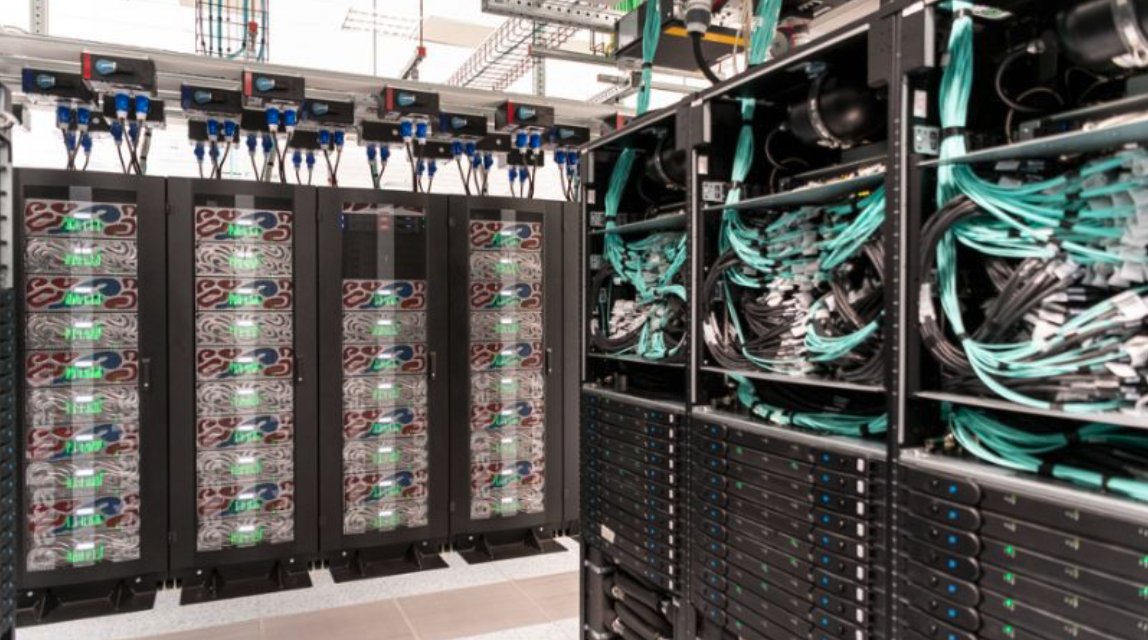
| As the AI boom surges, its footprint shows up in one major area: the monthly power bill. The cloud infrastructure that supports large language models, machine learning and generative software demands extraordinary amounts of electricity. As data-center load becomes a material driver of electricity demand, many markets are seeing rising power costs. For utilities, regulators and investors, the question has shifted from whether data centers will strain power infrastructure to how fast their power demand will grow, how supply will move to meet this demand and who ultimately pays the greater price.
The growth curve for data-center power demand is steep. According to the International Energy Agency (IEA), data centers are responsible for ~1.5% of global electricity consumption today, or ~415 terawatt-hours (TWh) in 2024 and are on course to more than double that draw to 945 TWh by 2030 as AI workloads scale. The Pew Research Center estimates that in the United States alone, data centers used about 183 TWh of electricity in 2024, just over 4% of national consumption and that figure is projected to grow by roughly 130% to 426 TWh by 2030. Multiple forecasters now estimate that by the end of the decade, U.S. data centers could account for 8–11% of total power demand, effectively turning them into one of the largest single load categories on the grid.
Rising demand is hitting an already overloaded grid. Recent data from the U.S. Energy Information Administration shows that residential electricity prices rose ~5–7% year over year through late 2025, reaching an average of 18.07 cents per kWh, up from ~16 cents in 2023 and 13.66 cents in 2021 as higher fuel costs and infrastructure investment flowed through to customers' bills. In markets like the Mid-Atlantic, hyperscale campuses are forcing utilities to accelerate power-generation and transmission build-outs years ahead of schedule. Households are increasingly paying for the digital economy, with wholesale electricity costs rising sharply in major data-center hubs.
Investors and operators must view this landscape from multiple perspectives. On one hand, data centers create attractive investment opportunities and revenue growth for utilities as well as grid-adjacent assets such as battery storage, flexible generation and demand-response technologies. On the other hand, local grids can be strained, triggering sensitive rate cases, interconnection delays and community pushback. According to the Environmental and Energy Study Institute, ~56% of the electricity used to power U.S. data centers still comes from fossil fuels, primarily natural gas, underscoring the climate and policy risk embedded in the current build-out.
The strategic takeaway is that the rising cost of electricity is no longer just a yes-or-no question; it is a function of how the digital economy grows. Data centers have become a structural driver of demand growth and grid investment. For capital holders, that creates opportunity across utilities, infrastructure and power-adjacent assets. For electricity users, it becomes a matter of price and reliability, where constrained supply shapes long-term power bills. The next phase of the AI race will be won not just in model quality but in who can secure reliable, cost-effective and increasingly low-carbon power sources at scale. |
|
|
|
|---|
PLAYBOOK When Scale Outruns Integration: The Renovo Collapse |  | Photo by Maskot/Getty Images |
| Renovo Home Partners was built on a simple thesis: a fragmented home remodeling market could be unified into a national platform by consolidating strong regional operators and aligning them under one system. Backed by private equity firm Audax Group, Renovo rapidly acquired remodelers across the country, centralized parts of the business and positioned itself as a coast-to-coast leader in kitchens, bathrooms, windows and roofing. Shared marketing, purchasing power and unified systems were supposed to drive margin expansion and consistent execution. But the company’s Chapter 7 bankruptcy filing shows how quickly that logic can unravel when growth outruns integration.
The macro backdrop shifted at the wrong moment. Higher interest rates slowed home sales which reduced the natural turnover that drives renovation demand. Inflation pushed labor and material costs higher which tightened margins as consumers became more cautious about large financed projects. Demand did not collapse but it became more expensive to secure. Renovo’s volume dependent model compressed faster than expected.
Integration became the core operational failure. Each acquired remodeler had its own systems, installer networks and sales culture. Attempts at centralization often slowed teams instead of aligning them. Public statements from former employees and partners described the company operating less like a coordinated national platform and more like a patchwork of loosely connected businesses. Scale added complexity without producing efficiency.
A heavy debt load amplified these issues. Industry reports noted that Renovo’s expansion strategy relied on debt and that the capital structure assumed rapid synergies such as procurement savings, marketing leverage and operational streamlining. When these synergies lagged, rising interest costs drained liquidity and left little capacity to fix structural gaps or absorb shifts in demand.
Cultural strain deepened the instability. Many of the acquired businesses were founder-led, built on craftsmanship, trust and local relationships. Central oversight and standardized KPIs clashed with established operating styles. What appeared unified on paper was in practice a set of cultures moving at different speeds.
When these pressures converged Renovo had no room to recover. Margin compression uneven operations, rising debt and an overextended integration plan proved unsustainable leaving liquidation as the final outcome. The collapse is not only a failed roll-up. It is a reminder that scale creates value only when integration keeps pace. In remodeling national reach has little meaning without operational alignment and financial flexibility. |
|
|
|
|---|
|
SPOTLIGHT How Landscaping Became a No-Off-Season Business |  | Photo by E.A. Quinn Landscape Contracting, Inc |
| As consumer demand for reliable property services continues to grow, a rising number of landscaping companies are moving away from a strictly seasonal model and embracing a year-round approach. By pairing traditional warm-weather services with snow and ice management in the winter, these firms convert what was once downtime into a stable, diversified revenue engine. The dual-season model not only strengthens financial performance but also improves staffing, customer retention and operational resilience.
Industry data supports the appeal of this approach. A 2024 Service Autopilot market study estimates the U.S. snow-removal sector at ~$20.8 billion, with ~88,200 snow-removal businesses nationwide. Notably, a significant portion of these providers also offer landscaping or lawn-care services, suggesting that nearly half of snow-removal operators already function as dual-season businesses. For many, this integrated model evolved naturally: the same customer base that needs summer lawn care typically requires winter safety services.
Landscaping itself remains a robust and expanding market. According to a 2025 IBIS report, U.S. landscaping services are projected to reach $184.1 billion, fueled by steady demand for property maintenance, outdoor living enhancements and recurring service contracts. As firms broaden their offerings to include winter operations, they anchor themselves to a larger, more durable slice of the property-services economy.
For operators, the strategic logic behind combining landscaping and snow removal is compelling. Equipment used during the growing season-trucks, trailers, loaders and even crew cab pickups-can often be repurposed with plows, salt spreaders and ice-management attachments. Crews familiar with route-based landscaping work transition naturally to snow-removal routes. This reuse of assets and labor reduces idle time, increases utilization and smooths cash flow across the calendar year.
Customers also benefit from the dual-season model. Commercial property managers, HOAs and homeowners prefer the simplicity of working with a single, trusted provider for year-round property care. One vendor handles lawn care, leaf removal, seasonal clean-ups, snow plowing and de-icing. This consolidation reduces administrative burden, minimizes coordination issues and ensures consistent expectations around quality and response times. Labor stability is another significant upside. Seasonal landscaping firms often struggle with turnover because work opportunities decline sharply in winter. By offering snow and ice services, companies can keep crews employed throughout the year, strengthening loyalty, preserving skilled labor and reducing the cost and disruption of seasonal rehiring. Many operators report that adding winter services materially increases crew retention and overall annual earnings.
Of course, the model is not without challenges. Snow removal introduces new risks: higher insurance costs, liability exposure and upfront investment in specialized equipment. Weather variability also makes revenue unpredictable - some winters deliver heavy snowfall, while others bring minimal accumulation. Operators must understand their region’s patterns and price accordingly to justify equipment and labor commitments.
Still, for most markets with consistent winter weather, the benefits outweigh the risks. Firms that successfully integrate landscaping and snow removal tend to exhibit steadier cash flow, higher equipment utilization and stronger client relationships than those relying on a single season. The model transforms a traditionally cyclical business into a more resilient, year-round operation.
At its core, the dual-season model is about running a smarter, more resilient business. It means fewer slow months, steadier crews and happier clients. And as property owners look for dependable service all year long, the companies that can deliver in every season will be the ones that stand out. |
|
|
|
|---|
|
| | This Week’s M&A Highlights |  |
|
|
|---|
| | • Carl Capital acquired Green Summit Landscape Group, a Long Island-based commercial HVAC company •The Rapid Group, a portfolio company of Hidden Harbor Capital Partners acquired Pumping Solutions, a New Jersey-based pump repair and services company • Anticimex-backed Turner Pest Control acquired Mitchell Pest Services, a Jacksonville-based Pest Services company • TSCP-backed PestCo acquired Southwest Exterminating, a Houston-based pest control service firm •New State Capital Partners acquired a majority stake in Harrell-Fish, an Indiana-based HVAC and plumbing contractor •Bessemer Investors completed a significant investment in Xanitos, a specialized provider of healthcare cleaning services •Fidelity Building Services Group acquired St. Johns Air, a Jacksonville-based HVAC and refrigeration services company •Wind Point Partners acquired CenterOak Partners-backed Turf Masters Brands and will merge it with its portfolio company ExperiGreen Lawn Care
|
|
|
|---|
ABOUT US WestGate Partners | | | WestGate Partners (WGP) is an independent sponsor focused on acquiring and growing lower middle market businesses in essential residential and commercial services. We bring institutional experience, tailored capital with hands-on partnership to help owners transition, grow and preserve their legacy. By partnering with strong operators, we build enduring businesses in economically-insulated industries. |
|
|
|
|---|
|
For more information, please visit: |
|
|
| | |
|---|
|
|