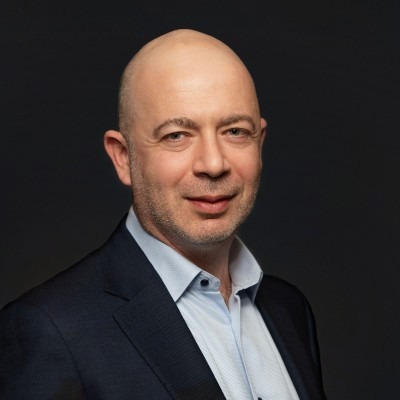
Lou Sokolovskiy is the Founder and CEO of Opus Connect, a membership-based networking and deal-making community for private equity and M&A professionals in the lower middle market. Lou founded Opus Connect with a $500 investment and built it into a seven-figure organization that facilitates thousands of deals through curated events, Deal Connect pairings and Opus Mind mastermind groups. Before Opus, he advised companies across healthcare, finance and technology on operations and strategy. We sat down with Lou to talk about what separates dealmakers who source from their network from those who just collect contacts, why curated rooms beat open platforms and what independent sponsors get wrong about business development.
Westgate Partners: You started Opus Connect with $500 in 2009, two years after founding Genero Capital Partners. What did the first twelve months of building Opus teach you about what dealmakers actually pay for, and what surprised you about the business that your PE work at Genero had not prepared you for?
Lou Sokolovskiy: The first twelve months taught me I was not the only one willing to sacrifice quantity for quality. Being in a well-curated room of forty people is far more powerful than attending a thousand-person conference, and when I put $500 into our first breakfast event, people were so willing to pay for the next one that we were profitable before we had a company name, an incorporation or even a website. I did not like the lifestyle of two-thousand-person events and I was willing to invest my time and money into delivering something different.
WGP: You have been running Genero since 2007 as an active LMM investor. What does sitting on the buy side that entire time teach you about how business development actually gets rewarded in this market, and where do most firms leave money on the table?
LK: A lot of dealmakers think the rules they would apply to their own portfolio companies somehow do not apply to them. We interviewed over 100 PE professionals three or four years ago and found roughly 12% had KPIs that went through any real scrutiny, and about a third had no measurable KPIs at all beyond closed results. Most of them told us they would fire themselves if they were the CEO of a portfolio company doing what they do for their own business development.
WGP: You have said curated communities outperform open networks. LinkedIn has a billion users and it is free. Make the case for why a dealmaker should pay for a room with 200 of the right people instead.
LK: The best number is eighteen, which is the power of the mastermind, a concept pioneered by Benjamin Franklin in 1700s Philadelphia with his group called the Junto. As one of our members put it, Opus Mind is "your personal advisory board meets group therapy session," and I tell prospective members that if you prefer shopping at Walmart over a high-end boutique, you are probably not our member. If you are serious about business development, free LinkedIn is not the option, the question is what is your LinkedIn budget.
WGP: Opus Connect grew revenue through COVID while competitors shut their doors. What did you change in 2020 that your competitors would not, and what did that period reveal about what your members actually valued?
LK: On March 16, 2020, we got on a conference call and I told my team COVID was the best thing that had happened to Opus Connect, though I did not have an answer yet and we had a week to figure it out. We pulled ideas off the shelf, found a new strategy and by April we were profitable, increasing our EBITDA 2.5x that year. Today we still produce around 270 virtual events every year alongside 8 in-person events, and the key is designing each event native to its platform, whether that is a restaurant, conference room or Zoom.
WGP: You describe yourself as a proactive giver, and you have built that into how Opus operates. Giving first sounds nice in a podcast. What does it look like as an actual deal sourcing strategy, and where is the line between generosity and giving away your edge?
LK: My approach is like a bank, I will start with a small line of credit, but if it does not get repaid that is all they are going to get. One of my biggest points of pride is that I have set up eight weddings, which came from trying to set up a few hundred people on dates, and that is proactive giving. My advice: learn how to enjoy it or do not do it, because if you give and never get anything back the frustration will consume you.
WGP: Independent sponsors have to source deals and raise capital simultaneously, often with no committed fund behind them. Watching how the top IS in Opus Mind actually operate, what do they do differently in how they build and work their networks compared to fund-backed sponsors?
LK: The number one thing is they know their weaknesses and address them before going to market. A successful independent sponsor is usually more than one person, because it takes at least three or four strong skill sets working together: deal sourcing, execution, capital raising and value creation through deal management. A lot of independent sponsors confuse closing a deal with making money on a deal, and I have seen deals get negotiated where the independent sponsor will never see a return.
WGP: A new independent sponsor closes their first platform deal and suddenly needs to build a network of capital partners, bankers and sellers with no playbook and no Rolodex. What should their first six months of business development actually look like, and what will everyone tell them to do that they should ignore?
LK: That associate should stay home and not be let out from behind the desk. Firms should not have first-year associates doing any business development, because sending them out to represent the firm is disrespectful to the person on the other end of the table, and senior professionals should not be interrupted by someone far too junior to have a substantive conversation. The junior person should be joining junior boards and nonprofits, building their own network at their own level, not representing the firm.
WGP: Deal sourcing is getting crowded with technology, whether AI-driven origination platforms or automated outreach tools. Where does technology genuinely change the sourcing game, and where is the relationship still the only thing that closes the gap?
LK: If you do not know how to do business development, AI is not going to help you. You can only automate, optimize and streamline things you really know how to do well yourself, so you need great process and SOPs first, and to understand where technology helps you scale versus where you still need relationships. You cannot send a spacecraft before you learn how to build a bicycle, and in business development, automation comes after mastery, not before it.
WGP: You have moderated panels on branding and differentiation for capital providers. Most independent sponsors pitch some version of "we source proprietary deals in overlooked verticals with operational expertise." How does an IS that is genuinely differentiated actually behave differently from one that just says it?
LK: I once attended an event with ~100 private equity firms and ninety percent said the same thing: they were looking for companies between $3 and $15 million of EBITDA, they had great partners and they were nice people. True differentiation comes down to two things: providing value that goes beyond what you do professionally, and being genuinely specialized in something that makes you the best possible buyer, the kind of acquirer sellers dream about. When you talk about being different, actually be different, because most firms sound nearly identical.
WGP: Members join Opus Connect to get deals done, and you can presumably see who succeeds and who churns. What separates the member who closes a deal from their network in year one from the one who attends every event and closes nothing?
LK: There are a few components that separate them, and they are not black and white. The members who close deals have a unique investment thesis they build everything around, a real business development plan rather than an aspiration like "I want to close more deals," and they think about their career five, ten or twenty years ahead. Almost all of them are proactive givers to the community who take leadership roles rather than sitting back and waiting for opportunities to come to them.
Find Lou at opusconnect.com. Operators and investors can reach Lou directly by connecting with him on LinkedIn.