| |
THIS WEEK'S KEYS:Pulse: The Permit Pipeline Problem Playbook: The Liquidity Decision Spotlight: How Neighborly Survived Three PE Holds (and Kept Growing) Roundup: This Week’s M&A Highlights
Have a great weekend! | | |
| | | PULSE The Permit Pipeline Problem | 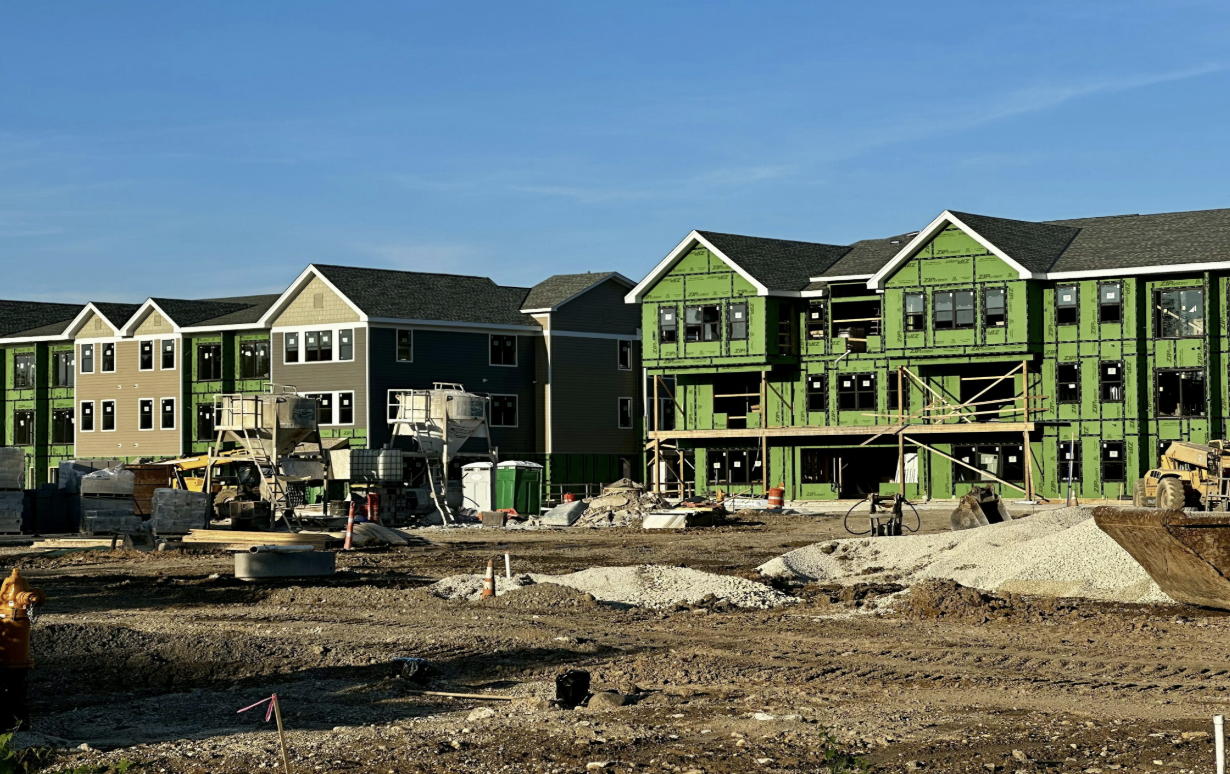 | Photo By Wikimedia Commons, CC0 Public Domain |
|
|
|
|---|
Housing starts get the headlines but building permits have a seat on the Conference Board's Leading Economic Index, one of ten official components tracking where the economy is headed. That distinction alone should settle which metric home services operators use to plan install capacity for HVAC, electrical and landscaping crews.
Full-year 2025 building permits totaled 1,431,200 units nationally, down 3.6% from 2024, while starts fell just 0.6%, per Census Bureau and HUD data. Starts are still running off a backlog approved months earlier while permits show what is actually happening now. Nick Erickson, executive director of the Housing Affordability Institute, noted that permits have declined for three straight years even as the country grapples with a well-documented housing shortage. CME Group's research notes that permits and starts typically move in tandem under normal conditions, which makes the current gap between them the actual signal rather than noise.
The divergence is concentrated exactly where install-heavy operators live: single-family. NAHB reports single-family permits fell to 909,280 nationally in 2025, with Texas, the top single-family permitting state, down 11.7% to 140,002 permits. Florida and North Carolina posted similar declines. Multifamily permits rose 5.6% nationally to 516,886 units, but multifamily does not generate the same per-unit electrical panel and HVAC install demand that single-family does. The segment operators actually depend on is contracting faster than the headline number implies.
The exposure is not uniform across trades. ACHR News reports new construction accounts for only 20-25% of residential air conditioning demand, meaning most HVAC volume rides on service and replacement work regardless of permit activity. Electrical carries similarly durable exposure. In California, the Center for Sustainable Energy finds that a third of single-family homes still run panels under 200 amps, the minimum threshold for EV charging and heat pump readiness, demand best captured while a contractor is already inside a new build rather than after.
For lower middle market operators and the investors underwriting them, the permit data has direct implications beyond crew scheduling. Permit-linked install revenue is now a more cyclical and more exposed earnings stream than recurring service and repair work. Target companies leaning heavily on new construction installs deserve a cautious look at multiple and revenue mix quality. The Fed did not move the housing market this cycle. A shrinking single-family permit pipeline is doing it instead. |
|
|
|
|---|
|
| | | |  | Photo by Mergersandinquisitions.com
|
| For a founder-owned business, the decision between a minority recap and a full sale comes down to one question: how much future upside and control am I willing to give up for liquidity today? Vista Point Advisors defines a recap as trading some equity for cash. The structural difference is whether the owner sells less than 50% or more than 50%. According to Fifth Third's guide on minority recapitalizations, the structure allows owners to access capital while retaining majority ownership and operational control.
The math makes the tradeoff concrete. Assume an operator owns 100% of a company generating $5 million of EBITDA with no debt. At 8.0x, enterprise value is $40 million. In a full sale, the owner sells 100% and receives $40 million before taxes and fees. The buyer captures all the future upside. In a minority recap, the owner sells 30% for $12 million and retains 70%. If EBITDA grows to $7 million and the company exits at the same 8.0x multiple, enterprise value reaches $56 million and the owner's remaining 70% stake is worth $39.2 million. Combined with the initial $12 million, total gross proceeds before taxes and fees reach $51.2 million. The recap path produced more value, but only because the business kept growing.
Control is the other side of that equation. A minority recap typically leaves the founder as majority owner and CEO, but majority ownership does not mean unconstrained authority. According to the Harvard Law School Forum, minority preferred investors often negotiate consent or veto rights on major corporate, financial and employee decisions. Osler similarly notes that protective provisions are negotiated to balance investor confidence with operating flexibility. In practice, an operator may retain full discretion over pricing, hiring, customers and daily operations while needing investor approval for significant debt, acquisitions, dividends, equity issuance, budget changes or a sale of the business. Understanding exactly where those lines sit before signing is not a legal formality. It is the core of the negotiation.
Timing also shapes the calculus. McKinsey & Company's 2026 private markets report showed exit value up in 2025 but exit count remained limited. Bain & Company's 2026 private equity report noted that distributions remained persistently low, meaning operators still have meaningful negotiating leverage with buyers. A minority recap can function as a bridge: de-risk personal wealth, fund organic or acquisitive growth and preserve optionality for a larger full sale later at a higher multiple.
The bottom line is direct. A full sale offers the most certainty and the cleanest exit. A minority recap offers the most flexibility and the most upside, but only for operators who remain genuinely bullish on the next chapter of the business. The structure should follow the conviction. |
|
|
|
|---|
|
SPOTLIGHT How Neighborly Survived Three PE Holds (and Kept Growing) |  | | | Few case studies in residential services private equity are as instructive as Neighborly. Founded in 1981 as Dwyer Group, the Waco-based franchisor had already passed through two Riverside Company investments before Harvest Partners acquired it in June 2018 with 20 brands and $1.7 billion in system-wide revenues. Three years later KKR acquired it from Harvest at $3 billion in system sales, a near doubling in a single holding period. In early 2025 KKR completed a second acquisition to retain the asset. The throughline is not luck. It is a repeatable thesis executed with unusual discipline.
What Harvest got right was recognizing that the franchise model fundamentally changes the roll-up equation. Rather than acquiring local service businesses outright, Neighborly acquires franchise brands and lets franchisees carry the balance sheet risk of local operations. According to Localogy's analysis of the platform, that structure allows Neighborly to capture economies of scale in marketing, technology and training while keeping capital requirements and operational complexity lighter than a direct ownership model. By the time KKR entered, the platform supported more than 5,500 franchises and 12 million customers annually. McKinsey & Company's research on the home services market notes that 70% of market share in categories like plumbing remains held by independent operators and that deal activity in home services grew at a 27% CAGR between 2017 and 2022, validating the structural fragmentation thesis underpinning Neighborly's entire acquisition strategy.
What roll-up buyers in services more broadly have gotten wrong is conflating brand aggregation with integration. The International Franchise Association's 2025 home services outlook noted that average unit revenues across the sector peaked in 2022 and declined in 2023 and 2024 as mortgage rate pressure reduced discretionary home improvement demand. Platforms that acquired aggressively at peak multiples without building cross-brand customer referral infrastructure or unified technology stacks found that the thesis was correct but the timing and execution were not. Neighborly's sustained performance through that same period reflects investments in digital enablement and national demand generation that predated the revenue headwinds rather than reacting to them.
The lesson for buyers underwriting home services platforms today is direct. The fragmentation premium is real but it is not permanent. Harvard's Joint Center for Housing Studies projects total homeowner spending to reach ~$522 billion by the end of 2026 as the average US home ages past 43 years. That tailwind rewards platforms with operational infrastructure and cross-brand customer data. It does not reward brand collection alone. Neighborly's durability across three holding periods and two macro cycles is a function of building the infrastructure first and letting the brands follow. That sequencing is the part most buyers get wrong. |
|
|
|
|---|
|
| | This Week’s M&A Highlights |  |
|
|
|---|
|
●Percheron Capital-backed Blue Cardinal Home Services acquired D&D Plumbing, Heating & Air Conditioning, a Midland, TX-based plumbing and HVAC services company
●Investcorp-backed Guardian Fire Services acquired Midwest Protection Services, an Omaha, NE-based fire and life safety solutions services company
●Atlas Partners-backed Pye-Barker Fire & Safety acquired Hartford Sprinkler Co, a Bloomfield, CT-based residential fire sprinkler contractor |
|
|
|---|
|
ABOUT US WestGate Partners | | | WestGate Partners (WGP) is an independent sponsor focused on acquiring and growing lower middle market businesses in residential and commercial services. We bring institutional experience, tailored capital with hands-on partnership to help owners transition, grow and preserve their legacy. By partnering with strong operators, we build enduring businesses in economically-insulated industries. |
|
|
|
|---|
|
For more information, please visit: |
|
|
| | |
|---|
|
|