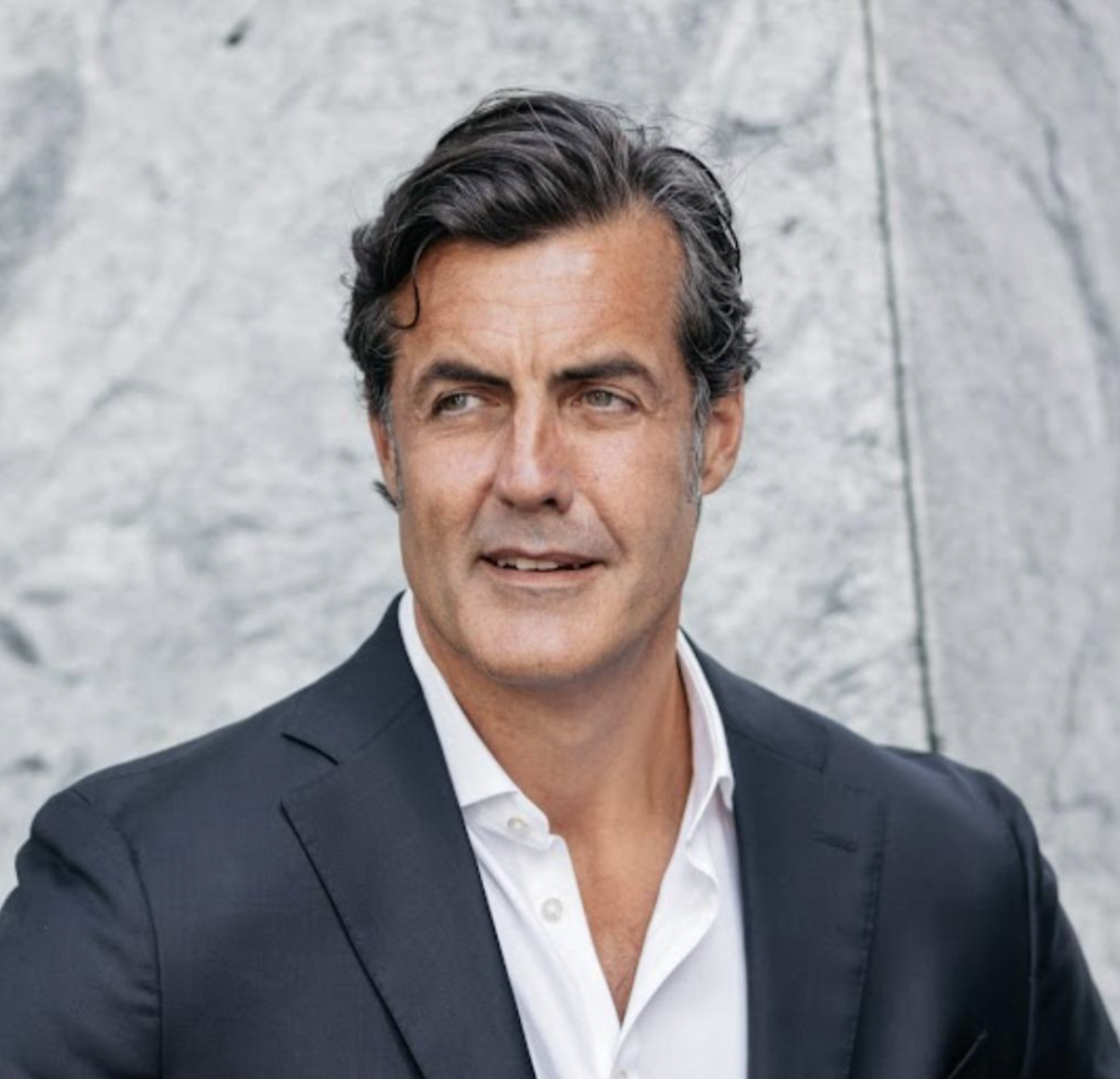
Lee McCabe is the founder of Claymore Partners, which builds commercial and digital infrastructure for PE-backed companies in the lower middle market. He was previously Operating Partner at AEA Investors and currently sits on the boards of 50 Floor and Window Nation. Before private equity he held senior roles at eBay, Expedia, Facebook and Alibaba, including running Facebook’s global travel business and Alibaba’s North America operation. His first book is due in 2027. We sat down with Lee to talk about what sponsors get wrong about marketing, where digital investment moves EBITDA versus where it does not, and what it takes to build a real commercial engine inside a business that was never built for one.
Westgate Partners: You started at eBay in the late nineties, ran travel at Facebook, led North America for Alibaba and then walked into private equity as an operating partner. What does a career like that give you when you sit down with a lower middle market portfolio company, and what do you have to learn from them?
Lee McCabe: Pattern recognition, mostly. eBay, Expedia, Facebook and Alibaba lived and died on conversion, attribution and unit economics, so I've usually seen a portfolio company's exact problem before, at a hundred times the scale. What I have to learn is everything else: a $20 million consumer services business is not a small Facebook. Big tech teaches you what good looks like, not what possible looks like.
WGP: You were an Operating Partner at AEA across 45 companies. Before you have looked at a single marketing dashboard, what do you watch for in the first week to know whether the commercial function is real or dressed up?
LM: I ask the CEO, the head of sales and whoever owns marketing the same question: where does a customer come from and what does one cost? A real commercial function gives three versions of the same answer; a dressed-up one gives three different businesses. Real organisations meet weekly and argue about numbers; fake ones meet quarterly and present to each other. Then I'll ring the company as a customer in week one; four rings and a voicemail tells me more than the dashboard will.
WGP: Sponsors underwrite revenue but they do not always underwrite who is actually responsible for generating it. What does a portfolio company look like on the inside when those two things are not the same person?
LM: Everyone owns revenue in the deck and nobody owns it on a Tuesday. The model says 15% growth; ask who delivers it and you get a committee. Pull the comp plans and see whose bonus actually moves when revenue misses; in most lower middle market businesses, the honest answer is nobody below the CEO.
WGP: You built Claymore specifically for the lower middle market. What does a business at that size need from a growth partner that an enterprise company does not, and where do sponsors get that wrong?
LM: An enterprise company needs advice; a lower middle market company needs hands. A $500 million business has a CMO, a data team and an agency roster and can take a strategy deck and execute it; a $20 million business has a marketing manager who also runs the Christmas party. We build the tracking, the funnel and the reporting, then hand over something that runs. Sponsors get it wrong when they buy for the company they're hoping to own in year five, hiring enterprise talent that bounces off a founder-built business.
WGP: Pick one engagement. What was broken, what did you change and what was different ninety days later?
LM: An $80 million home services business, spending seven figures a year on TV and digital. The board thought marketing was performing, but revenue was going sideways because tracking stopped at the lead, with no call tracking or close rate by channel. Once we built that layer, one channel turned out to be producing a third of the leads and almost none of the revenue, and half of all leads were waiting more than four hours for a callback. We moved the money, fixed speed to lead, and revenue moved within a quarter on the same budget.
WGP: A sponsor closes on a consumer services business and asks you to fix the commercial engine in the first hundred days. Where do you start, and what do you leave alone?
LM: I start with the plumbing, not the spend. Day one is instrumentation: call tracking live, every lead source tagged, because you cannot manage what the business cannot see. Then speed to lead, the cheapest EBITDA in the building, since it means same leads, same budget, more revenue. What I leave alone is the brand, the agency and the org chart; you can't tell if the agency is bad until the tracking is in, and rebrands are year-two conversations.
WGP: You ran the global travel business at Facebook before most sponsors had thought seriously about digital. What did that teach you about attribution that most operating partners still have not figured out?
LM: That attribution is a knife fight, not a maths problem. At Facebook, every platform, agency and analytics vendor fought to claim credit for the same booking, because credit is where next year's budget goes. Most operating partners still treat it as a technical project, buying the right tool and the right model, but every attribution model is just an opinion that favours the vendor. What matters is directional confidence: does revenue go up when we spend more and down when we stop? You get that from holdouts, not from a $200K platform.
WGP: Lower middle market businesses are being told they need digital strategies. What is the honest conversation about what that actually means for a company doing twenty million in revenue, and what it does not mean?
LM: A $20 million company doesn't need a digital strategy. It needs a website that converts, a phone that gets answered, honest tracking and two or three channels run properly, and that fits on an index card. It doesn't mean transformation: no data lake, no CDP, no AI roadmap. The software industry has convinced $20 million businesses they have $2 billion problems. At this size, execution is the strategy.
WGP: After everything you have seen across AEA's portfolio, Claymore's engagements and three board seats, what is the one belief about marketing inside a PE-backed business you have completely changed your mind on?
LM: I used to believe it was a talent problem. I thought these businesses just needed better people, so I spent my first couple of years in PE recommending exactly that, and I watched most of those hires fail. I now believe the opposite: it's a systems problem wearing a talent costume. Put an average marketer inside a business with real instrumentation and a comp plan tied to revenue, and they'll outperform a brilliant one operating blind.
Lee can be reached on LinkedIn or at Claymore Partners.