| |
THIS WEEK'S KEYS:Pulse: The Sun Belt's Water Problem Playbook: The Real Value of a Technician Spotlight: Fire & Life Safety: Regulated & Recurring Roundup: This Week’s M&A Highlights
Have a great weekend! | | |
| | | PULSE The Sun Belt's Water Problem |  | Photo By Adobe Stock Photos |
|
|
|
|---|
For years, water risk lived in the sustainability section of the annual report. That is changing fast. The Conference Board warns in its 2026 backgrounder that federal guidelines governing Lake Powell and Lake Mead expire at the end of this year, pitting deteriorating Colorado River supply against an urgent need for policy action across seven Western states. As senior economist Alex Heil put it plainly: the water is, in all likelihood, not going to be there.
The squeeze is already visible at the property level. McKinsey & Company's research on corporate water risk finds that two-thirds of businesses carry meaningful exposure through direct operations or supply chains. In the Sun Belt today, that exposure shows up as irrigation curfews. Durham, North Carolina has moved to Stage 2 restrictions banning spray irrigation outright, with large commercial users ordered to cut consumption by 30%. Texas pool builders face a parallel constraint. With over 80% of the state in drought, industry veterans note that Nevada and California have already capped pool sizes and paused new construction permits during past shortages. What was once a regional anomaly is becoming standard operating procedure across the fastest-growing markets in the country.
Landscaping demand is shifting just as fast. The Southern Nevada Water Authority has paid homeowners to convert over 200 million square feet of grass since 1999, and Nevada law will ban decorative turf at commercial and HOA properties starting January 2027. Phoenix is paying businesses $2 per square foot to remove non-functional grass, reshaping demand for commercial landscapers almost overnight. Las Vegas-area median strips and HOA common areas are already moving toward gravel and native plants. The customer is not going away. The service mix is changing.
For lower middle market operators in landscaping, pool services and irrigation, water scarcity is no longer a background risk. It is a permitting bottleneck, a contract restructuring conversation and for the contractors who move first, a genuine competitive edge. Businesses that build expertise in drought-tolerant landscaping, water-efficient irrigation systems and compliance with local restriction frameworks are positioning themselves ahead of a demand shift that is structural rather than cyclical. Water has stopped being a sustainability footnote. It is now a line item that determines which operators win the next decade of Sun Belt growth. |
|
|
|
|---|
|
| | | |  | Photo by Adobe Stock Photos
|
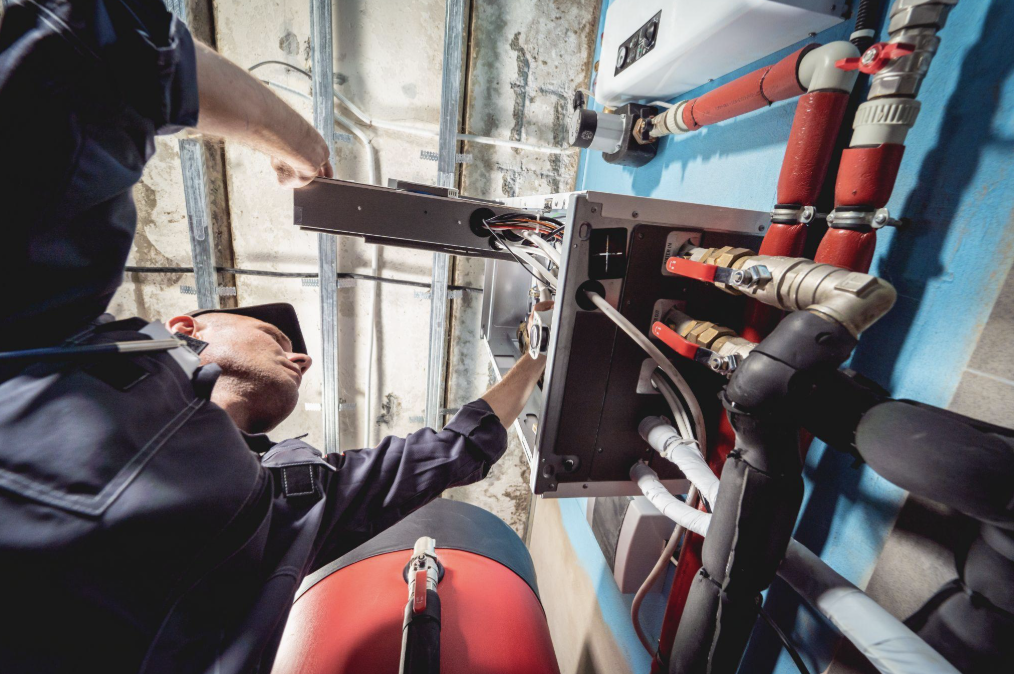
| Private equity buyers in the trades are not really buying trucks, territory or even revenue. They are buying a workforce. A roofing, HVAC, electrical or plumbing business runs on a roster of skilled people who hold the customer relationships and carry the capacity. That makes technician alienation, the slow erosion of the people who run the business, the quietest threat to value in a lower middle market roll-up.
It starts with the acquisition itself. When a founder-led shop gets acquired and professionalized, the technicians loyal to the owner can feel pushed out, and they walk. The cost is not abstract. CT Acquisitions finds that workforce composition is the single largest valuation driver in residential trades and that buyers routinely discount a target by 20-25% when turnover runs high, because the acquirer must spend capital just replacing the people it bought. Alienation does not show up in an HR report. It shows up in the exit multiple.
Buyers know this, which is why the roster has become a diligence item. Kroll notes that sophisticated platform buyers analyze a target's labor model, technician productivity and customer retention before closing. They are not just underwriting revenue. They are underwriting whether the people who produce it will still be there after the wire clears.
The play is to retain, not re-staff. ServiceTitan’s technician tenure data shows just how fragile the labor base really is: average HVAC technician tenure sits at roughly ~2.1 years, with top operators stretching that to 4.5+ years, while similar skilled trades like electrical show only modestly longer stays. In other words, most shops are constantly cycling through their workforce. That makes your best technicians the entire enterprise value. Strip comp, layer on quotas, or swap experienced techs for cheaper rookies and you are not cutting cost, you are accelerating that churn cycle. The short-term margin lift is real, but so is the reset in tenure, productivity, and customer relationships. The efficiency gain is temporary. The multiple compression is not.
According to industry data reported by ACHR News, HVAC technician wages have climbed across all experience levels in 2025. With average pay rising roughly 3–4% year over year as contractors continue to compete for a constrained pool of qualified labor, driven by higher wages, bonuses and apprenticeship programs. In a market that Capstone Partners describes as a shortage-driven fight for skilled labor, where a master license commands ~$77,000 against ~$63,000 without one, paying up is not generosity. It is underwriting protection. The operator who protects the multiple is not the one who cuts fastest. It is the one that keeps the people who built the business long enough to scale it. |
|
|
|
|---|
|
SPOTLIGHT Fire & Life Safety: Regulated & Recurring |  | Photo by Adobe Stock Photos |
| Fire & Life Safety has quietly become one of the most attractive niches in the broader services ecosystem. Suppression, inspection and monitoring businesses consistently command premium multiples, and the reason is not complicated. The industry combines regulatory certainty, recurring revenue and strong unit economics in a way that most service verticals cannot replicate.
The market outlook remains steady and structurally supported. According to the U.S. Bureau of Labor Statistics, employment of fire inspectors and investigators is projected to grow at approximately a 6% CAGR through 2034, reflecting consistent demand for inspection, code enforcement, and fire prevention services across commercial and residential infrastructure. This growth rate, while moderate, is notable for its stability, as it is driven primarily by regulatory requirements and replacement demand rather than cyclical consumption trends. As a result, the sector is positioned for durable, low-volatility expansion rather than rapid but unstable growth.
What makes the sector particularly attractive to investors is the non-discretionary nature of demand. Inspection, testing, and maintenance are mandated by fire code, meaning revenue is largely insulated from typical budget cycles or discretionary spending. Under NFPA standards, systems must be inspected on recurring schedules that range from weekly and monthly checks to annual and multi-year testing requirements, depending on the component, according to NFPA inspection frequency guidance. Missing these intervals can result in code violations, fines, or liability exposure, effectively forcing compliance-driven service demand.
Margins further differentiate the space. Inspection and monitoring services can generate 50%+ gross margins, while deficiency-driven repair work reaches 40-50%, creating strong pull-through economics across the customer lifecycle. At the company level, EBITDA margins for scaled operators average over 12%, with meaningful upside in recurring-heavy models. The business compounds well: inspections identify deficiencies, deficiencies generate repair work and repair work creates the next inspection cycle.
Those dynamics translate directly into valuation. According to CT Acquisitions, Fire & Life Safety businesses typically trade at 4x-7x EBITDA, with platform-scale recurring-heavy operators commanding 8x-12x and the largest assets reaching 17x-20x. Praxis Rock notes that businesses generating a majority of revenue from contracted inspection and monitoring often earn multiple premiums of two to three full EBITDA turns above peers. The recurring revenue is not just operationally valuable. It is the primary driver of where these businesses price in a competitive process.
Fire & Life Safety sits at the intersection of compliance, infrastructure and subscription-like revenue. That combination continues to attract institutional capital and supports the sector's position as one of the most durable and premium-valued verticals in services. For investors building platforms in the lower middle market, the Fire & Life Safety thesis is not a discovery. It is a conviction trade with a long runway. |
|
|
|
|---|
|
| | This Week’s M&A Highlights |  |
|
|
|---|
|
●Norwest acquired East Range Group, a Boston, MA-based high-purity water systems services company
●Huron Capital-backed Exigent acquired Superior Building Services, a Columbus, OH-based boiler, chiller and HVAC services company
●CAI Capital Partners-backed GreenArrow acquired Atlantic Transportation Systems, a Westbrook, ME-based transportation electrical services company
●Thompson Street Capital Partners-backed PestCo acquired Arrow Pest Control, a NJ-based residential and commercial pest control services company
●AEA Investors-backed Pave America acquired Bennett Paving, a Roebuck, SC-based pavement maintenance and construction services company
●Bartlett Tree Experts acquired T.F. Morra Tree, a Providence, RI-based landscaping services company
●CI Capital-backed Mariani Premier Group acquired Lopez Gardening, a Palm Beach Gardens, FL-based landscaping services company
●Team SPG acquired S&B Plumbing, a Sugar Land, TX-based plumbing services company
●MRE Capital-backed DJ’s Landscape Management acquired Greenscape Land Design, a Fairfax, VA-based commercial landscape and property management services company, and Meadow Green Landscaping, a Prior Lake, MN-based landscape design and development services company
●Balance Point Capital Advisors invested in Trivest-backed AquaVerse, a Palm Beach, FL-based residential pool services company
●O2 Investment Partners-backed Azureon acquired Pooltek Services, a Rockville, MD-based pool services company |
|
|
|---|
|
ABOUT US WestGate Partners | | | WestGate Partners (WGP) is an independent sponsor focused on acquiring and growing lower middle market businesses in residential and commercial services. We bring institutional experience, tailored capital with hands-on partnership to help owners transition, grow and preserve their legacy. By partnering with strong operators, we build enduring businesses in economically-insulated industries. |
|
|
|
|---|
|
For more information, please visit: |
|
|
| | |
|---|
|
|