| |
THIS WEEK'S KEYS:Pulse: The Frozen Housing Market Playbook: Building a Bench Spotlight: HomeTeam's Double Exit Roundup: This Week’s M&A Highlights
Have a great weekend! | | |
| | | PULSE The Frozen Housing Market | 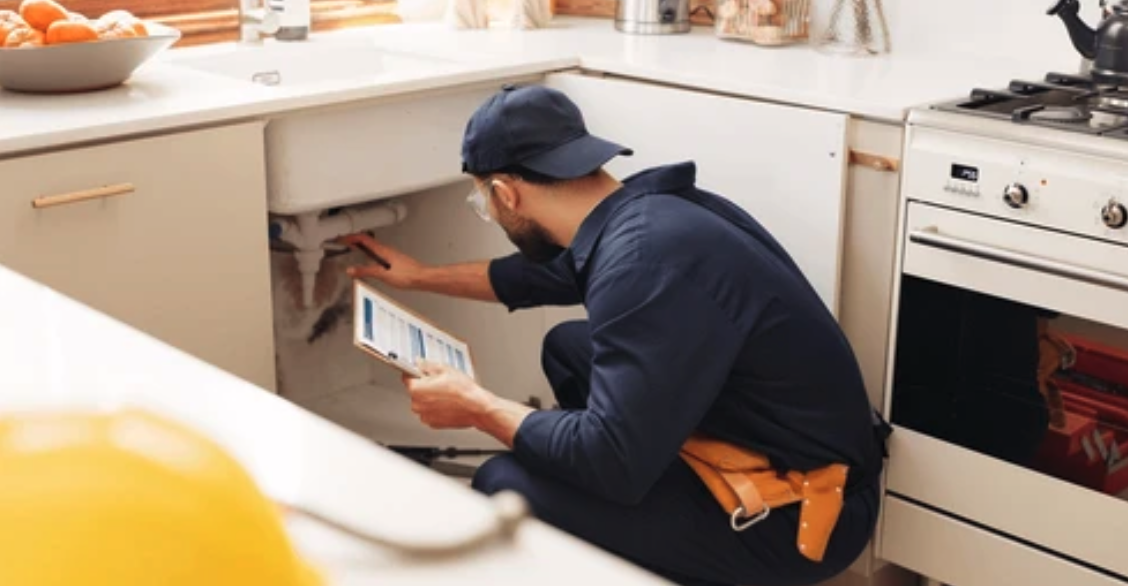 | | |
|
|
|---|
Americans have stopped moving. Existing home sales totaled 4.06 million in 2025, unchanged from 2024 and the lowest annual pace since 1995, per the NPR. NAR chief economist Lawrence Yun called 2025 "another tough year for homebuyers, marked by record-high home prices and historically low home sales." Sales have been stuck near a 4 million pace since 2023, well short of the 5.2 million historical norm. The housing market is frozen. The home services market is not.
The culprit is the mortgage lock-in. According to a Redfin analysis of FHFA data, ~80% of mortgaged US homeowners hold a rate below 6% and more than half are below 4%. Trading a 3% mortgage for a 6-7% one raises the typical monthly payment by nearly $1,000. An FHFA working paper found that the lock-in prevented 1.33 million home sales between Q2 2022 and Q4 2023, later revised up to 1.7 million through mid-2024. Homeowners are not moving. They are staying put and spending differently.
Locked-in owners do not stop spending. They redirect. A Redfin survey fielded by Ipsos in November 2025 found that 65% of recent renovators chose to upgrade their current home instead of moving, and among those planning work, 71% are remodeling rather than buying. Harvard's Joint Center for Housing Studies projects homeowner improvement and repair spending will hit a record $526 billion in early 2025 via its LIRA index. Homeowners are sitting on a record $17.6 trillion in equity, $11.5 trillion of it tappable per ICE Mortgage Technology. That equity is being converted into kitchens, bathrooms and roofs.
The aging housing stock adds a non-discretionary layer on top of that discretionary spending. The median owner-occupied home is now 42 years old, up from 31 in 2005, per NAHB analysis of Census data. Older homes need new HVAC systems, updated wiring, replaced pipes and new roofs. These are not optional upgrades. They are maintenance requirements that generate service calls regardless of where mortgage rates sit.
The capital markets have read this correctly. McKinsey & Company pegs US home services spending at ~$700 billion, growing toward $802 billion by 2030. Private equity is moving accordingly. Blackstone agreed to acquire Champions Group for a reported $2.5 billion at ~18.5x EBITDA in February 2026 and Capstone Partners reports PE add-on activity in HVAC rose 88% year over year through mid-2025, with financial buyers now accounting for ~half of all HVAC deals. The lock-in effect created the demand. The capital is following it. |
| | | | |  | | |
When operators think about preparing a company for sale, they tend to focus on the numbers: clean financials, tight margins and a defensible growth story. Far fewer think about something buyers consistently rank just as highly: whether the business can run without its founder standing in the room. That gap is exactly why the best operators start building a leadership bench years before an exit is ever on the table.
Owner dependency is not a soft concern. According to a lower middle market analysis covered by Big Talk About Small Business, owner dependency is the single most prevalent factor that reduces earnings multiples during a corporate sale, and strategic buyers often walk away entirely from organizations that lack a structured, autonomous management framework. Acquisition Stars makes the mechanism explicit: the more a business depends on one customer, one employee or one owner, the lower the multiple a buyer will pay, since that multiple is simply a reflection of perceived risk.
Buyers go further than reviewing org charts during diligence. A breakdown of the M&A due diligence process from IB Interview Questions notes that management depth sits alongside customer concentration and undisclosed litigation as one of the findings most likely to move price or kill a deal outright. According to Madras Accountancy's guide to accounting firm M&A, buyers interview senior team members directly to assess flight risk and evaluate the depth of the bench beneath them, often examining staff tenure and retention agreements as part of that process. The question being answered is not just who is here today but who stays after the founder leaves.
The most sophisticated acquirers have built entire internal functions around this problem. Research from Russell Reynolds Associates found that top-performing PE firms now treat cultivating a bench of CEOs, C-suite leaders and board members as a core value creation lever, since a well-maintained pipeline accelerates leadership placements and reduces friction at exit. That same discipline applied at the portfolio company level, before a process launches, is what separates a business that attracts a competitive buyer field from one that attracts a single cautious offer.
The payoff compounds well before any sale conversation starts. Dover mentions that in the lower middle market decentralized management and documented procedures keep companies attractive to a broader set of acquirers, whereas heavy owner dependency narrows that pool considerably. A deep bench is not a nice-to-have for succession planning. It is a direct lever on what the business is ultimately worth and how many buyers show up to compete for it. |
|
|
|
|---|
|
| |  | Photo by HomeTeam Pest Defense |
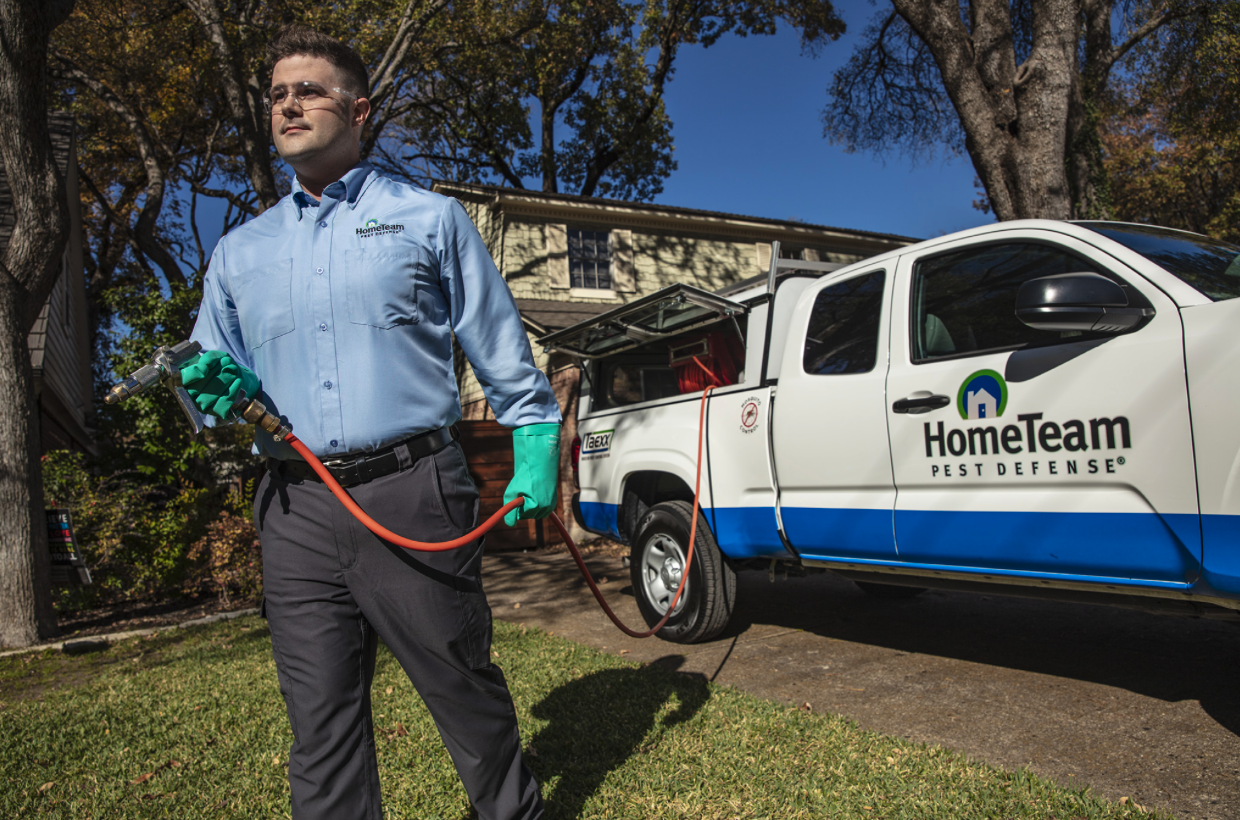
| HomeTeam Pest Defense's growth story offers a useful playbook for independent operators eyeing scale, and it did not follow the classic private equity path. It followed a more deliberate one: own a defensible niche, prove the model regionally and find a strategic acquirer willing to pay to keep what you built intact.
Founded in 1996 in Dallas, HomeTeam built its early growth around a specific insight: pest control installed directly into new homes during construction. The company's proprietary Taexx system, a built-in pest defense network embedded in the walls during the build process, became its core differentiator. Rather than competing on service calls, HomeTeam embedded itself inside the homebuilding supply chain, working with over 1,000 builder partners and performing more than a million services annually. That positioning was not easy to replicate and not easy to displace.
The relationship-driven model attracted Centex, a major public homebuilder, as an early backer, giving HomeTeam capital and distribution through builder networks while it scaled. By 2008, the company had grown into the nation's third-largest residential pest management company with 50 offices across 13 states serving ~400,000 customers. That kind of embedded, recurring revenue profile is exactly what strategic acquirers pay a premium for.
In April 2008, Rollins acquired HomeTeam from Centex for ~$137 million, with HomeTeam reporting $134 million in 2007 revenue, a near 1x revenue multiple reflecting the asset-heavy, builder-relationship nature of the business. The more important decision Rollins made was not the price. It was choosing to operate HomeTeam as a standalone subsidiary alongside Orkin and its other pest brands rather than folding it into existing operations. Preserving the brand and management team that built the builder relationships was the right call, and it set up the next chapter.
Under Rollins, HomeTeam became a platform for continued consolidation. The company acquired Fox Pest Control, a fast-growing door-to-door operator with 1,300 employees across 13 states, and folded in regional players including Stout Pest Management. The standalone structure that felt conservative at acquisition turned out to be exactly the right foundation for bolt-on growth.
The takeaway for independent operators is direct. HomeTeam scaled by owning a niche that competitors could not easily enter, proving the model regionally before expanding nationally and positioning itself as something a disciplined acquirer would want to preserve rather than strip for synergies. The lesson is not to find a PE firm. It is to build something differentiated enough that any serious buyer will pay to keep it intact. |
|
|
|
|---|
|
| | This Week’s M&A Highlights |  |
|
|
|---|
|
●Georgia Oak Partners-backed Septic Blue acquired Superior Septic, a Dade City, FL-based septic tank installation and repair services company
●CID Capital-backed Hittle Landscaping acquired Barthuly Irrigation, a Westfield, IN-based commercial and residential irrigation services company
●Huron Capital-backed The Exigent Group acquired Superior Building Services, a Columbus, OH-based mechanical contractor specializing in boiler, chiller and HVAC services
●Access Holdings-backed Zeus Fire and Security acquired Security Equipment Inc, an Omaha, NE-based security, fire and life safety services company
●Andreeson Horowitz invested $34M in Probook AI, an AI operating system for the home services industry
●Southfield Capital-backed Osprey Landscape Group acquires LandGraphics, a San Diego, CA-based commercial landscape services provider
●Caymus Equity-backed Moeris acquired Stay Safe Traffic Control, a Raleigh, NC-based provider of work zone safety and traffic control services |
|
|
|---|
|
ABOUT US WestGate Partners | | | WestGate Partners (WGP) is an independent sponsor focused on acquiring and growing lower middle market businesses in residential and commercial services. We bring institutional experience, tailored capital with hands-on partnership to help owners transition, grow and preserve their legacy. By partnering with strong operators, we build enduring businesses in economically-insulated industries. |
|
|
|
|---|
|
For more information, please visit: |
|
|
| | |
|---|
|
|