| |
THIS WEEK'S KEYS:Pulse: The SBIC Moment Playbook: The Sale Leaseback Advantage Spotlight: Interview with Steve Conwell Roundup: This Week’s M&A Highlights
Have a great weekend! | | |
| | | | |  | Photo By Signature Realty |
|
|
|
|---|
While much of the private equity industry continues to navigate slower exits, higher borrowing costs and a challenging fundraising environment, one corner of the market is quietly gaining momentum: Small Business Investment Companies. The same conditions creating headwinds for traditional private equity are creating opportunities for investors focused on smaller businesses, and the numbers are beginning to reflect it.
According to McKinsey & Company, fundraising has become increasingly concentrated among a smaller group of managers while investors are placing greater emphasis on differentiated strategies, operational value creation and specialized market expertise. For many firms, the lower middle market remains one of the few areas where those opportunities are still abundant, and the SBIC program sits squarely at the center of that thesis.
The program's recent trajectory reflects that interest. In fiscal year 2025, the US Small Business Administration reported a record $53 billion in combined private capital and SBA-backed leverage, up from $46 billion the prior year. The agency approved 48 new SBIC licenses, signaling continued interest from both established sponsors and emerging managers expanding their capital base. The pipeline looks equally robust, with the SBA approving a record 86 Green Light letters, conditional pre-approvals for SBIC licenses, expected to generate over $20 billion in aggregate investment.
The legislative backdrop has turned meaningfully more supportive. On May 19, 2026, President Trump signed the Investing in All of America Act, representing the most significant expansion of SBIC capacity in over a decade. According to the Small Business Investor Alliance, the legislation materially increases SBIC leverage caps, expands bonus leverage eligibility across rural, manufacturing and critical technology sectors and broadens the institutional investor base by easing prior constraints on public endowments such as universities.
The implications for fund design and deployment are direct. According to Troutman Pepper Locke's SBIC legislative analysis, higher leverage ceilings effectively increase deployable capital per dollar of LP equity, improving capital efficiency at the fund level while allowing managers to scale platform strategies across fragmented small business markets more quickly. For sponsors active in the lower middle market, that combination of structural leverage and policy tailwind is a meaningful competitive input.
SBICs are no longer a peripheral tool in private markets. They are evolving into a mainstream vehicle for accessing the lower middle market with embedded leverage advantages, expanding policy support and a structurally growing mandate. For investors underwriting LMM strategies in the current environment, the SBIC program deserves a closer look than it has historically received. |
| | | | |  | | |
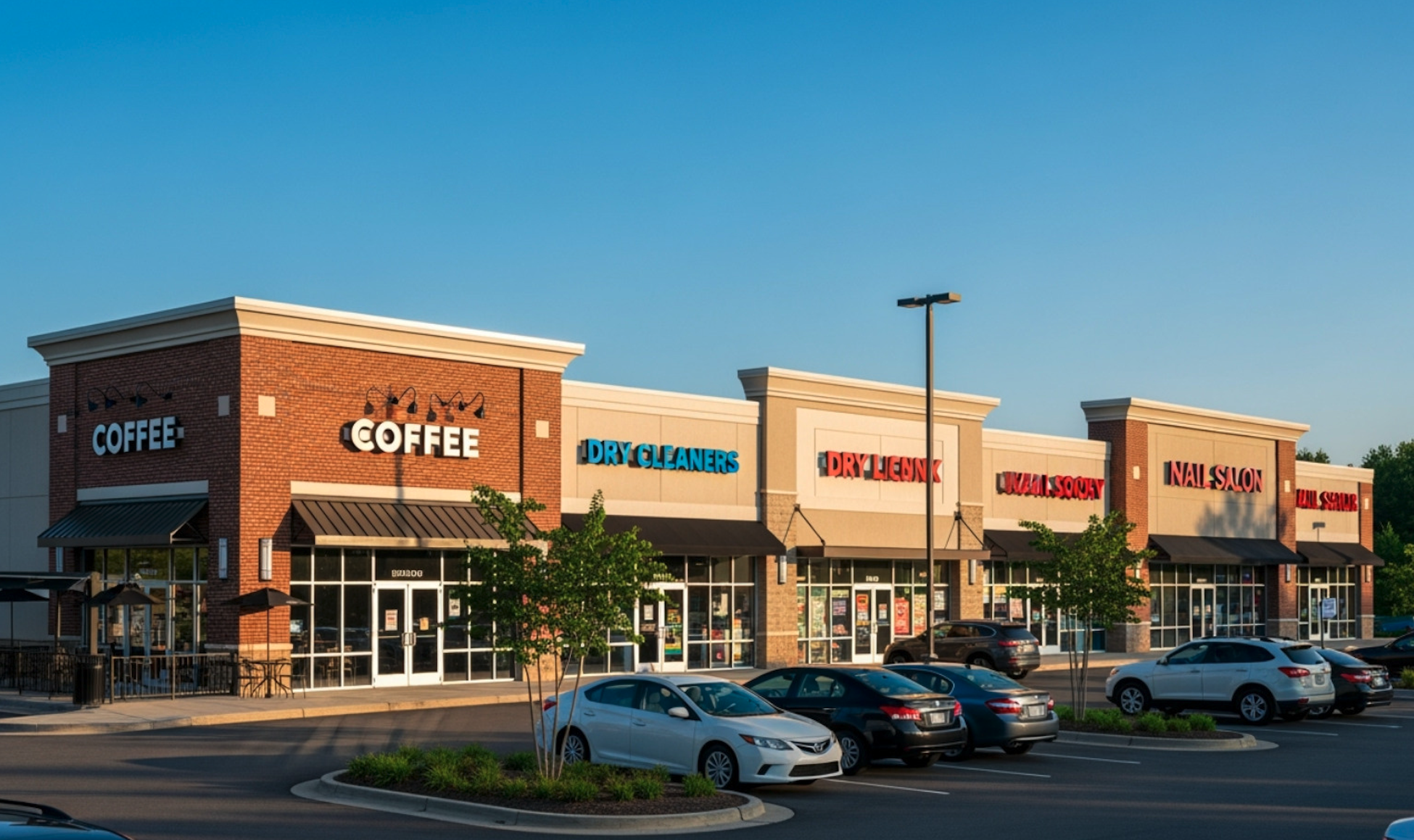
Most lower middle market operators think of their real estate as an asset. The smarter framing is to think of it as a financing option that can be exercised without giving up a square foot of space. That framing is gaining traction fast, and the transaction data is starting to reflect it.
According to SLB Capital Advisors, the US sale-leaseback market recorded 714 discrete transactions in 2025, with aggregate dollar volume rising 18% to ~$14.4 billion, the first time since 2022 that annual transaction count exceeded 700. The mechanism is straightforward: a company sells its owned facility to a real estate investor and simultaneously signs a long-term lease to stay in place, converting an illiquid asset into cash without disrupting a single day of operations. As SLB Capital Advisors Managing Partner Scott Merkle noted, historically when corporate M&A activity improves, sale leasebacks follow as companies seek to unlock capital from owned real estate.
The macro context explains the timing. Deloitte's 2026 Commercial Real Estate Outlook found that while new loan volume has recovered meaningfully, banks remain selective and alternative debt sources including private credit funds have been the primary driver behind the resurgence in lending activity. For lower middle market operators who own their facilities, that tightening creates a direct opening. A sale-leaseback sidesteps the bank entirely, generating liquidity without adding to the debt stack or diluting equity. As traditional lenders maintain tighter credit standards, sale-leasebacks are filling the gap for operators seeking capital for growth, acquisitions or balance sheet optimization.
Private equity has understood arbitrage for years. There is a meaningful disconnect between the lower EBITDA multiple, often 6x to 8x, paid to acquire a business and the higher implied multiple, typically 12x to 14x, achieved from the sale of the real estate. For a founder sitting on an industrial facility, that gap represents value a bank loan will never unlock. W.P. Carey Managing Director Tyler Swann noted that industrial middle-market sale-leasebacks were a standout performer in 2025, representing a significant share of deal flow as companies sought to access capital without sacrificing operational control.
The pressure to find creative liquidity solutions is not going away. McKinsey's 2026 Global Private Markets Report found that more than 16,000 companies globally are currently held for more than four years, representing 52% of total buyout-backed inventory, with average hold periods now stretching to a record 6.6 years. That dynamic is pushing sponsors to find capital within existing portfolio companies rather than waiting for exits, and sale-leasebacks on owned real estate are a logical first move. An estimated $1 trillion in unrealized assets sat on PE balance sheets at mid-year 2025, and exit pressure is intensifying the search for tools that return capital without requiring a full transaction.
For founder-owned businesses in the lower middle market, the same logic applies without the institutional wrapper. Lease terms, rent escalations and renewal options can all be tailored to align with long-term business objectives including ownership transitions. That flexibility makes the structure particularly relevant ahead of a sale process. Most private equity buyers prefer to acquire a business without its real estate, and an operator who has already executed a sale-leaseback walks into that conversation with a cleaner balance sheet, a higher implied enterprise value and proceeds already in hand. The operators who understand this tool before they need it are the ones who use it best. |
|
|
|
|---|
|
| | 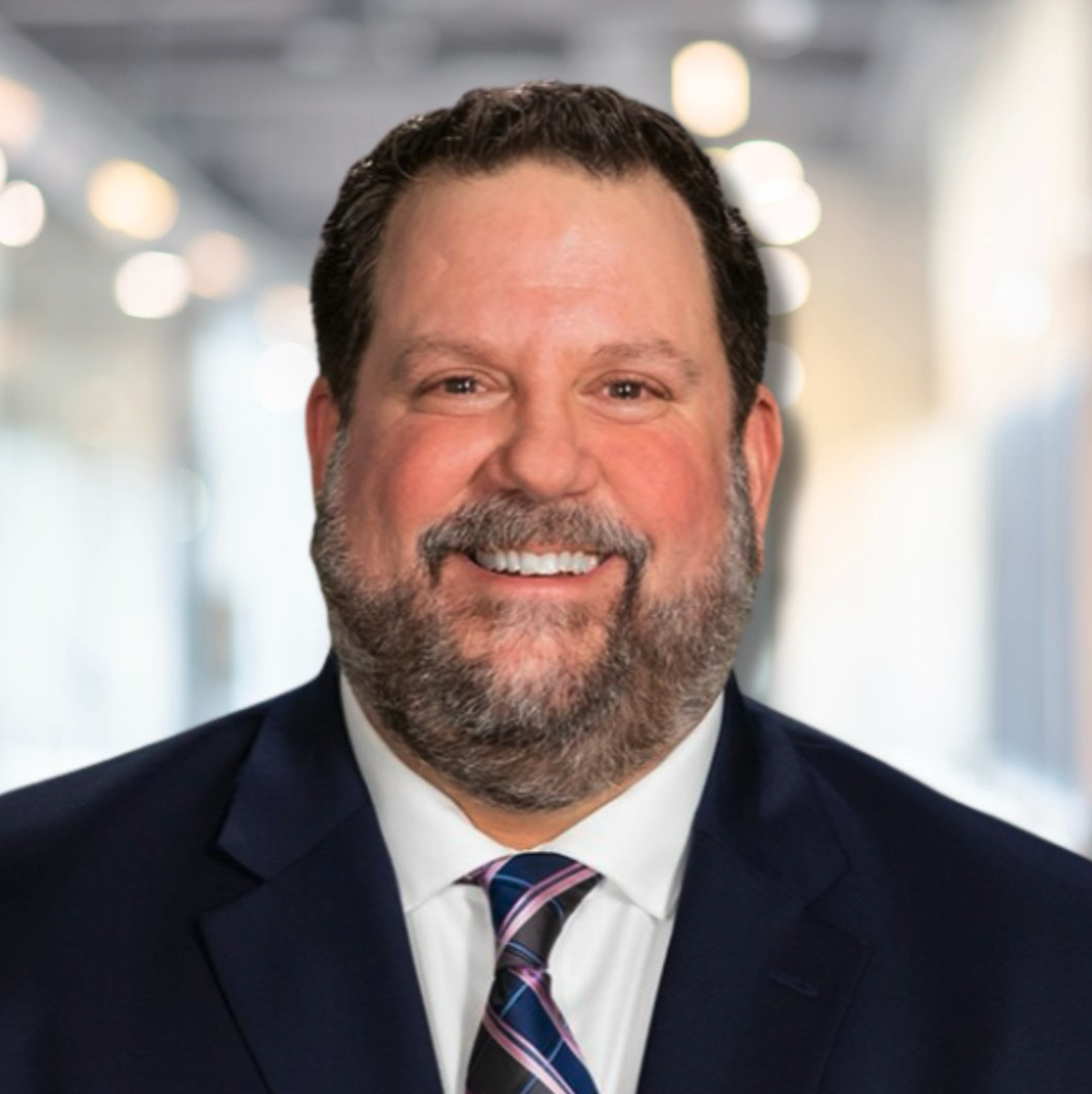 | | | Steve Conwell is CEO and Partner of Final Ascent, an M&A advisory firm focused on helping middle market business owners build exit-ready companies and sell them for maximum value. He spent years at EY, Deloitte and Crowe before building and selling his own IT consulting and recruiting firm, an experience that reshaped how he advises owners today. Final Ascent works both sell-side and buy-side.
We sat down with Steve to talk about what it costs an owner to start exit planning too late, where founders leave money on the table and what life looks like after the sale.
WestGate Partners: You have described a moment that completely changed your way of thinking. For someone hearing your story for the first time, what was happening in your life or career at that point and what did you walk away believing that you did not before?
Steve Conwell: I was 27 at EY and could not convince certain people that my approach to a project was right. Eventually I looked in the mirror and asked what if I am the problem. I started reading on emotional intelligence and soft skills, learned to adapt my communication style to my audience and it made all the difference.
WGP: Final Ascent advises on both sell-side and buy-side M&A. Most advisors pick one. How does working both sides of the table change the quality of advice you give an owner who is thinking about a sale?
SC: Walk in someone else’s shoes before you make the wrong judgment. Being on both sides prepares me, and my client, for the reasons behind requests from the bankers, the QoE partner, the advisor across the table and the attorneys. We never assume, and we approach every engagement holistically.
WGP: When you started and sold your first business, there is a version of that story only someone who has been through it can tell. What did the process actually feel like from the inside and what blindsided you that you did not see coming as an advisor?
SC: My wife and I built our IT consulting and recruiting firm from the two of us to ninety professionals, and sold to a top-ten accounting firm in May 2008 believing we had done great. Years later, working with a client who had a real exit planner, I realized we left $3 to $4 million on the table and had no idea. In 2017, I started Final Ascent so middle market owners would not make the same mistake.
WGP: Founders often underestimate how personally disorienting life after a sale can be. Did you experience that yourself and how has it shaped the way you prepare clients for what comes after the check clears?
SC: I rolled with my sale as an Executive Director at the CPA firm we sold to, believing it was the right path forward. I was not prepared for the shift from visionary decision-maker to “that will be decided up the food chain.” It solidified that I needed to be my own boss and work with middle market owners.
WGP: The lower middle market rarely makes headlines yet represents the most significant wealth creation event in most owners’ lives. Why does it matter who advises them and what does a bad advisor cost someone in this market?
SC: Partner with strong advisors early, ideally more than five years out. That decision is worth its weight in gold and I am living proof. The cost of getting it wrong is measured in millions left at the table.
WGP: There is a version of exit planning that starts five years out and a version that starts five months out. What does it actually cost a business owner in dollars and in personal terms when they wait too long?
SC: Starting five months out is a non-starter. You can clean things up, but in that scenario we can easily lose $10 million or more with the owner completely unaware. Time is your friend.
WGP: If you walked into a business today with a mandate to increase its exit value over the next two years, what are the first three things you would look at and why do most owners consistently overlook them?
SC: Clean, accurate financials are the resume of your business, and serious buyers walk away when there are real issues. Cash is king, and positive cash flow engines are vital. From there, how does the company benchmark against the competition and how can it move into the top tier.
WGP: Key man risk is one of the most common value killers in founder-owned businesses. How do you help an owner practically start removing themselves from the business without it falling apart in the process?
SC: Buyers do not want a company that depends on its owner, and offers reflect that with 50% up front and a 50% earnout over three to five years. We teach owners to delegate and elevate their management team, and cross-train staff so there is no gap when someone is out. We also document the business into the ABC Company Way so it runs consistently, which lets it scale and creates value.
WGP: What is the one thing you would want a business owner who is quietly thinking about an exit to understand that almost nobody tells them upfront?
SC: It is the most difficult and most rewarding journey they will undertake. Only a small percentage of businesses sell for maximum value, and those that do are in rarified air. Having the right experienced team around you is vital, because who wants to be on a roller coaster blindfolded without a safety belt.
WGP: After walking owners through the most significant financial event of their lives, what does a truly successful exit look like beyond the number and what separates the owners who feel that way from the ones who do not?
SC: Life after the sale must be explored and revisited often, because several months in without your business can be depressing or even scary. The key is for the owner to feel pulled toward bigger and better things, whether that is family, hobbies, volunteering or mentoring another owner. Picturing your new life is as important before the exit as it is after. Operators and investors can reach Steve directly at sconwell@finalascent.com |
|
|
|
|---|
|
| | This Week’s M&A Highlights |  |
|
|
|---|
|
●Garnett Station Partners-backed Grizzly MEP acquired Stegall Mechanical, a Birmingham, AL-based plumbing, HVAC and electrical services company
●Cobepa-backed Eagle Fire acquired 7 Hills Fire Protection, a Cartersville, GA-based specialty fire sprinkler systems and fire pump contractor, and Star City Fire Protection, a Roanoke, VA-based fire protection and life safety solutions provider
●Blue Sea Capital-backed Flagger Force acquired MidAmerica Safety Solutions, an Evansville, IN-based flagging, temporary traffic control, signage and special event support services company
●Allied Industrial Partners-backed Liberty Waste Solutions acquired M&M Garbage Disposal, an Asheboro, NC-based residential waste collection services company
●TerraCycle Commercial acquired NLR, an East Windsor, CT-based universal regulated waste recycler service company AAVCO, MB Air & Plumbing and First Choice Air and Plumbing merged forming Family Ties Air, Plumbing & Drain, a Southern California-based HVAC, plumbing and drain services company
●Gauge Capital-backed APHIX acquired North Carolina Turf Care, a Raleigh, NC-based landscaping services company
●North Current Partners-backed Liberty Service Partners acquired DB’s Plumbing and Drain, a Woodbridge, VA-based plumbing company |
|
|
|---|
|
ABOUT US WestGate Partners | | | WestGate Partners (WGP) is an independent sponsor focused on acquiring and growing lower middle market businesses in residential and commercial services. We bring institutional experience, tailored capital with hands-on partnership to help owners transition, grow and preserve their legacy. By partnering with strong operators, we build enduring businesses in economically-insulated industries. |
|
|
|
|---|
|
For more information, please visit: |
|
|
| | |
|---|
|
|