| |
THIS WEEK'S KEYS:Pulse: The Rare Earth Problem Playbook: The EOSP Advantage Spotlight: The 5 Basic Automations Every Business Should Run Roundup: This Week’s M&A Highlights
Have a great weekend! | | |
| | | PULSE The Rare Earth Problem | 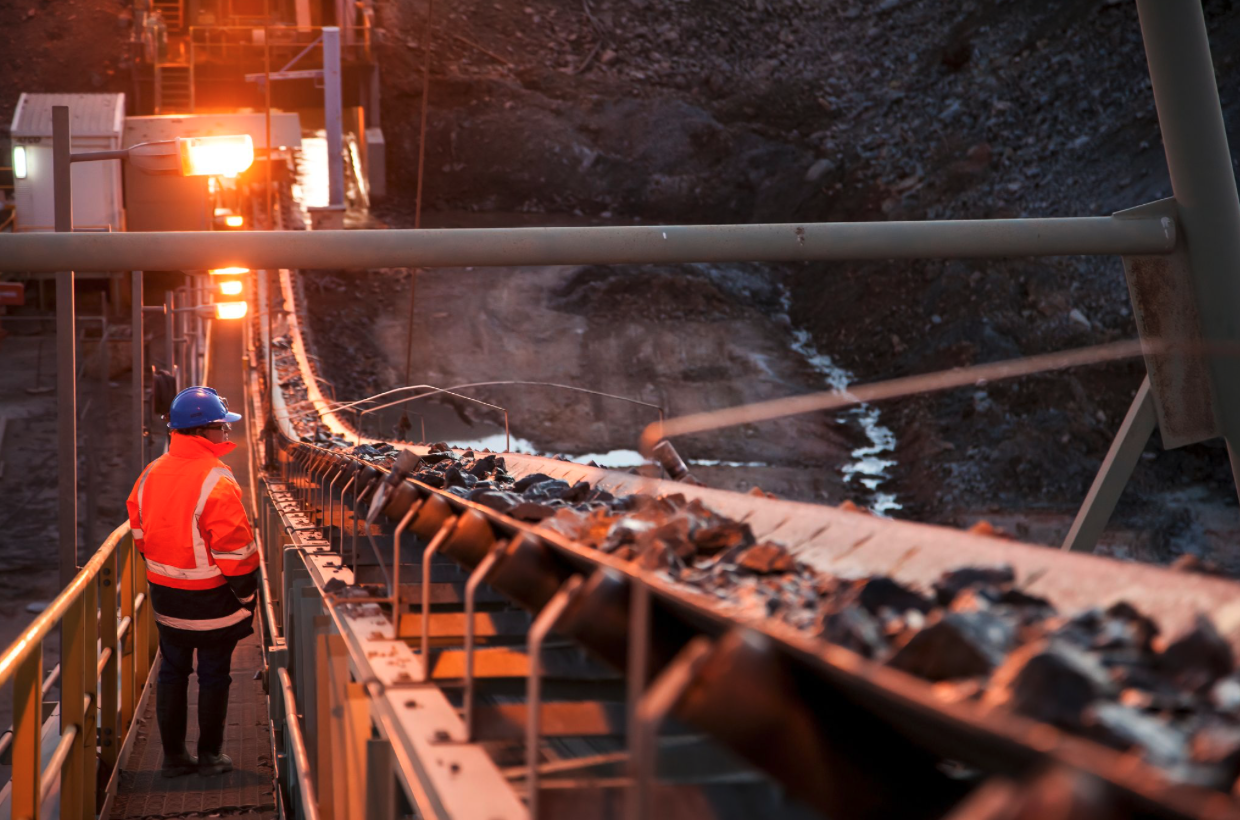 | Photo by Adobe Stock Photos |
|
|
|
|---|
Rare earth minerals have become increasingly important to the home services industry as contractors, manufacturers and distributors rely more heavily on advanced technology, electrification and smart equipment. These seventeen elements are critical components in HVAC systems, heat pumps, smart home devices, solar panels and energy efficient appliances that are rapidly transforming residential services. What was once a distant industrial supply chain issue is now landing directly on the cost structures of home services operators.
China remains the dominant force in the market. According to the Financial Times, China controls ~70% of global rare earth mining and nearly 90% of processing capacity. That concentration has created growing concern among manufacturers and contractors that depend on imported components for equipment ranging from HVAC compressors to EV charging infrastructure. When Beijing moves, the entire supply chain feels it.
The market has grown significantly more volatile following a wave of export restrictions. According to the Council on Foreign Relations, China imposed export controls in 2025 on several heavy rare earth elements including dysprosium, terbium and yttrium, which are essential for high performance magnets and advanced electrical systems. Those restrictions exposed how dependent global supply chains remain on Chinese processing infrastructure and contributed to meaningful pricing pressure across manufacturing sectors.
The downstream impact on home services is already visible. According to Reuters, prices for some rare earth oxides experienced significant spikes following supply constraints. Rising material costs have increased pressure on HVAC manufacturers, appliance producers and electrical equipment suppliers, pressure that ultimately translates into higher installation and replacement costs for homeowners and tighter margins for the operators serving them.
Demand is accelerating at the same time supply is tightening. According to the International Energy Agency, global electric vehicle production surpassed 17 million units in 2024 while heat pump adoption continues to expand rapidly across North America and Europe. Many of these systems depend on permanent magnets made from rare earth elements such as neodymium and dysprosium for energy efficient motors and compressors. The electrification trend is structural, and it is running directly into a constrained supply chain.
For home service providers, supply chain disruptions, higher equipment costs and growing demand for energy efficient technology are increasingly shaping pricing, installation timelines and long term business strategy across HVAC, electrical, plumbing and renewable energy services. Operators and investors who treat rare earth exposure as a macro abstraction are underestimating a cost pressure that is already showing up in the numbers. |
| | | | |  | | | Employee stock ownership plans have emerged as a compelling strategy for ownership transition, employee engagement and long term value creation. At their core, ESOPs allow employees to gain an equity stake in the company through a trust structure, aligning incentives between workers and shareholders while offering a tax advantaged liquidity path for owners. As succession pressures intensify across the lower middle market, the structure is moving from niche to mainstream.
The scale of adoption reflects that shift. According to the National Center for Employee Ownership, there are more than 6,600 ESOPs in the United States covering ~15 million participants and over $2 trillion in assets. According to Deloitte's ESOP survey, these plans represent more than 14 million employees and over $1.4 trillion in assets, underscoring their growing relevance in corporate finance strategy.
A major driver of this growth is the so-called Great Ownership Transfer. According to McKinsey, up to six million small and midsize businesses representing trillions in enterprise value are expected to transition ownership in the coming decade. ESOPs offer an alternative to private equity or strategic sales by keeping companies independent while transferring wealth to employees. For founder-led businesses where legacy and culture matter as much as valuation, that distinction carries real weight.
Performance data strengthens the case further. Companies adopting ESOP structures see productivity improvements of 4-5% in the first year and achieve 25% greater job growth over a decade compared to non-ESOP peers. Additional research cited by the National Center for Employee Ownership shows ESOP firms can grow 2.3-2.4% faster than expected, with even stronger gains when paired with participative management. The structure does not just transfer ownership. It tends to improve the business being transferred.
From an employee perspective, the benefits are tangible. According to Citizens Bank, ESOP participants often carry significantly higher retirement savings, in some cases double that of non-ESOP employees. That shift from wages to wealth building is a meaningful differentiator for retention and engagement in industries where labor quality is a direct driver of business performance.
For business owners, ESOPs provide liquidity, succession planning and potential tax advantages without requiring a full exit to a financial or strategic buyer. For employees, they offer a pathway to ownership without upfront capital. As capital markets evolve and the generational ownership transfer accelerates, ESOPs are increasingly positioned as a durable solution for operators who want to monetize without walking away. |
|
|
|
|---|
SPOTLIGHT The 5 Basic Automations Every Business Should Run |  | | |
Efficiency is no longer a competitive advantage. It is a baseline expectation. As businesses look to do more with leaner teams, tools like Claude Code are making automation accessible without requiring a dedicated engineering department. Below are five practical automations that can reduce repetitive work, improve accuracy and free up time for higher-value activity.
Customer Support Triage Sorting incoming customer emails and messages by urgency and topic is one of the highest-leverage automations a service business can implement. Claude Code can tag billing issues, technical problems and general inquiries, then route each to the appropriate team without manual intervention. According to McKinsey research on AI-driven productivity, automated triaging can reduce response times by up to 40%. For businesses handling high inbound volume, that improvement compounds quickly.
Meeting Summaries and Action Items Manual note-taking is inefficient and inconsistent. Claude Code can process meeting transcripts and generate concise summaries with clearly assigned action items, ensuring alignment across teams and reducing the risk of missed follow-through. Harvard Business Review research highlights that structured post-meeting summaries significantly improve decision execution, a straightforward gain for any organization running a high volume of internal calls.
Data Entry and CRM Updates Manual data entry is slow and error-prone. Claude Code can extract relevant information from emails, forms and documents and push updates directly into CRM systems, removing a step that consumes significant team bandwidth without adding analytical value. Salesforce research shows that automation in CRM workflows can increase sales productivity by over 30%, a figure that reflects both time saved and data quality improved.
Content Drafting and Editing Marketing teams can use Claude Code to generate first drafts of blog posts, newsletters and social media content, and to refine tone, grammar and clarity in existing copy. The goal is not to replace human judgment on strategy and messaging. It is to eliminate the blank page problem and accelerate the production cycle so teams spend more time on decisions and less on drafting.
Invoice Processing and Expense Tracking Claude Code can read invoices, extract key details and log them into accounting systems, flagging anomalies or missing information in the process. According to Deloitte, automation in financial processes can reduce processing costs by up to 50%. For growing businesses where finance teams are stretched, that reduction translates directly into capacity.
The case for these automations is not about replacing employees. It is about redirecting them. Small, targeted automations applied to the right workflows produce meaningful efficiency gains without sacrificing quality or oversight. For operators building scalable businesses, that is precisely the kind of leverage worth pursuing. |
|
|
|
|---|
|
| | This Week’s M&A Highlights |  |
|
|
|---|
|
●Gardiner Service Company acquired IntelliTech Fire & Security, a Medina, OH-based full-service provider specializing in fire protection and building safety systems
●Kompass Kapital-backed Founders Home Service Group acquired AAA City Plumbing, a Charlotte, NC-based plumbing company
●Allied Industrial Partners-backed Liberty Waste Solutions acquired Randolph County Garbage Services, an Asheboro, NC-based residential subscription waste collection company
●Altas Partners-backed Redwood Services acquired the Sierra Platform, a Las Vegas, NV-based residential HVAC, plumbing and electrical services company
●The Davey Tree Expert Company-backed Hartney Greymont acquired Green Trees Arborcare, a Wrentham, MA-based provider of residential and commercial tree care and plant health care services
●MSA Safety (NYSE: MSA) acquired Autronica Fire and Security, a fire and gas safety lifecycle solutions business, for ~$555M
●Boyne Capital acquired H&B Facility Services, a Lake Hiawatha, NJ-based commercial cleaning and facility services platform
●Platinum Equity acquired Infratech, a Gardena, CA-based infrared electric heating solutions company
●LGP-backed Pye-Barker Fire & Safety acquired AAA Fire Extinguisher, a Lubbock, TX-based portable fire extinguisher and fire suppression systems inspection and servicing company
●Align Capital Partners-backed Strata Landscape Services acquired Watersedge Landscape and Venco Western, two San Diego, CA-based public and commercial landscape companies
|
|
|
|---|
|
ABOUT US WestGate Partners | | | WestGate Partners (WGP) is an independent sponsor focused on acquiring and growing lower middle market businesses in essential residential and commercial services. We bring institutional experience, tailored capital with hands-on partnership to help owners transition, grow and preserve their legacy. By partnering with strong operators, we build enduring businesses in economically-insulated industries. |
|
|
|
|---|
|
For more information, please visit: |
|
|
| | |
|---|
|
|