| |
THIS WEEK'S KEYS:Pulse: The SBA's Shrinking Lane Playbook: The Aftermarket Advantage: Recurring Revenue & the Right to Repair Spotlight: The Lower Middle Market's Lender of Choice Roundup: This Week’s M&A Highlights
Have a great weekend! | | |
| | | PULSE The SBA's Shrinking Lane |  | Photo By Adobe Stock Photos |
|
|
|
|---|
For decades, the SBA's 7(a) loan program was the primary financing engine for lower middle market acquisitions, making it feasible for buyers with limited personal capital to purchase profitable businesses. That engine is now stalling, and the cause is not a recession or a credit crisis. It is policy.
Since the start of FY2026, 7(a) loan volume has declined 18%, per American Banker's March 2026 analysis. The contraction traces directly to a series of eligibility restrictions that have shrunk the qualified borrower pool faster than the market can absorb.
The fraud crackdown provided the initial justification. In January 2026, the SBA suspended 6,900 Minnesota borrowers tied to pandemic-era fraud. In February, it extended that action to 111,620 California borrowers linked to $8.6 billion in fraudulent activity. The agency, working with Palantir on pattern analysis across its loan portfolios nationwide, has characterized the findings as a "culture of fraud," giving the administration cover for broader structural reform.
That reform arrived quickly. Under SBA Policy Notice 5000-876441, businesses must now be 100% owned by US citizens or nationals to access any SBA-backed financing, including the 7(a) and 504 programs. Green card holders are fully excluded with no exceptions. A 1% ownership stake held by a permanent resident disqualifies the entire company. As NerdWallet reported in February 2026, the SBA has since extended the rule to microloans and its Surety Bond Guarantee program, effective April 1.
The lower middle market is disproportionately exposed. According to Axios, immigrants account for 18-23% of all US small business owners, with heavy concentration in restaurants, construction and service businesses, sectors that represent a significant share of lower middle market deal flow. Calder Capital has already flagged longer approval timelines and structural deal pivots as lenders adapt to the new landscape.
The gap is being imperfectly filled. American Banker quoted Adam Benowitz, CEO of VOX Funding, warning the restrictions would push borrowers toward alternative lenders. Private credit AUM has reached ~$1.7 trillion, but non-bank financing carries higher rates and tighter terms. It is a costly substitute for government-backed capital, not an equivalent one.
The 7(a) program was built to expand access to capital. The current trajectory is doing the opposite, and the lower middle market is absorbing the impact in real time. |
| | | PLAYBOOK The Aftermarket Advantage: Recurring Revenue & the Right to Repair | 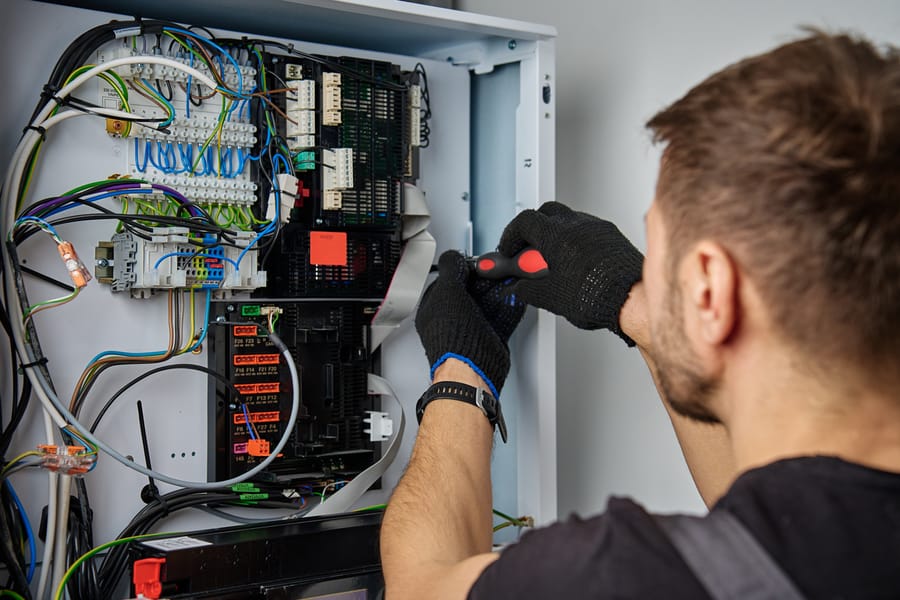 | Photo by Adobe Stock Photos
|
| In home services, a significant share of economic value is not generated at installation. It is generated after, through maintenance, repairs, diagnostics, routine servicing and component replacement over the life of the asset. That aftermarket revenue compounds over time and, critically, it carries far better margins than the initial sale. McKinsey & Company research suggests aftermarket services generate EBIT margins of ~25% compared to ~10% for new equipment sales. For operators and investors building platform businesses, that delta is the thesis.
The industry has been moving toward more structured service models to capture that value. Historically, home services firms operated reactively, dispatching technicians only after equipment failures. The shift toward preventative and subscription-based maintenance converts episodic repairs into predictable, recurring income. The US Department of Energy estimates that predictive maintenance programs can reduce maintenance costs by up to 30% for facility and equipment operations, compressing costs while stabilizing revenue at the same time.
Subscription models do more than improve the revenue profile. According to Jaken Equities, companies with subscription-based revenue streams command 2-4x higher valuation multiples than peers. For sponsors underwriting home services platforms, that multiple expansion potential is a direct underwriting input, not a secondary consideration. Predictable cash flows reduce risk, improve lender confidence and support more aggressive platform buildout.
The right to repair introduces friction into that model. As manufacturers increasingly build closed service ecosystems that restrict repairs to their own approved networks, independent operators face real constraints on their ability to capture aftermarket value. Legislative momentum is building in response. A University of Chicago study found that 84% of Americans support granting more rights to independent repair professionals, and legislative activity around the issue has accelerated in recent years. The outcome of that debate will have direct implications for how much aftermarket value independent operators can realistically retain.
The tension is worth underwriting carefully. Recurring service revenue is one of the most powerful value creation levers in home services, but its durability depends on access to the repair ecosystem. Operators and sponsors that navigate manufacturer restrictions effectively, whether through approved network partnerships, proprietary service agreements or legislative tailwinds, will be better positioned to capture the full margin potential that aftermarket services represent. |
|
|
|
|---|
|
SPOTLIGHT The Lower Middle Market's Lender of Choice |  | Photo by Adobe Stock Photos |
| Most conversations on private credit start with Ares, Apollo or Blackstone. Monroe Capital is fine being a few rungs below the spotlight. Founded in 2004 by Ted Koenig in Chicago, the firm has spent two decades compounding quietly, building one of the most focused private credit franchises in the US through disciplined lending in the lower middle market and targeting companies with ~$35 million in EBITDA that larger platforms routinely skip.
The core of Monroe's business is direct lending. The firm provides senior secured loans, unitranche facilities and mezzanine debt directly to borrowers, bypassing the syndicated loan market entirely. That model produces stickier relationships, stronger structural protections and historically lower loss rates than broadly syndicated alternatives. Fund V attracted over 90 institutional investors from 18 countries, including pension plans, insurance companies, foundations, endowments and family offices. According to Alternatives Watch, institutional appetite for the strategy is genuinely global, not niche.
The numbers reflect consistent execution. Monroe's 2025 Private Credit Fund V brought total investable capital to $6.1 billion, its largest direct lending vehicle to date, stepping up from Fund IV's $4.8 billion close in April 2022. The firm now manages ~$23 billion in assets under management and employs over 320 people, including ~115 investment professionals focused on deal sourcing and underwriting.
The firm's strategic trajectory shifted meaningfully in late 2024. Wendel Group, one of Europe's leading listed investment firms, completed a transaction to acquire a 75% equity stake in Monroe and committed $1 billion for seed capital and GP commitments across current and future Monroe strategies. In parallel, Monroe launched MLEND, a new non-traded BDC targeting retail investors through senior secured and club loan strategies, broadening the firm's product shelf beyond its institutional core.
The recognition Monroe has accumulated points to a firm performing consistently rather than peaking. GrowthCap Advisory named Monroe a Top Private Credit Firm for the second consecutive year in 2025, evaluating firms on partnership approach, team caliber and ability to deliver effective solutions to portfolio companies. Private Equity International noted that the criteria favor relationship-driven lenders over volume players, a profile Monroe fits precisely.
The Wendel partnership, the Fund V close and the MLEND launch together tell a coherent story: a founder-led firm that spent two decades mastering a specific niche and is now, with institutional backing and a broader product shelf, scaling into something considerably larger. In private credit, that combination of earned credibility and deliberate expansion is harder to build than the headline numbers suggest. |
|
|
|
|---|
|
| | This Week’s M&A Highlights |  |
|
|
|---|
|
●Align Capital Partners-backed Strata Landscape Services acquired Venco Western, a commercial landscape provider
●Trinity Hunt Partners-backed Visterra Landscape Group announced a strategic investment in Land Corps
Landscaping, a provider of commercial landscape maintenance and enhancement services
●New State Capital Partners-backed Harrell-Fish acquired Ecofriendly Mechanical, a HVAC and mechanical solutions company
●Armory Capital-backed Westnet acquired Low Voltage Installations, a fire dispatch systems company
●Rentokil Terminix acquired Cridder Ridder Wildlife and Pest Control and Animal Remover, two wildlife control companies
●Home Depot (NYSE:HD)-backed Heritage Pool Supply Group acquired Commercial Energy Specialists Holdings, a wholesale distributor of commercial pool equipment, chemicals and supplies
●Trivest Partners-backed LMC Landscape Partners acquired Prestige Landscape Services, a Dallas-based landscape maintenance company
●Massey Services acquired Urbanex Pest Control, an Alabama-based residential pest, termite and mosquito control service
|
|
|
|---|
|
ABOUT US WestGate Partners | | | WestGate Partners (WGP) is an independent sponsor focused on acquiring and growing lower middle market businesses in essential residential and commercial services. We bring institutional experience, tailored capital with hands-on partnership to help owners transition, grow and preserve their legacy. By partnering with strong operators, we build enduring businesses in economically-insulated industries. |
|
|
|
|---|
|
For more information, please visit: |
|
|
| | |
|---|
|
|