| | THIS WEEK'S KEYS:Pulse: Climate as a Capital Variable Playbook: The 90-Day Integration Playbook Spotlight: The Bifurcation of Commercial Cleaning Roundup: This Week’s M&A Highlights
Have a great weekend! | | |
| | | PULSE Climate as a Capital Variable | 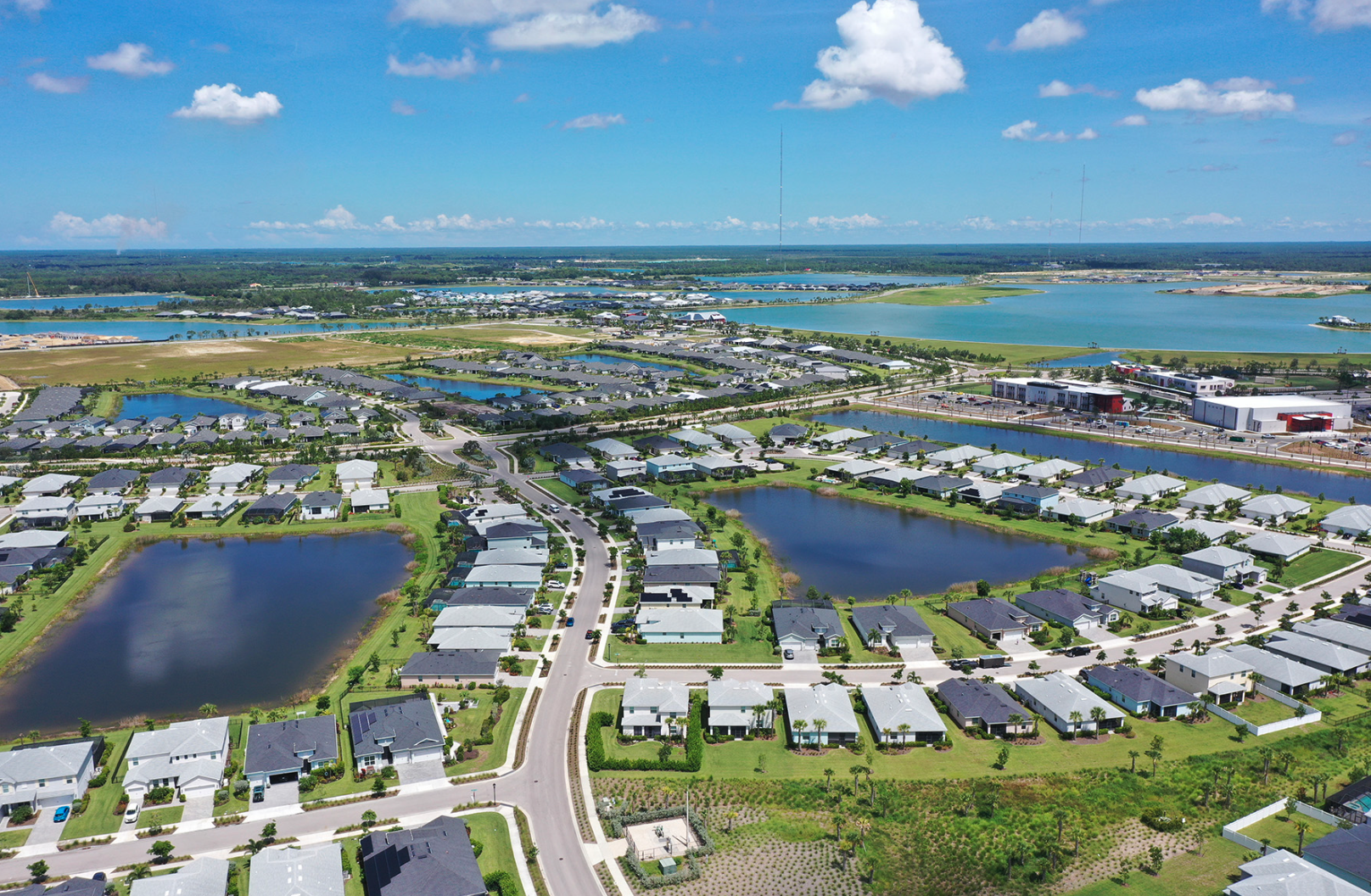 | | |
|
|
|---|
Florida’s growth story has long been defined by migration, tax policy and demographic momentum. Increasingly, it is being shaped by physics.
The state remains one of the fastest-growing in the country. According to U.S. Census Bureau estimates, Florida added more than 365,000 net new residents in 2023 alone, ranking among the top states for population growth. Yet the conditions underpinning that expansion are shifting. Climate is no longer a background variable. It is an input into capital allocation, insurance pricing, infrastructure planning and long-term asset valuation.
Recent storm activity has made that reality tangible. Hurricane Helene served as a clear example of intensifying weather dynamics. World Weather Attribution researchers concluded that Helene’s wind speeds were ~11% stronger and rainfall totals ~10% higher due to climate change. That incremental intensity materially alters damage functions. Small percentage increases in wind velocity can translate into disproportionately higher structural losses because wind damage scales nonlinearly.
Longer-term climate data reinforce the trend. The past decade has been the warmest on record globally, with 2023 and 2024 marking new temperature highs. Florida has experienced a steady increase in extreme heat days, defined as days exceeding 95 degrees Fahrenheit. Meanwhile, Florida State University climate researchers estimate that sea levels along portions of Florida’s coastline have risen roughly 8 inches since 1950, with the rate of rise accelerating over the past three decades. Even marginal increases in baseline sea level meaningfully expand storm surge reach.
The impact on energy demand is structural. McKinsey research notes that rising temperatures increase cooling loads, particularly in Sun Belt states where air conditioning is already non-negotiable. The U.S. Energy Information Administration reports that Florida households already devote a higher share of electricity consumption to air conditioning than the national average. As average temperatures rise, peak demand periods extend, stressing grid infrastructure. Utilities are responding with grid hardening investments and capacity expansion, while developers are incorporating higher efficiency HVAC systems, reflective roofing materials and tighter insulation standards to comply with evolving building codes.
Sea-level rise is reshaping development geography. Research from the University of Miami’s Rosenstiel School documents the growing frequency of “sunny day flooding” events in South Florida, where high tides alone can overwhelm drainage systems even absent storm activity. Miami Beach has invested hundreds of millions of dollars in road elevation projects, pump installations and stormwater redesign to combat recurrent flooding. These capital expenditures are not episodic repairs. They are structural adaptations. Over time, asset valuation increasingly incorporates elevation data, drainage capacity and proximity to hardened infrastructure.
Insurance markets are internalizing this risk faster than zoning maps. According to the Insurance Information Institute, Florida accounts for a disproportionate share of U.S. homeowners insurance litigation and catastrophe-related claims. Premiums in many counties have increased sharply over the past several years, with some homeowners experiencing double-digit annual increases. Several major insurers have reduced underwriting exposure or exited segments of the Florida market entirely. Reinsurance costs have also climbed, feeding through to retail premiums. Higher insurance costs directly affect housing affordability and influence both residential migration patterns and new development feasibility.
Capital is responding accordingly. While coastal construction continues, development momentum is gradually shifting inland toward comparatively lower flood-risk areas. Builders are incorporating stronger wind-resistance standards, impact-rated materials and flood-mitigation designs, but these upgrades raise per-unit construction costs. In a higher interest rate environment, incremental cost increases can materially alter project viability.
Heat also affects labor productivity. Research from the National Bureau of Economic Research finds that high temperatures measurably reduce worker output in outdoor occupations. Public Citizen has documented rising heat-related illness risk among construction workers. As extreme heat days increase, contractors adjust schedules toward early morning or evening hours. These adjustments, while necessary for safety, can extend project timelines and elevate labor costs. Over time, such changes become embedded in feasibility models and bid assumptions.
The cumulative impact is not a halt to Florida’s expansion. The state’s population growth, business formation rates and migration trends remain robust. Instead, growth is being recalibrated. Infrastructure is being redesigned with climate resilience in mind. Energy systems are scaling for higher baseline loads. Insurance pricing is incorporating forward-looking risk. Asset valuation models increasingly reflect flood exposure and mitigation investments.
Climate risk is moving from abstract environmental discussion to operational variable. For developers, lenders and investors, the key question is not whether Florida will continue to grow. It is how capital will price resilience. In markets where migration remains strong but physical risk intensifies, adaptation becomes an input to return. Elevation, drainage capacity, grid stability and insurability are no longer secondary considerations. They are determinants of long-term value. |
| | | | |  | Photo by Adobe Stock Photos
|
| In mergers and acquisitions, value is rarely lost in the spreadsheet. It is lost in execution. Financial models may justify a transaction and investment memos may outline synergy potential, but the first 90 days after closing determine whether projected value becomes durable performance. Research from McKinsey & Company consistently shows that companies with structured post-merger integration processes significantly outperform those that approach integration reactively. The difference is not the strategy. It is the discipline with which that strategy is executed on the ground.
Immediately after an acquisition closes, uncertainty spreads faster than any operational change. Employees question reporting lines, customers question continuity and vendors question payment behavior. The most effective acquirers address this ambiguity immediately. Boston Consulting Group notes that clearly defined governance structures and decision-making authority established in the first month materially increase the probability of achieving projected synergies. When leadership communicates roles, priorities and escalation paths early, disruption compresses rather than compounds.
Stability is therefore the first objective. Many acquirers attempt to optimize before protecting the core. Field-level disruptions in payroll, scheduling or procurement can erode trust within days. A study by PwC highlights that early operational instability is one of the strongest predictors of integration underperformance. The first 30 to 45 days should prioritize revenue protection, retention of key employees and uninterrupted service delivery. In route-based and labor-intensive services businesses, even minor disruptions to dispatch systems or vendor terms can cascade into margin compression and customer churn.
Once stability is secured, momentum becomes essential. Integration cannot remain in a holding pattern. Employees and middle managers need visible evidence that the transaction is creating tangible improvements rather than abstract strategic alignment. Bain & Company emphasizes that integrations delivering measurable “quick wins” within the first 60 days experience higher morale and lower voluntary attrition. These wins may include harmonizing pricing policies, consolidating procurement agreements or implementing unified reporting dashboards. The financial impact may initially be incremental, but the signaling effect is powerful. Early wins demonstrate competence and reinforce confidence in leadership.
At the same time, discipline must extend beyond cost and systems integration. Cultural alignment is frequently underestimated yet repeatedly cited as a primary cause of acquisition failure. Harvard Business Review research shows that many integrations fail not because the strategic logic was flawed but because incentives, expectations and leadership styles were misaligned. During the first 90 days, leaders must articulate a shared operating philosophy and align performance metrics accordingly. Compensation structures, reporting cadence and accountability frameworks should reinforce the new structure rather than perpetuate legacy silos.
Measurement anchors the entire process. Revenue retention, backlog quality, customer churn, employee turnover and operational uptime should be monitored closely throughout the transition. Transparent reporting does more than track performance. It creates alignment. When managers understand how daily metrics connect to integration success, execution improves. Integration becomes a shared operational objective rather than a corporate initiative imposed from above.
Integration also requires restraint. The first 90 days are not the time for wholesale reinvention. Aggressive system migrations or structural overhauls can destabilize operations before trust is established. Strong acquirers sequence change. They protect revenue first, build confidence second and optimize third. That sequencing preserves optionality while reducing execution risk.
Ultimately, the first 90 days after closing are less about transformation and more about controlled acceleration. They are about operational steadiness, visible progress, cultural clarity and disciplined leadership. In private markets, it is often said that the deal is won after it closes. Acquirers who prioritize early execution, clear governance and measurable momentum materially increase the likelihood that their acquisition thesis translates into durable results. |
|
|
|
|---|
|
SPOTLIGHT The Bifurcation of Commercial Cleaning |  | | | For decades, commercial cleaning occupied a predictable place in corporate budgets. It was categorized as a necessary but interchangeable service, evaluated primarily on cost per square foot and compliance with basic specifications. Procurement teams frequently awarded contracts to the lowest bidder and providers competed on labor efficiency rather than differentiation. Cleaning was measured by what it did not do: create complaints, disrupt operations or exceed budget.
That model has fractured.
Since 2020, the commercial cleaning industry has undergone a structural bifurcation. It is increasingly divided between commodity providers competing on price and advanced service partners positioned as risk mitigation and operational resilience specialists. The shift is not cosmetic. It reflects deeper changes in how organizations evaluate health, safety and productivity inside commercial environments.
Workplace expectations have evolved materially. McKinsey & Company research on workplace health and resilience has shown that employee confidence in physical work environments materially influences engagement and retention. Organizations that signal credible hygiene and safety standards experience stronger workforce confidence, particularly in hybrid environments where attendance is increasingly discretionary. Cleaning is no longer invisible. It is part of the employer value proposition.
Industry data reinforces this repositioning. The International Sanitary Supply Association estimates that the global cleaning industry now exceeds $400 billion in annual economic impact. ISSA research also demonstrates that enhanced cleaning and disinfection protocols meaningfully reduce the transmission of pathogens in commercial settings, particularly in high-touch and high-traffic areas. In sectors such as healthcare, education and logistics, cleaning standards are increasingly embedded within compliance frameworks and insurance underwriting requirements. In these environments, failure is not merely aesthetic. It carries liability risk.
The financial stakes are material. According to the Academy to Innovate HR, illness-related absenteeism costs U.S. employers billions annually in lost productivity. Harvard Business Review has cited research indicating that healthier workplaces are associated with lower absenteeism, higher engagement and improved performance outcomes. While cleaning is only one component of workplace health, it functions as a frontline defense against operational disruption.
Procurement behavior is reflecting this divide. Commodity providers continue to win contracts in price-sensitive segments such as small office buildings and cost-constrained retail environments. Their differentiation remains limited to labor pricing and standardized checklists. Margins are thin and switching costs are low.
In contrast, advanced cleaning partners are investing in workforce certification, measurable outcomes and technology-enabled service models. Deloitte research on smart facilities highlights the growing use of Internet of Things sensors, occupancy analytics and automated scheduling systems that allow cleaning frequency to respond dynamically to building utilization patterns. Instead of fixed nightly routines, high-traffic zones receive predictive service while low-usage areas are optimized for cost efficiency. The result is higher hygiene performance with better labor allocation.
Technology is reinforcing the bifurcation. Electrostatic sprayers, advanced filtration systems and data-driven inspection tools are increasingly common among higher-tier providers. Performance dashboards now allow facilities managers to track completion rates, response times and compliance metrics in real time. These capabilities transform cleaning from a manual task to a measurable service outcome.
Market growth projections underscore the strategic importance of the category. Verified Market Research estimates that the global commercial cleaning services market will continue expanding steadily through the end of the decade, supported by urbanization, regulatory scrutiny and rising expectations for workplace safety. In the United States, continued growth in logistics facilities, healthcare infrastructure and educational campuses further expands demand for professionalized cleaning services.
Occupant perception has also become a measurable variable. PwC survey data shows that employees are more willing to return to physical workplaces when they trust hygiene protocols and visible cleanliness standards. In competitive labor markets, perception influences behavior. A visibly maintained environment signals institutional competence and care.
The long-term implication is structural. Cleaning is migrating from a discretionary expense line to a component of enterprise risk management. In highly regulated environments such as food production, pharmaceuticals and healthcare, hygiene standards are directly tied to inspection outcomes and operational continuity. In corporate offices and mixed-use buildings, cleanliness influences occupancy rates, tenant retention and brand perception.
This does not eliminate the commodity segment. Price-sensitive buyers will continue to prioritize cost efficiency. But the strategic tier of the market is expanding, supported by regulatory expectations, technology integration and workforce psychology.
Commercial cleaning is no longer simply about surface appearance. It sits at the intersection of risk management, employee trust and operational resilience. Providers that invest in expertise, data and measurable outcomes are positioning themselves as partners rather than vendors. In an environment defined by heightened awareness of health and continuity, that distinction is no longer subtle. It is structural. |
|
|
|
|---|
|
| | This Week’s M&A Highlights |  |
|
|
|---|
|
●CID Capital-backed Hittle Landscaping acquired Calvin Landscape, an Indianapolis, IN-based landscape construction servicer
●Truly Lawn acquired TurfDoctor, LawnMaster and LawnPhix, all Massachusetts-based lawnscapers
●TruArc-backed Schill Grounds Management acquired Begonia Brothers Services and Atlas Outdoor, both Michigan-based commercial landscapers
●Halle Capital-backed Rockit acquired Green Solutions Lawn & Pest Control, a Tampa, FL-based lawn care and pest control company
●Southern Home Services acquired Alabama-based Dunn's HVAC, Plumbing & Electrical
●Noosa Pest Management acquired South Carolina-based HomeWorks Pest Control
●Kian Capital-backed Diamond Landscaping acquired Christensen Landscape Services, a Connecticut-based residential landscaper
●Green Heron Partners announced an investment in Regency Plumbing Contractors, a Houston-based commercial plumbing contractor |
|
|
|---|
|
ABOUT US WestGate Partners | | | WestGate Partners (WGP) is an independent sponsor focused on acquiring and growing lower middle market businesses in essential residential and commercial services. We bring institutional experience, tailored capital with hands-on partnership to help owners transition, grow and preserve their legacy. By partnering with strong operators, we build enduring businesses in economically-insulated industries. |
|
|
|
|---|
|
For more information, please visit: |
|
|
| | |
|---|
|
|