| | THIS WEEK'S KEYS:Pulse: The Reworked Career Trajectory Playbook: Scaling Without Breaking The System Spotlight: Garage Doors: The Intersection of Repair & Technology Roundup: This Week’s M&A Highlights
Have a great weekend! | | |
| | | PULSE The Reworked Career Trajectory |  | Photo By Adobe Stock Images |
| For much of the last century, professional careers followed a predictable pattern. Individuals selected a field early, joined an organization and progressed upward through a hierarchy over decades. Loyalty to one company or industry was common, and career success was measured by tenure, title progression and long-term stability. That model increasingly no longer reflects reality for today’s students.
College students now approach careers very differently from their parents and grandparents. Rather than committing to a single profession, many deliberately pursue multiple majors, interdisciplinary programs and transferable skill sets to preserve optionality. Pairings such as finance and computer science, consulting and analytics or engineering and business are increasingly common. These choices are not simply exploratory. They are a rational response to economic pressure, labor-market volatility and institutional lag within higher education.
One of the strongest forces reshaping career decision-making is cost. The price of higher education has risen dramatically over the last two decades. According to the Federal Reserve Bank of New York, the average student loan balance for U.S. graduates is now ~$40,000, and total outstanding student loan debt exceeds $1.6 trillion. Debt service obligations begin almost immediately after graduation, which materially influences early-career risk tolerance. As a result, students increasingly prioritize roles that offer high entry-level compensation, brand credibility and perceived exit flexibility. This financial pressure encourages students to treat education less as personal development and more as capital allocation. Majors and early job choices are evaluated based on expected return, downside protection and mobility rather than passion alone. Research from the National Association of Colleges and Employers (NACE) shows that average starting salaries in finance, consulting and computer science can exceed those in humanities and social sciences by 40–60% in the first year out of school. When combined with high fixed debt costs, these gaps strongly shape behavior.
Labor-market dynamics reinforce the shift. The U.S. Bureau of Labor Statistics reports that the median employee tenure across all industries is now just over four years, down meaningfully from prior decades. For workers aged 25 to 34, average tenure is even shorter. Job switching is no longer a red flag but a normalized feature of career progression. In this environment, committing too narrowly to a single path carries real risk.
At the same time, the pace of job creation and skill obsolescence has accelerated. The World Economic Forum estimates that ~44% of workers’ skills will be disrupted by 2027, driven by automation, artificial intelligence and digital transformation. New roles are emerging faster than universities can revise curricula, creating a mismatch between academic training and market needs. Students respond by building adaptable skill stacks that can be redeployed across industries rather than betting on a single occupation.
Recruiting practices amplify this behavior. Competitive pipelines in investment banking, consulting, and technology now recruit students as early as sophomore year, forcing career signaling decisions before meaningful exploration has occurred. Resume screens and brand-based filters reward linear narratives, even as the broader economy rewards adaptability. To hedge this tension, students choose entry points that preserve optionality and offer multiple downstream paths.
The result is a generation that structures its professional lives around sequences of experiences rather than a single lifelong role. Critics argue this erodes craftsmanship and long-term commitment. Others view it as a practical response to an economy defined by volatility, rising education costs and faster cycles of change.
What is clear is that the era in which most professionals worked in one industry until retirement has largely passed. In its place is a career model built on continuous skill renewal, mobility and personal development. For today’s students, flexibility is not avoidance. It is strategy. |
|
|
|
|---|
PLAYBOOK Scaling Without Breaking The System |  | Photo by Adobe Stock Images |
| Growth always looks clean on a slide. In real operations, on the floor, in the field and across multiple sites, growth feels more like a pressure test. Volume increases, handoffs multiply, exceptions rise and the same 24 hours in a day remain. As businesses scale, the operator’s role inevitably shifts from doing the work to ensuring the work can reliably happen without them. Whether that transition succeeds depends on how quickly the operating system matures alongside growth.
One of the earliest failure points is process drift. As headcount grows, unwritten rules spread faster than documented standards. The same job begins to get completed multiple ways until a customer complaint, an audit or a KPI forces the inconsistency into view. In early stages, tribal knowledge is efficient. At scale, it becomes expensive. Rework increases, outcomes vary and accountability blurs. This is why quality management frameworks emphasized by the International Organization for Standardization focus on a process-based approach with clear ownership, defined inputs and outputs and continuous feedback loops rather than static documentation that quickly becomes obsolete.
As complexity rises, many organizations slip into a firefighting culture. Leaders spend their days reacting to escalations while teams are rewarded for heroics instead of reliability. Short-term fixes replace root cause analysis and operational debt accumulates quietly. Research from McKinsey & Company shows that organizations with embedded daily management systems, clear escalation paths and continuous improvement habits consistently outperform those that rely on episodic fixes or individual effort. The difference is not fewer problems, but faster and more predictable resolution at the lowest possible level.
Workforce strain compounds these challenges. Hiring, training and retention rarely keep pace with demand. Onboarding compresses, error rates rise and frontline supervisors carry unsustainable loads. Scalable operators treat labor as a system rather than a headcount target. They invest early in repeatable onboarding, role-based training and clear advancement pathways that reduce dependency on any single manager. Harvard Business Review has consistently highlighted that the people closest to the work identify risk, waste and improvement opportunities first when given structured mechanisms to do so. Engaging frontline teams is not cultural fluff. It is a core control mechanism at scale.
Asset reliability and operational flow also come under pressure as volume increases. Preventive maintenance is deferred to hit today’s number, quietly building tomorrow’s outages. Temporary workarounds accumulate and gradually become permanent. Mature operators counter this by establishing basic reliability discipline early: planned maintenance, simple failure tracking and consistent review of availability losses even without full OEE frameworks. The same discipline applies to inventory and internal logistics. As SKU counts and throughput grow, informal tracking breaks down, leading to stockouts, expedited freight and excess working capital. Industry analysis from JUSDA Global highlights that weak in-plant logistics and material flow often become hidden constraints on growth long before leadership recognizes them.
Technology rarely fixes these issues on its own. Tool sprawl, inconsistent data definitions and disconnected reporting layers can add friction rather than remove it. High-performing platforms standardize a small set of operational KPIs early and use technology to reinforce execution and visibility, not to add steps or complexity. The goal is consistent decision-making, not dashboards for their own sake.
Ultimately, scaling operations is not about working harder. It is about building a system that produces consistent outcomes under pressure. Clear standards, capable leaders, stable flow, disciplined maintenance and a culture of continuous improvement allow growth to feel controlled rather than chaotic. When those elements are in place, the business can expand without breaking the machine that sustains it. |
|
|
|
|---|
|
SPOTLIGHT Garage Doors: The Intersection of Repair & Technology | 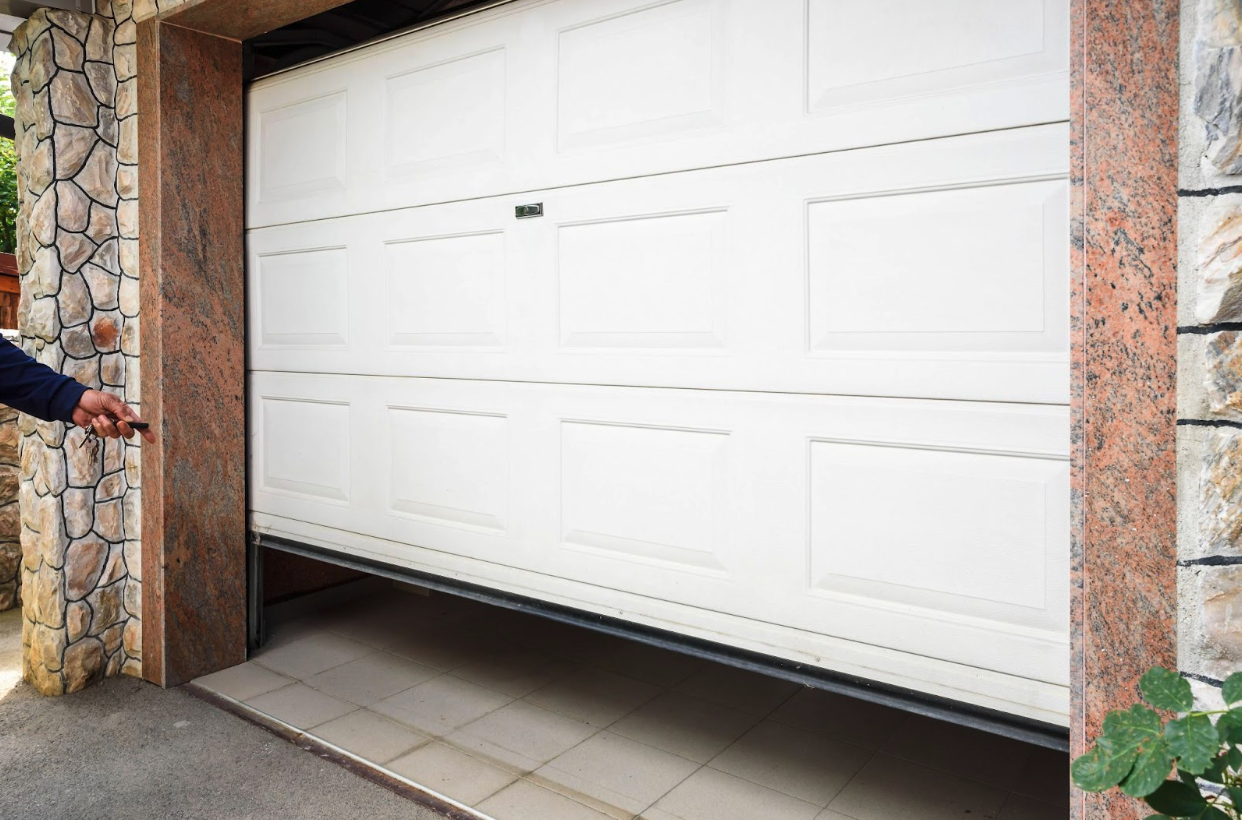 | Photo by Adobe Stock Images |
| What began as a fragmented network of local repairmen has quietly evolved into one of the most structurally attractive segments in the home services economy. Garage door and automated gate companies, once viewed as commoditized service providers, now sit at the intersection of urgency, security and high-ROI home investment. As the market moves through 2026, the category has emerged as a resilient backbone of both residential and commercial property maintenance. Several forces are converging at once. Homeowners are becoming more selective in their spending, prioritizing projects that combine functionality, safety and resale value. Commercial operators are placing greater emphasis on reliability for mission-critical access points. At the same time, smart-home adoption and automation are redefining expectations around how entry systems function and integrate into daily life. The result is a service category that benefits from non-discretionary demand, expanding average ticket sizes and unusually strong customer lifetime value.
Historically, the garage door was treated as a purely functional component of the home. It opened, it closed and it was rarely considered until it failed. That perception has shifted meaningfully. Remodeling Magazine’s Cost vs. Value Report 2025 ranks garage door replacement among the highest-return home improvement projects in the United States. In many markets, homeowners recoup more than 100% of the project cost at resale, and in select high-demand regions reported returns approach 268%. Few other improvement categories offer that combination of visual impact, functional upgrade and resale appeal.
This change has reshaped the operating model. Leading companies no longer position themselves as repair technicians alone. They act as design advisors, energy-efficiency consultants and security integrators. Premium materials such as insulated steel, composite overlays and full-view glass panels have moved garage doors into the aesthetic and performance conversation. For operators, this evolution supports higher margins, stronger upsell opportunities and reduced exposure to price-only competition.
The durability of the garage door and gate business is rooted in structural advantages that are difficult to replicate across other home services categories. When a torsion spring fails or a motor seizes, the problem often creates a “trapped-car” scenario. Access to the home or vehicle is immediately compromised. Demand becomes urgent and price-inelastic. Customers are not shopping for the lowest bid. They are seeking the fastest credible solution. Emergency response pricing, after-hours service and bundled repairs support healthy unit economics even when broader discretionary spending slows.
At the same time, garage doors are complex mechanical systems with predictable wear cycles. Springs, rollers, cables and motors degrade over time, creating natural entry points for inspection, maintenance and replacement. Industry research from The Freedonia Group notes that aging components and safety requirements support recurring service revenue and long customer lifetimes. For well-run operators, a single installation can anchor years of follow-on service, upgrades and eventual replacement, reinforcing a compounding revenue profile.
Technology has further elevated the category. Modern garage door systems now feature Wi-Fi connectivity, mobile monitoring, remote access and AI-enabled geofencing. These features shift the value proposition from one-time hardware sales to ongoing service and system management. As smart-home penetration increases, garage doors are increasingly treated as part of the broader home security ecosystem rather than standalone components. For operators, technology integration expands average ticket size and deepens customer relationships by embedding the company into everyday homeowner routines.
While residential work provides steady volume, the commercial and industrial segments add defensibility and scale. High-cycle overhead doors and automated gates are critical infrastructure for warehouses, logistics hubs, cold storage facilities and manufacturing sites. Verified Market Research points to continued growth in the commercial garage and overhead door market driven by expansion in e-commerce, distribution and industrial real estate. In these environments, downtime is costly. A malfunctioning industrial door can halt operations, disrupt supply chains and create safety risks measured in thousands of dollars per hour. Operators with the technical expertise to service these systems build sticky relationships and face limited competition from general contractors.
Looking ahead, The Business Research Company projects the global garage and overhead door services market to exceed $8 billion by 2026. Automation and smart features are no longer optional upgrades. They are becoming baseline expectations. For operators, the model offers recession-resistant demand anchored by urgency, safety and asset protection. For customers, it delivers a rare combination of security, energy efficiency and property value enhancement. The evolution of the garage door and gate business is a reminder that even the most overlooked entry point can become a high-growth platform. Through disciplined execution, technological adoption and thoughtful expansion across residential and commercial markets, leading operators have transformed a utilitarian service into a structurally advantaged business. |
|
|
|
|---|
|
| | This Week’s M&A Highlights |  |
|
|
|---|
|
●Ardian-backed Impact Climate Technologies acquired BoHeat Transfer Systems, a Georgia-based HVAC equipment company
●AE Industrial Partners-backed United Building Solutions acquired DFW Mechanical Group, a Texas-based commercial and industrial HVAC contractor
●Imperial Capital-backed Certus acquired Smith’s Pest Management, expanding into Silicon Valley
●Storr Group-backed SPS PoolCare acquired Pool Troopers, a multi-state residential and commercial pool maintenance and repair platform
●Preferred Landscaping acquired Stout Creek Landscapes, a Michigan-based commercial and residential landscaper
●Osceola Capital-backed Trauma Services acquired Georgia Clean, Fagala Biohazard Specialists and BioClean Team
●Imperial Capital and Liberty Mutual Investments-backed CERTUS Pest Control acquired National Pool Partners, a Florida-based pool services company
●Ares-backed Landscape Workshop acquired Lucky Landscaping and Ginkgo Landcare, Florida-based commercial landscapers
●TruArc-backed Northwinds Services Group acquired Phoenix Mechanical, an HVAC-focused mechanical services company |
|
|
|---|
|
ABOUT US WestGate Partners | | | WestGate Partners (WGP) is an independent sponsor focused on acquiring and growing lower middle market businesses in essential residential and commercial services. We bring institutional experience, tailored capital with hands-on partnership to help owners transition, grow and preserve their legacy. By partnering with strong operators, we build enduring businesses in economically-insulated industries. |
|
|
|
|---|
|
For more information, please visit: |
|
|
| | |
|---|
|
|