| | THIS WEEK'S KEYS:Pulse: The Inventory Reset in Home Services Playbook: The Pro-First Shift in Building Products Spotlight: Why Second-Generation Company Operators Often Struggle Roundup: This Week’s M&A Highlights
Have a great weekend! | | |
| | | PULSE The Inventory Reset in Home Services | 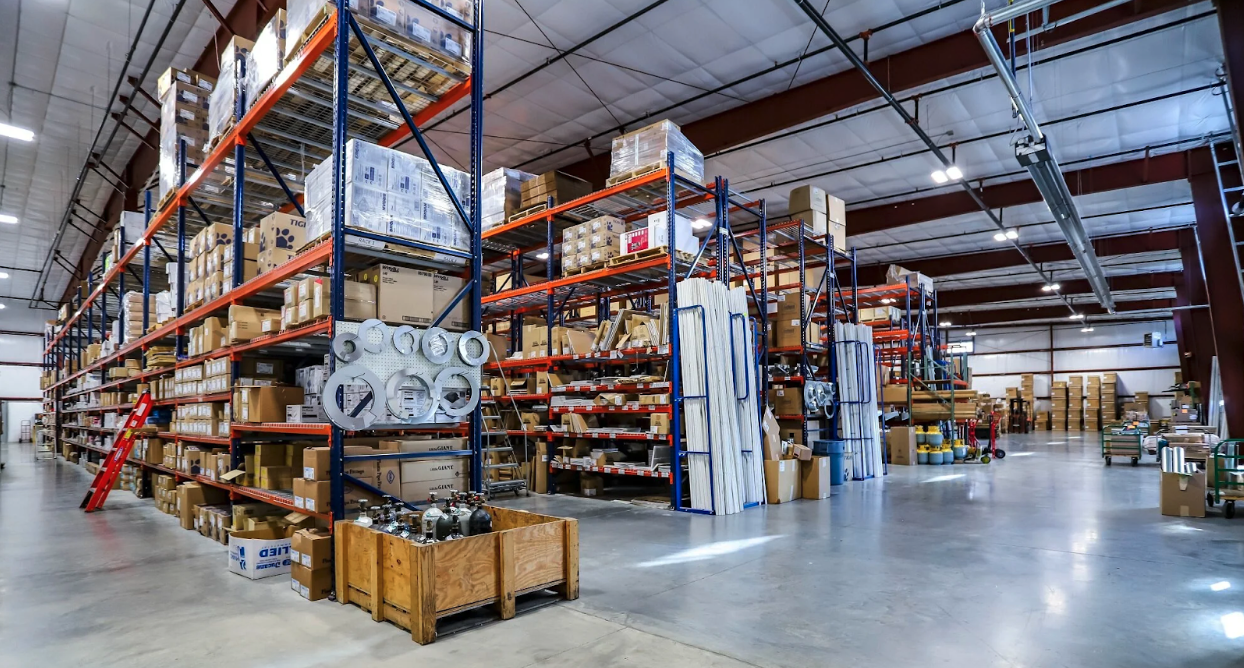 | Photo by Integrating Building Systems |
| The home services ecosystem is working through a rare inventory reset. During the pandemic, contractors and distributors across HVAC, plumbing, electrical, pest, landscaping and adjacent trades faced persistent shortages and unpredictable lead times. Availability became the primary constraint. Operators responded by ordering early, ordering extra and carrying materially more inventory than historical norms to keep trucks running and crews productive. That behavior is visible in public disclosures. Watsco reported inventory levels of ~$1.61 billion as of March 31, 2023 compared with ~$1.37 billion at year end 2022, illustrating how aggressively the channel built buffers to protect supply. Similar dynamics played out across distributors, platforms and independent operators as certainty was prioritized over capital efficiency during the height of supply chain disruption.
As supply chains normalized, those buffers turned into excess. The Federal Reserve Bank of New York’s Global Supply Chain Pressure Index has returned close to pre-pandemic levels, confirming that logistics delays are no longer the dominant constraint they were in 2021 and 2022. At the same time, end market demand cooled from post COVID peaks and many customers entered 2024 already well stocked. The result has been a multi quarter destocking cycle as distributors, contractors and scaled platforms work through inventory before placing incremental orders.
For operators, the reset has brought both relief and friction. Availability has improved materially and lead times are more predictable. But excess inventory is expensive. Stock ties up cash at a moment when higher interest rates have increased the cost of working capital. Data from the Federal Reserve Bank of St. Louis shows the effective federal funds rate remains elevated relative to the prior decade, amplifying the carrying cost of inventory and increasing the penalty for inefficiency. Research from McKinsey & Company has highlighted working capital discipline as a critical lever for resilience in tighter capital environments, placing inventory management at the center of operational performance.
Margin pressure has followed. Some operators are carrying inventory purchased at peak pricing while competing in a softer and more price sensitive market. As input costs normalize, pricing pressure is emerging through discounting and tighter bids, particularly where customers push back on rates set during the shortage years. The lag between procurement costs and current market pricing has introduced noise into reported margins and short term profitability.
There are also second order effects across the value chain. When distributors and platforms pause ordering to destock, volume volatility shifts upstream. Manufacturers experience uneven demand even as product availability remains strong. Contractors that over ordered are forced into cleanup mode, tightening purchasing discipline, reducing SKU complexity and establishing clearer reorder thresholds. Indicators from the Institute for Supply Management show inventory components of recent PMI surveys moderating, reinforcing the view that normalization is underway rather than a collapse in underlying activity. While this transition can be messy, it separates mature operators from reactive ones.
Longer term, inventory management is becoming a competitive differentiator again. The industry is not reverting to fragile just in time models, but it is moving toward a more balanced approach. Operators are carrying less inventory overall while diversifying suppliers, improving demand forecasting and maintaining targeted buffers for true bottleneck items. The playbook is shifting from stockpiling to survive toward optimizing to compete.
For investors and consolidators, this cycle distorts near term performance. Destocking can suppress reported revenue even when service demand remains stable. Elevated cost inventory can temporarily compress margins. Working capital swings can skew cash flow depending on timing. The underwriting takeaway is to normalize for the inventory cycle, focus on steady execution post reset and favor platforms that demonstrate disciplined procurement, pricing rigor and clean operating control.
COVID exposed how fragile supply chains could be. The current glut is exposing how quickly inventory discipline can erode when fear replaces planning. The operators that win next will be those that use this reset to rebuild tighter systems so the next shock does not become the next overcorrection. |
|
|
|
|---|
PLAYBOOK The Pro-First Shift in Building Products |  | Photo by Adobe Stock Images
|
| Home services are often described as local, fragmented and difficult to scale. That perception persists not because growth is unattainable, but because many operators attempt to scale volume before building the structural foundation required to support it. Growth pursued without discipline often increases complexity faster than capability, leaving businesses exposed to operational risk, margin erosion and owner burnout.
True scalability in home services is not defined by fleet size, technician count or topline growth. It is defined by whether a business can grow without a proportional increase in owner involvement, execution risk or earnings volatility. Scalable operators convert variable, project based demand into predictable, system driven revenue streams that support repeatable expansion. As institutional capital continues to flow into HVAC, plumbing, electrical, landscaping and adjacent service categories, this distinction has become increasingly important. Industry research from KPMG highlights that platform durability and operating discipline are now core underwriting priorities as investors differentiate between growth and scalability.
Recurring revenue sits at the center of that structure. One time or emergency driven models produce uneven utilization and force constant reinvestment in customer acquisition. Maintenance agreements, route based services and subscription style plans stabilize cash flow and improve customer lifetime value. Research from CMM shows that recurring client relationships materially improve retention and smooth revenue volatility in service based businesses, reinforcing why investors increasingly favor predictable revenue models across home services. Predictability allows operators to plan staffing proactively, smooth seasonal swings and reinvest in systems rather than relying on overtime, price discounting or last minute hiring during peak periods. Over time, recurring revenue shifts the business from reactive to deliberate.
Geographic density compounds these benefits. Scalable platforms expand depth before breadth, prioritizing tight service territories over rapid multi market expansion. Dense routing reduces windshield time, increases jobs completed per technician per day and improves same day response rates. It also lowers fuel costs and scheduling friction while improving customer satisfaction. From an investor perspective, density enhances margins and creates local defensibility that competitors struggle to replicate without comparable scale, data and infrastructure. Market analyses from Mordor Intelligence reinforce that regional density and route efficiency are key drivers of profitability in the United States HVAC and broader home services markets.
Process standardization is what allows growth to occur without degradation. Many subscale operators rely on informal pricing, manual scheduling and owner judgment to resolve daily operational issues. These approaches may function at a small scale but break down as complexity increases. High performing platforms institutionalize decision making through standardized pricing frameworks, defined service protocols, consistent call handling and real time performance tracking. According to insights from the Forbes Business Council, the integration of field service software, CRM platforms and AI enabled tools is accelerating this shift by reducing operational variance and improving management visibility across crews, branches and markets.
Labor strategy is equally critical. While skilled labor shortages are real, they are rarely the true constraint on scale. The binding constraint is retention, productivity and consistency. Scalable operators invest in structured onboarding, continuous technical training and clear advancement pathways that reduce turnover and improve service quality. Standardized systems ensure that performance does not depend on a single technician, dispatcher or manager. The objective is not to eliminate judgment, but to make outcomes repeatable regardless of who executes the work.
Customer experience also benefits directly from professionalization. Consistent pricing, predictable service windows and standardized scopes build trust and reduce friction. When customers know what to expect, retention improves and referrals increase. Over time, this lowers customer acquisition costs and reduces dependence on paid marketing, reinforcing the economics of scale. Research from DataHorizzon Research underscores that franchise and platform models with strong customer experience infrastructure consistently outperform fragmented peers in long term growth and valuation.
Ultimately, scalability in home services comes from professionalization rather than leverage. In a highly fragmented industry dominated by owner operated businesses, the platforms that win are those that systematize pricing, routing, labor and customer relationships. Growth is earned through execution, not just expansion. When these systems are replicated across markets, incremental efficiency gains compound into durable growth, stronger cash flow and outsized enterprise value. |
|
|
|
|---|
|
SPOTLIGHT Why Second-Generation Company Operators Often Struggle |  | Photo by Adobe Stock Images |
| When a business survives long enough to pass from founder to child, it is often viewed as a milestone achievement. Longevity itself becomes the headline. In practice, however, the transition from founder to second-generation leadership is one of the most fragile periods in a company’s life and frequently more difficult than the startup phase that came before it. Research from Cornell SC Johnson College of Business underscores just how steep this challenge is. Only ~40% of family businesses successfully transition to the second generation and far fewer go on to thrive beyond that point. The odds are not stacked against successors because they lack opportunity. They are stacked against them because the nature of leadership changes once a business is inherited rather than built.
Founders typically create businesses out of necessity and personal sacrifice. They know every process, customer and risk because they lived through the company’s most vulnerable years. Their intuition is forged through crisis. Second-generation leaders inherit something that already works. While that stability is an advantage, it can also create distance from day-to-day operations and reduce the instinctive understanding of what truly drives margins, loyalty and resilience when conditions change.
Authority is another major hurdle. Longtime employees often continue to view the founder as the real decision maker even after formal leadership has changed. That dynamic makes it harder for successors to enforce accountability, introduce new systems or reset expectations. Research published in the Journal of Small Business and Entrepreneurship Development highlights that one of the most common challenges facing successors is skepticism from employees who question legitimacy rather than capability. Credibility, in these cases, must be earned deliberately over time rather than assumed by title.
At the same time, the market rarely stands still during a generational handoff. Pricing models, customer acquisition channels, labor dynamics and technology stacks that worked in the founder’s era may no longer be competitive. Second-generation operators are forced to modernize while respecting legacy systems and relationships that still matter to the business. That tension often slows decision making and creates internal resistance, particularly when change feels like a rejection of the founder’s way of operating rather than an evolution of it.
Family dynamics further complicate the transition. Ownership structures involving siblings or extended family can blur lines between governance and operations. Disagreements over roles, compensation and strategic direction introduce emotional friction into decisions that would otherwise be purely commercial. Succession advisors consistently note that unclear role definitions and unresolved family expectations are among the leading causes of stalled progress during generational transitions.
None of this suggests that second-generation leaders are destined to fail. Many succeed by doing something founders rarely had the time or incentive to do early on: professionalizing the organization. Bringing in outside advisors, upgrading systems, formalizing reporting and developing a leadership identity distinct from the founder can help successors establish authority and restore momentum. In many cases, the second generation’s greatest strength is not replicating the founder’s grit, but building structure that allows the business to scale beyond it.
The transition from founder-led intensity to inherited responsibility is one of the most difficult moments in a company’s lifecycle. It explains why so many family businesses struggle to grow past the first generation and why those that do often emerge stronger, more disciplined and more durable than before. Longevity is not guaranteed by inheritance. It is earned through adaptation. |
|
|
|
|---|
|
| | This Week’s M&A Highlights |  |
|
|
|---|
|
●SiteOne Landscape Supply (NYSE: SITE) acquired Bourget Flagstone, a California-based hardscape company ●Rollins-owned Northwest Exterminating acquired Volunteer Rid-A-Pest, a Tennessee-based pest control company
●Imperial Capital-backed Certus acquired Smith’s Pest Management, expanding into Silicon Valley
●Trinity Hunt Partners-backed Visterra Landscape Group acquired Texas-based Liberty Lawn & Landscaping
●Riverview Landscapes acquired Southern NJ-based Meticulous Landscaping
●Thompson Street Capital-backed PestCo Holdings acquired Long Pest Control, a Washington-based residential and commercial pest control service provider |
|
|
|---|
|
ABOUT US WestGate Partners | | | WestGate Partners (WGP) is an independent sponsor focused on acquiring and growing lower middle market businesses in essential residential and commercial services. We bring institutional experience, tailored capital with hands-on partnership to help owners transition, grow and preserve their legacy. By partnering with strong operators, we build enduring businesses in economically-insulated industries. |
|
|
|
|---|
|
For more information, please visit: |
|
|
| | |
|---|
|
|